How Coffee Is Processed: Dry vs Wet Methods Explained
Ever wonder how your coffee beans go from bright red fruit on a tree to the green seeds you roast at home? Before any brewing or roasting happens, every coffee bean must be processed to remove the fruit and prepare the seed inside. The way this is done dramatically affects flavor. Most coffee is processed using one of two main methods: dry (or natural) and wet (or washed). Here’s how each works, why it matters, and what happens at every stage.
To turn coffee cherries into green coffee beans, producers use either dry processing (drying the whole fruit) or wet processing (removing the fruit pulp before drying). Dry processing skips water and ferments naturally on the sun-dried cherry, while wet processing uses water, fermentation, and mechanical washing to remove the pulp and mucilage before drying the seeds. Both methods end with dried seeds ready for roasting—but the route they take shapes your cup.
What Happens After Coffee Is Picked?
Once coffee cherries are harvested, they aren’t yet ready to become the beans we roast. They still contain fruit, pulp, mucilage, and the silver skin around the seed. To get to the green coffee bean—the dried, hulled coffee seed used for roasting—a series of steps must take place. This initial stage is called coffee processing, or coffee primary processing. It includes cleaning, removing the outer fruit, drying the seed, and sorting it for quality. How this is done defines whether you end up with a fruity natural or a clean washed profile.
Why Processing Methods Matter
The coffee processing method directly influences the flavor, aroma, and body of the final brewed coffee. Dry processing tends to enhance sweetness, body, and fruity or fermented notes due to prolonged contact with the fruit. Wet processing highlights clarity, acidity, and cleaner flavors by removing the fruit early. The choice of method often depends on climate, equipment availability, and desired flavor profiles. Both methods aim to produce high-quality green coffee ready for export and roasting.
Wet Processing (Washed Method) Step-by-Step
The wet process, also known as washed processing, removes the coffee cherry’s outer skin and pulp before drying the seeds. This method uses water and fermentation to clean the beans, resulting in a cleaner, brighter cup. Here’s the full sequence:
- Coffee cherries are harvested and brought to the processing station.
- The cherries are cleaned to remove dirt, leaves, and unripe or damaged fruit.
- Unripe or defective cherries are sorted out.
- The skin and pulp are removed mechanically (usually via a pulper).
- The sticky mucilage is loosened through controlled fermentation in water tanks.
- After fermentation, the beans are washed to remove remaining mucilage.
- The beans are soaked in clean water (optional step for further cleaning).
- The wet seeds are dried on patios, raised beds, or mechanical dryers until they reach 11–12% moisture.
- The dried seeds (now called parchment coffee) are stored in parchment until hulling.
- The parchment layer is removed (called hulling or dehulling).
- The beans may be polished (optional step to improve appearance).
- Beans are sorted and graded by density and size.
- Defects are removed, and quality lots are separated.
- The final green coffee is weighed and packaged for export.
Dry Processing (Natural Method) Step-by-Step
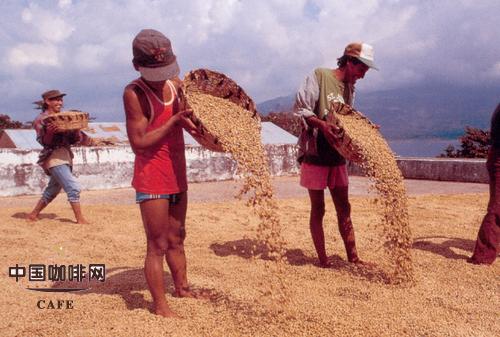
Dry processing, or the natural method, is the oldest and simplest way to process coffee. Instead of removing the fruit first, the entire coffee cherry is dried intact. This method is common in regions with limited water resources. Here’s how it works:
- Freshly picked coffee cherries are sorted and cleaned, often using water floatation to remove unripe or defective fruit.
- The sorted cherries are spread out in thin layers on large surfaces to dry in the sun.
- The cherries are regularly turned and raked to ensure even drying and prevent mold.
- Drying continues until the cherries reach 11–12% moisture content, which can take several weeks.
- Once dried, the coffee is stored in sacks as parchment-covered seeds—or sometimes as whole dried cherries—until ready for hulling.
- The dry husk (including skin, pulp, and parchment) is later removed mechanically to reveal the green coffee bean.
- The beans are then sorted, polished (optional), graded, and cleaned of defects.
- Finally, the green coffee is weighed and packaged for shipment.
What’s the Goal of Coffee Processing?
The ultimate goal of coffee processing is to safely and effectively remove the coffee bean from its fruit while preserving or enhancing its inherent qualities. Whether using dry or wet methods, producers aim to end up with dry, stable, and defect-free green coffee beans—ready for roasting. The processing method affects how the seed’s flavors develop during drying, and ultimately influences the cup profile when brewed.
Key Terms Defined
Green Coffee: Dried coffee seeds with the silvery skin still attached, ready for roasting. Also called raw coffee.
Washed Process: Another name for the wet process; involves removing the pulp and mucilage before drying.
Natural Process: Another name for the dry process; the entire cherry is dried before the bean is removed.
Parchment Coffee: Dried coffee seeds still encased in their protective parchment layer.
Hulling: The step where the parchment or dried husk is removed to expose the green bean.
Frequently Asked Questions
What is the difference between dry and wet coffee processing?
Dry processing dries the whole coffee cherry—including the bean inside—before removing the fruit layers. Wet processing removes the skin, pulp, and mucilage using water and fermentation, then dries the bare seeds. Dry processing is simpler and needs less water, while wet processing tends to produce cleaner, more acidic flavors.
Which processing method produces sweeter coffee?
Dry processing (natural) typically results in sweeter, fuller-bodied coffee with more pronounced fruit and fermented notes due to extended contact with the cherry sugars. Wet processing highlights clarity and acidity over sweetness.
How long does coffee processing take?
Dry processing can take 2–4 weeks of sun drying, depending on weather. Wet processing may take 2–3 days for fermentation and an additional 1–2 weeks for drying, though exact times vary with climate and equipment.
What is parchment coffee?
Parchment coffee refers to dried coffee beans that are still encased in a thin, protective parchment layer. This layer is removed just before export or roasting through a hulling process.
Do all coffee farms use the same processing method?
No. The method depends on local climate, water availability, equipment, tradition, and market demand. Some regions like Ethiopia or Brazil commonly use dry processing, while Central American countries often prefer washed processing.
Does processing affect coffee flavor?
Yes. Processing has a major impact on flavor. Wet-processed coffees tend to be cleaner, brighter, and more acidic, while dry-processed coffees are often fruitier, sweeter, and heavier in body.
Recommended FrontStreet Beans for Natural & Washed Profiles
Explore FrontStreet Coffee’s Ethiopia Humbera for a classic natural process cup with blueberry, jasmine, and fermented depth, or try Yirgacheffe for bright lemon, bergamot, and floral tones typical of washed coffees. For a balanced washed option, their Kenya Little Tomato delivers blackcurrant, tartaric acid, and citrus. All are single-origin greens ideal for seeing how process shapes flavor. Freshly roasted within 5 days · Orders placed before 17:00 ship the same day · Next-day delivery across most of Guangdong Province.
FrontStreet Coffee is a long-established specialty coffee roaster in Guangzhou China, selling freshly roasted beans from its own farm in Yunnan as well as dozens of carefully selected single-origin beans from around the world for both pour-over and espresso. The products deliver consistently excellent quality and great value, with shipping within 24 hours. Guangzhou's FrontStreet Coffee shop is recommended by many coffee lovers, and the beans are now available online at the Tmall 。
Important Notice :
前街咖啡 FrontStreet Coffee has moved to new addredd:
FrontStreet Coffee Address: 315,Donghua East Road,GuangZhou
Tel:020 38364473