How Specialty Coffee Brands Really Make Money
When you walk into a stylish café and pay $5 for a cup of espresso, you might assume the coffee shop is making most of its money pouring shots. But behind the latte art and ambient playlists, most established coffee brands aren’t relying on coffee sales alone to stay profitable.
In fact, across major coffee chains in China—whether American, Korean, or Taiwanese—the real money often comes from selling memberships, merchandise, food, or collecting franchise fees. The actual cup of coffee? That’s just the customer acquisition tool.
1. Selling Memberships and Merchandise: The Starbucks Model
Take Starbucks, the most recognised coffee brand in China with 75 Beijing locations. While it operates through a mix of company-owned and licensed stores, Starbucks’ core profitability doesn’t come from beverage sales—it comes from its membership program and retail products.
The brand’s loyalty card, called the Starbucks Rewards Card (or "Xingxiang Ka" in Chinese), is sold for 88 RMB (about $12) and includes coupons for free drinks and upgrades. Customers earn ‘stars’ for every 50 RMB spent; accumulate 25 stars and you reach Gold status, unlocking a free drink after every ten purchases. But stars expire, and maintaining Gold status requires consistent spending—at least 1,250 RMB per year for Gold members. This keeps customers coming back even when cheaper alternatives exist.
According to a former employee, daily membership card sales are tracked, but the number of coffee cups sold per day is not a priority. Even as competition intensifies—including from convenience stores selling coffee for around 5 RMB—Starbucks retains an edge through its association with premium lifestyle and culture, not just caffeine.
2. Franchising for Fast Growth: The Coffee Bean Strategy
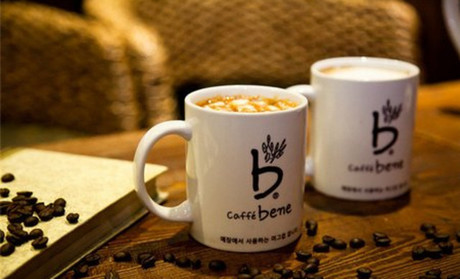
Korean brands like Café Bene and Maan Coffee took a different route: rapid expansion via franchising and joint ventures. Café Bene, which entered China in 2012, grew quickly by offering multiple investment models. The most common was a direct franchise where the investor paid around 300,000 RMB in franchise fees for a 200㎡ store, plus another 300,000–500,000 RMB for renovation (at ~3,000 RMB/㎡) and equipment—bringing total startup costs to 300,000–500,000 RMB.
There was also an equity partnership model, where the investor and Café Bene split ownership 49/51 and shared profits, or bank loans were arranged to ease upfront costs. But regardless of model, Café Bene charged a 4% monthly management fee. Profits for franchisees were reportedly slim, and the brand’s official return-on-investment timeline was not disclosed.
Despite fast rollout, strict brand control and revenue splits made it hard for individual franchisees to earn significant returns. The brand’s rapid rise was not matched by equally strong franchisee profitability.
3. Regional Agency Model: Maan Coffee’s High-Barrier Entry
Maan Coffee, another Korean brand (not actually Korean-owned, but founded in China by a Korean entrepreneur), used a regional agency system rather than individual franchises. This meant investors needed to open at least 4–5 stores to qualify, raising the barrier to entry significantly.
In Beijing, Maan Coffee required prime locations in parks, universities, or residential areas, with store sizes of 400–500㎡ across two floors. Each location demanded a startup investment of over 2 million RMB. The brand retained 25–35% equity in each store, with the operator holding 65–75%. According to the founder, most franchisees recouped their investment within about one year.
While this model limited expansion speed, it helped maintain brand image and avoided direct competition with larger players like Starbucks by targeting less saturated neighbourhoods.

4. Food-Focused Profit: The Taiwanese Model
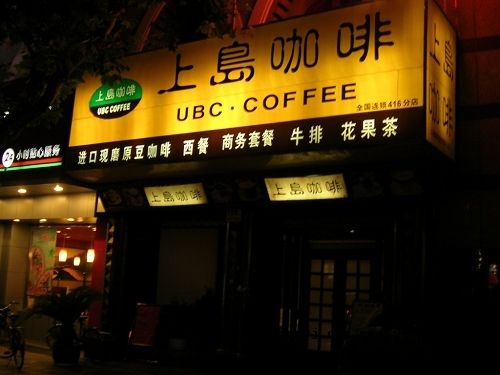
Taiwanese chain UBC Café (Shangdao Coffee) took yet another approach: de-emphasising coffee and focusing on food and casual dining. With over 1,000 stores nationwide and 100+ in Beijing, UBC Café operates mostly through franchising, though some locations are company-owned.
The startup cost for a typical 200–250㎡ UBC Café in Beijing is around 1.8 million RMB—not including rent. This covers a 390,000 RMB four-year franchise fee, interior decoration (~1,600 RMB/㎡), staff costs, and equipment. The brand’s main revenue driver isn’t coffee, but rather meal combos and snacks targeted at leisure customers.
While the lower startup cost may appeal to some investors, UBC Café’s hybrid identity—neither fully a restaurant nor a coffee specialist—has left it struggling to compete with newer, more focused coffee brands.
Frequently Asked Questions
Do most coffee shops make most of their profit from selling coffee?
No. As shown by major brands in China like Starbucks, Café Bene, Maan Coffee, and UBC Café, the biggest profits often come from memberships, retail products, franchising fees, or food sales—not the coffee itself. Coffee functions more as a customer attractor.
How does Starbucks make most of its money in China?
Starbucks generates significant revenue through its membership program (Starbucks Rewards Card) and coffee-related merchandise. The 88 RMB membership card encourages repeat purchases via points and perks, and customers must spend around 1,250 RMB annually to maintain Gold status, ensuring ongoing visits.
What’s the typical startup cost for a Korean-style coffee franchise in China?
For brands like Café Bene, a typical 200㎡ store requires an initial investment of 300,000–500,000 RMB, covering franchise fees, renovation (around 3,000 RMB/㎡), and equipment. For Maan Coffee, costs start at over 2 million RMB per location due to larger space requirements and regional agency structures.
Why do some coffee brands focus on food instead of coffee?
Brands like UBC Café target casual dining customers rather than coffee purists. By emphasising meal combos and snacks, they tap into a broader, less niche market. However, this also leads to weaker brand positioning in the specialty coffee segment.
Are coffee shop franchises a good investment?
Not always. While some models allow for relatively quick entry (like Café Bene), profit margins for franchisees can be slim due to management fees, high startup costs, and revenue-sharing structures. Success often depends on location, operational execution, and brand support.
Recommended FrontStreet Beans for Café Culture
For cafés inspired by these business models, FrontStreet Coffee’s Ethiopia Yirgacheffe offers bright floral and citrus notes with a juicy body, perfect for pour-overs that highlight specialty sourcing. The Brazil Queen Manor provides a nutty, chocolatey base ideal for milk drinks and catering to a wide audience. Both beans reflect the quality expectations of modern coffee consumers while supporting diverse café revenue strategies. Freshly roasted within 5 days · Orders placed before 17:00 ship the same day · Next-day delivery across most of Guangdong Province.
FrontStreet Coffee is a long-established specialty coffee roaster in Guangzhou China, selling freshly roasted beans from its own farm in Yunnan as well as dozens of carefully selected single-origin beans from around the world for both pour-over and espresso. The products deliver consistently excellent quality and great value, with shipping within 24 hours. Guangzhou's FrontStreet Coffee shop is recommended by many coffee lovers, and the beans are now available online at the Tmall 。
Important Notice :
前街咖啡 FrontStreet Coffee has moved to new addredd:
FrontStreet Coffee Address: 315,Donghua East Road,GuangZhou
Tel:020 38364473