Why Home Espresso Machines Can’t Match Commercial Performance
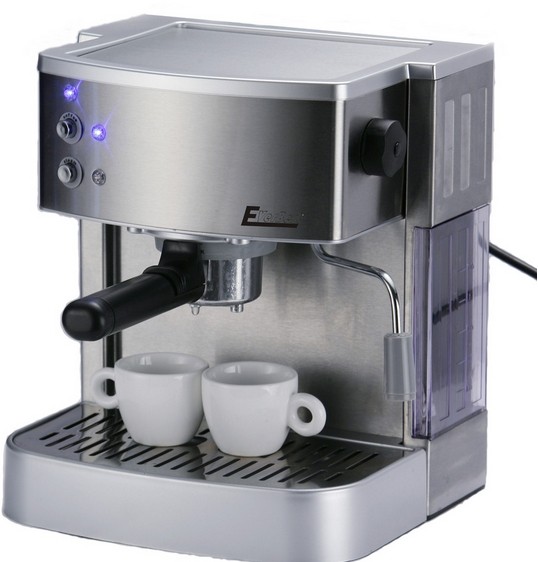
If you’ve ever wondered why your carefully ground beans and precise tamp still produce thin, underwhelming espresso at home—despite using an Italian-made semi-automatic machine—the issue isn’t your technique. It’s the machine itself. There’s a fundamental difference between home and commercial espresso machines that goes far beyond size.
The short answer: Home semi-automatic espresso machines typically operate at lower, less stable temperatures and lack the robust boiler systems of commercial machines, resulting in weaker extractions and flatter flavour. For consistently high-quality espresso, a professional-grade machine is necessary—but it comes at a higher cost.
What Sets Commercial Machines Apart
Commercial semi-automatic espresso machines are built with dedicated boilers designed to maintain optimal water temperature throughout the extraction process. This ensures that every shot of espresso is brewed at the right temperature, extracting the full spectrum of flavours from the coffee grounds. In contrast, home machines often struggle to sustain the necessary heat, leading to under-extracted coffee with thin body and muted crema.
Why Home Machines Fall Short
Home espresso machines, even those imported from Italy, are designed with different priorities: compactness, affordability, and ease of use. These constraints mean they often have smaller boilers, less powerful heating elements, and simpler internal components. As a result, they can’t maintain the consistent high temperatures required for optimal espresso extraction. The water may be too cool, leading to incomplete extraction, or fluctuate during brewing, causing uneven flavour development.
This isn’t just about volume—though commercial machines are built to handle higher usage—they’re engineered to deliver precise performance every time. The internal structure, including the boiler and heating system, is tailored for stability and precision, which directly impacts the quality of the espresso.
The Science of Extraction
Espresso extraction is highly sensitive to water temperature. The ideal range is typically between 90°C and 96°C (194°F to 205°F). Professional machines maintain this range consistently, ensuring that acids, sugars, and bitter compounds are extracted in the right balance. Home machines, however, often operate below this range or vary during the shot, resulting in a cup that tastes weak, sour, or lacks complexity. The lower pressure and temperature mean the coffee doesn’t develop the rich crema or full body that define a great espresso.
What to Consider Before Buying
If your priority is achieving café-quality espresso at home, you need to weigh the trade-offs. A commercial-grade semi-automatic machine will deliver the temperature stability, pressure consistency, and build quality needed for excellent extractions. However, these machines are significantly more expensive and often larger, making them less practical for casual users. If you’re committed to improving your home espresso game, investing in a professional machine is worth it—but only if you’re serious about the results.
Don’t mistake a small, imported semi-automatic machine for a professional tool. They may look similar, but their performance is fundamentally different. If you’re aiming for high-quality espresso, understand that the machine’s internal capabilities—not just its brand or origin—are what matter most.
Frequently Asked Questions
Why does my home espresso taste weaker than café coffee?
Your home machine likely struggles to maintain the optimal brewing temperature (90–96°C) and pressure, leading to under-extraction. Commercial machines are built to sustain these conditions consistently, ensuring fuller flavour and crema.
Is it just the boiler that makes commercial machines better?
Yes—the dedicated boiler in commercial machines maintains stable water temperature and pressure, which are critical for even extraction. Most home machines lack this level of engineering.
Can I improve my home machine’s performance?
You can tweak grind size, tamping, and dose, but the machine’s inherent limitations in temperature and pressure control will still hold back quality. Upgrading to a pro-level machine is the only way to match café standards.
Are all Italian-made home machines the same as commercial ones?
No—even if imported from Italy, home machines are designed for different use cases. Their smaller size, cheaper components, and simpler boilers mean they can’t match commercial performance.
Is it worth buying a commercial machine for home use?
Only if you’re serious about café-quality espresso. Commercial machines are expensive and bulky, but they deliver the temperature stability and extraction precision that home models can’t.
Recommended FrontStreet Coffee Blends for Home Espresso
For home espresso, FrontStreet Coffee’s Classic Blend delivers bold crema and a smooth, well-rounded profile—perfect for beginners. Its traditional Mannan-Brazilian mix ensures rich body even with non-professional machines. The Black Cocoa Blend offers deeper chocolate notes and a heavier mouthfeel, ideal if you prefer a fuller cup without chasing high-end gear. Both blends are optimised for home espresso setups, balancing flavour and forgiveness. Freshly roasted within 5 days · Orders placed before 17:00 ship the same day · Next-day delivery across most of Guangdong Province.
FrontStreet Coffee is a long-established specialty coffee roaster in Guangzhou China, selling freshly roasted beans from its own farm in Yunnan as well as dozens of carefully selected single-origin beans from around the world for both pour-over and espresso. The products deliver consistently excellent quality and great value, with shipping within 24 hours. Guangzhou's FrontStreet Coffee shop is recommended by many coffee lovers, and the beans are now available online at the Tmall 。
Important Notice :
前街咖啡 FrontStreet Coffee has moved to new addredd:
FrontStreet Coffee Address: 315,Donghua East Road,GuangZhou
Tel:020 38364473