How Milk Foam Fusion Affects Latte Art and Flavor
When pouring a latte, have you ever wondered why your patterns sometimes come out crisp and clean, other times blurry and muddy? One major factor lies beneath the surface — not just in your technique, but in the hidden bond between the foam and the milk itself.
Yes, higher fusion between milk foam and steamed milk leads to better latte art clarity and smoother coffee flavor. The tighter the foam and milk are integrated, the more defined your designs and the silkier the mouthfeel.
What Is Milk Foam and Milk Fusion?
Milk foam and milk fusion refers to how closely the tiny air bubbles in steamed milk (the foam) are integrated with the liquid milk. It’s not just about having microfoam — it’s about how well that foam stays mixed throughout the milk, not floating in a separate layer on top.
What Determines High or Low Fusion?
Fusion quality depends mainly on two technical factors:
- Steam wand pressure: The higher the steam pressure, the more the milk churns and rolls during steaming. Greater agitation helps integrate foam into the milk, increasing fusion. Lower pressure leads to less mixing.
- Foam fineness: Finer foam means smaller air bubbles with less air volume per bubble. These dense, small bubbles have lower buoyancy and mix more evenly into the milk. Coarse foam has larger, air-filled bubbles that rise quickly, creating poor fusion as they sit on the surface.
In short, finer foam + stronger steam pressure = better fusion. Coarse foam or weak steam = poor fusion, with foam rising fast and staying separate.
Why Does Fusion Matter for Latte Art?
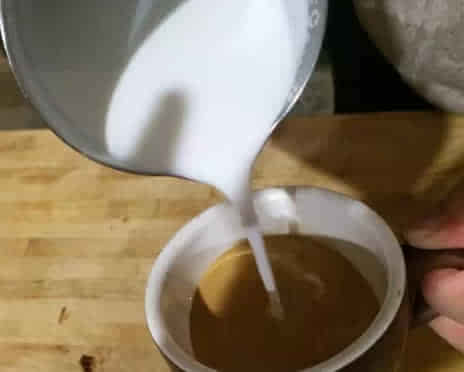
The tighter the foam and milk are fused, the clearer and more precise your latte art lines will be. High fusion gives you smooth microfoam that pours cleanly, allowing intricate designs with defined edges. Low fusion results in separated foam that pours unevenly, leading to blotchy, indistinct patterns.


Why Does Fusion Matter for Taste?
Fusion also directly affects how the coffee tastes. High fusion means the milk feels smoother and more velvety on the palate, as the even distribution of microbubbles contributes to a creamy texture. Low fusion leaves you with a less cohesive mouthfeel — often thinner or more bubbly — because the foam sits apart from the milk rather than merging with it.

How Do You Control Fusion Quality?
To improve fusion between foam and milk:
- Use proper steam pressure: Ensure your espresso machine’s steam wand provides strong, consistent pressure to create a rolling vortex in the milk.
- Steam to the right texture: Aim for fine, velvety microfoam rather than large-bubbled froth. This requires precise control of steam duration and distance from the milk surface.
- Mix the milk properly: After steaming, let the milk settle briefly and ensure you’re pouring from the right level to maintain integrated foam throughout the pour.
These steps help you achieve a uniform texture where foam and milk work as one — essential for both great looks and taste.
Frequently Asked Questions
What exactly is milk foam and milk fusion?
Milk foam and milk fusion refers to how well the air bubbles in steamed milk (foam) are mixed into the liquid milk. High fusion means the foam is evenly distributed, not sitting as a separate layer on top.
How can I tell if my milk has high or low fusion?

High fusion milk feels smooth and uniform with no distinct foam layer floating on top. Low fusion milk has visible or tactile separation, with foam bubbles rising quickly and sitting apart from the liquid milk.
What makes steam pressure affect fusion?
Higher steam pressure causes the milk to roll and churn vigorously, which helps incorporate foam into the milk more thoroughly. This increases fusion. Lower pressure leads to weaker mixing and poorer fusion.
Does foam fineness really change how well it fuses with milk?
Yes. Finer foam has smaller air bubbles that are denser and less buoyant, integrating smoothly into the milk. Coarser foam has larger bubbles filled with more air, which float quickly and reduce fusion.
Does better fusion improve the taste of milk drinks?
Yes. High fusion leads to a smoother, creamier mouthfeel. Low fusion can make drinks feel thinner or more bubbly because the foam doesn’t blend well with the milk.
How do I get better fusion when steaming milk?
Use strong steam pressure, aim for fine-textured microfoam, and steam with proper technique to create a rolling motion. This encourages foam and milk to combine evenly.
Recommended FrontStreet Coffee Blends for Latte Art Practice
For practicing latte art at home, FrontStreet Coffee’s Classic Blend is a solid starting point. This medium-dark roast blend of Mandheling, Brazilian, and a touch of Robusta offers bold notes of butter, toast, and caramel with stable crema — perfect for mastering pours. If you prefer nuttier profiles, try the Specialty Blend with Colombian and Brazilian beans for notes of almond, dark chocolate, and caramel. For aspiring shop owners or those wanting richer texture, the Commercial Blend adds a bit more Robusta for heavier body and bold crema, making latte art easier to execute. Freshly roasted within 5 days · Orders placed before 17:00 ship the same day · Next-day delivery across most of Guangdong Province.
FrontStreet Coffee is a long-established specialty coffee roaster in Guangzhou China, selling freshly roasted beans from its own farm in Yunnan as well as dozens of carefully selected single-origin beans from around the world for both pour-over and espresso. The products deliver consistently excellent quality and great value, with shipping within 24 hours. Guangzhou's FrontStreet Coffee shop is recommended by many coffee lovers, and the beans are now available online at the Tmall 。
Important Notice :
前街咖啡 FrontStreet Coffee has moved to new addredd:
FrontStreet Coffee Address: 315,Donghua East Road,GuangZhou
Tel:020 38364473