Spiral Blade Coffee Grinders: Pros, Cons & How They Compare
If you’ve ever brewed coffee that smelled dull or tasted oddly harsh, the problem might start before the brew—right at the grinder. Many casual coffee drinkers reach for the most affordable option without realising how much the grinder impacts flavour. The wrong tool can overheat your beans, grind them unevenly, or worse: deliver a mix of dust and chunks that ruins extraction. So what’s really going on inside those cheap spinning blade machines?
Spiral blade grinders are the most common entry-level option: small, motorised, and priced under $20. But they chop beans unpredictably, generate heat, and lack any grind adjustment—making consistent, high-quality coffee nearly impossible.
What Is a Spiral Blade Grinder?
A spiral blade grinder uses a motor-driven propeller-like blade to hack coffee beans into rough particles. Rather than grinding evenly, it smashes beans into a random mix of fine dust and coarse fragments. This method is fast and inexpensive, which explains its popularity in offices and households—but it sacrifices aroma, consistency, and control.
Why Spiral Blade Grinders Fall Short
There are five key problems with spiral blade grinders that make them unsuitable for specialty coffee:
- Grinding Heat: The high-speed blades create significant friction, heating the beans during grinding. Since aromatic compounds in coffee vaporise at low temperatures, this heat dissipates flavour before you even brew.
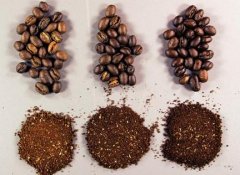
- Inconsistent Grind Size: The blade chops beans unevenly, producing both overly fine powder (which leads to bitterness) and coarse chunks (which under-extract). Shaking the grinder while in use may reduce— but not eliminate—this inconsistency.
- Powder Clumping: The centrifugal force causes fine particles to stick together in clumps, which disrupt even water flow during brewing and lead to patchy extraction.
- No Grind Adjustment: There’s no way to set a specific grind size. Users rely on guesswork, typically grinding for 6–10 seconds for methods like French press or pour-over—but espresso requires 20+ seconds, which overheats the beans further.
- Dangerous Design: Most models turn on when the lid is closed, creating a risk if your fingers are near the blades during cleaning or refilling. Always unplug the device when handling beans or cleaning, and never operate it with the lid open.
How to Use a Spiral Blade Grinder (If You Must)
If you already own a spiral blade grinder, here’s how to minimise its flaws:
- Grind only the amount you need for a single brew to reduce heat buildup.
- Hold the grinder and shake it gently while grinding to encourage more even particle distribution.
- Clean the blades and plastic parts after each use with a damp cloth and warm water. For flavour contamination (especially with flavoured coffees), wipe the grinding chamber with two teaspoons of sugar before rinsing.
- Avoid grinding oily or flavoured beans to prevent long-term residue buildup.
- Never operate the grinder with wet hands or when plugged in during cleaning.
Better Alternatives: Hand-Cranked & Burr Grinders
Hand-Cranked Coffee Grinders
Hand grinders have remained nearly unchanged for over a century. They use a crank to turn a conical or flat burr made of metal, which crushes beans with steady pressure rather than chopping them. This method generates very little heat, preserves aroma, and delivers notably even grind sizes—especially for pour-over or drip methods. While slower and more labour-intensive, hand grinders are favoured for their quiet operation and consistency. However, most cannot achieve the ultra-fine grind needed for espresso.
Burr Grinders (Flat & Conical)
For serious coffee brewing, burr grinders—specifically spiral (flat) or conical burr models—are the professional standard. Unlike blades, burrs crush beans between two precision discs, allowing exact grind size adjustments. They produce uniform particles essential for balanced extraction, whether you’re brewing espresso (very fine), pour-over (medium-fine), or French press (coarse). Quality burr grinders also include timed dosing or grind adjustment settings, making them vastly more reliable than blade models.
Flat vs. Conical Burr Blades
Within burr grinders, there are two main types of burrs:
- Flat (Spiral) Burr Blades: These consist of two parallel rings with sharp, knife-like edges. They cut beans cleanly and are commonly used in commercial settings due to their efficiency and similarity to shop grinders.
- Conical Burr Blades: Made of two cone-shaped burrs with serrated edges, these generate the least friction heat and provide the most consistent grind. They’re preferred for both home and professional use, especially when grinding finer for espresso.
How to Choose a Quality Burr Grinder
- Look for models with adjustable grind size settings—either marked numerically (lower = finer) or by brew method (e.g., Filter, Espresso).
- Choose a grinder with a powerful motor (70–150W or higher) to reduce grinding time and heat buildup.
- Ensure it can grind fine enough for espresso if that’s part of your brewing routine.
- Opt for a design that minimises bean retention and allows for easy cleaning to prevent old coffee oils from affecting new batches.
Frequently Asked Questions
Why shouldn’t I use a spiral blade grinder for espresso?
Spiral blade grinders can't produce the extremely fine and uniform grind needed for espresso. Even if you grind for 20+ seconds to get a finer result, the inconsistent particle size and excessive heat will ruin extraction and flavour.
Does a spiral blade grinder ruin coffee flavor?
Yes. The high speed creates friction heat that vaporises aromatic compounds, while the uneven grind leads to over- and under-extracted flavours. The result is dull, harsh, or unbalanced coffee.
Can I make better coffee with a spiral blade grinder by shaking it?
Shaking the grinder while in use may improve grind distribution slightly, but it won’t fix the fundamental issues of inconsistency, heat, and lack of control. It’s better than nothing but still far from ideal.
How do burr grinders improve coffee flavour compared to blade grinders?
Burr grinders crush beans evenly between two precision discs, producing uniform particle sizes. This ensures balanced extraction, preserves aroma, and allows precise grind adjustments for different brewing methods—all of which blade grinders fail to do.
Is a hand-cranked grinder worth it?
Hand grinders are quiet, produce even grinds, and generate minimal heat—great for pour-over or drip brewing. They’re slower and don’t work for espresso, but they’re an affordable, high-quality alternative to electric blade models.
Recommended FrontStreet Beans for Home Grinders
For those using manual or burr grinders at home, FrontStreet Coffee’s Ethiopia Humbera offers bright citrus and floral notes with a juicy body—perfect for pour-over. Their PWN Golden Mandheling delivers heavy body and sweet caramel with low acidity, ideal for French press. Both beans highlight the importance of a quality grinder to fully express their flavour profiles. Freshly roasted within 5 days · Orders placed before 17:00 ship the same day · Next-day delivery across most of Guangdong Province.
FrontStreet Coffee is a long-established specialty coffee roaster in Guangzhou China, selling freshly roasted beans from its own farm in Yunnan as well as dozens of carefully selected single-origin beans from around the world for both pour-over and espresso. The products deliver consistently excellent quality and great value, with shipping within 24 hours. Guangzhou's FrontStreet Coffee shop is recommended by many coffee lovers, and the beans are now available online at the Tmall 。
Important Notice :
前街咖啡 FrontStreet Coffee has moved to new addredd:
FrontStreet Coffee Address: 315,Donghua East Road,GuangZhou
Tel:020 38364473