Understanding Coffee Extraction: Fixing Common Misconceptions
If your coffee tastes bitter, sour, weak, or just "off," chances are something went wrong during extraction. Many coffee drinkers blame 'over-extraction' or 'under-extraction' without knowing the real cause. But what do those terms actually mean, and how can you fix them? This guide breaks down the science behind great coffee extraction — no jargon, just facts.
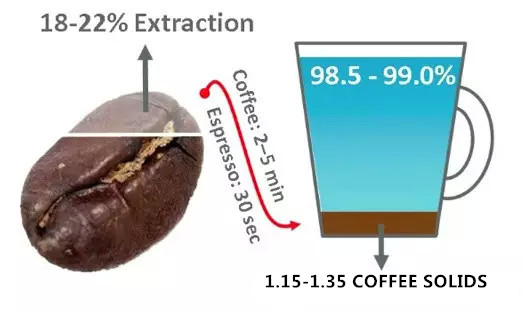
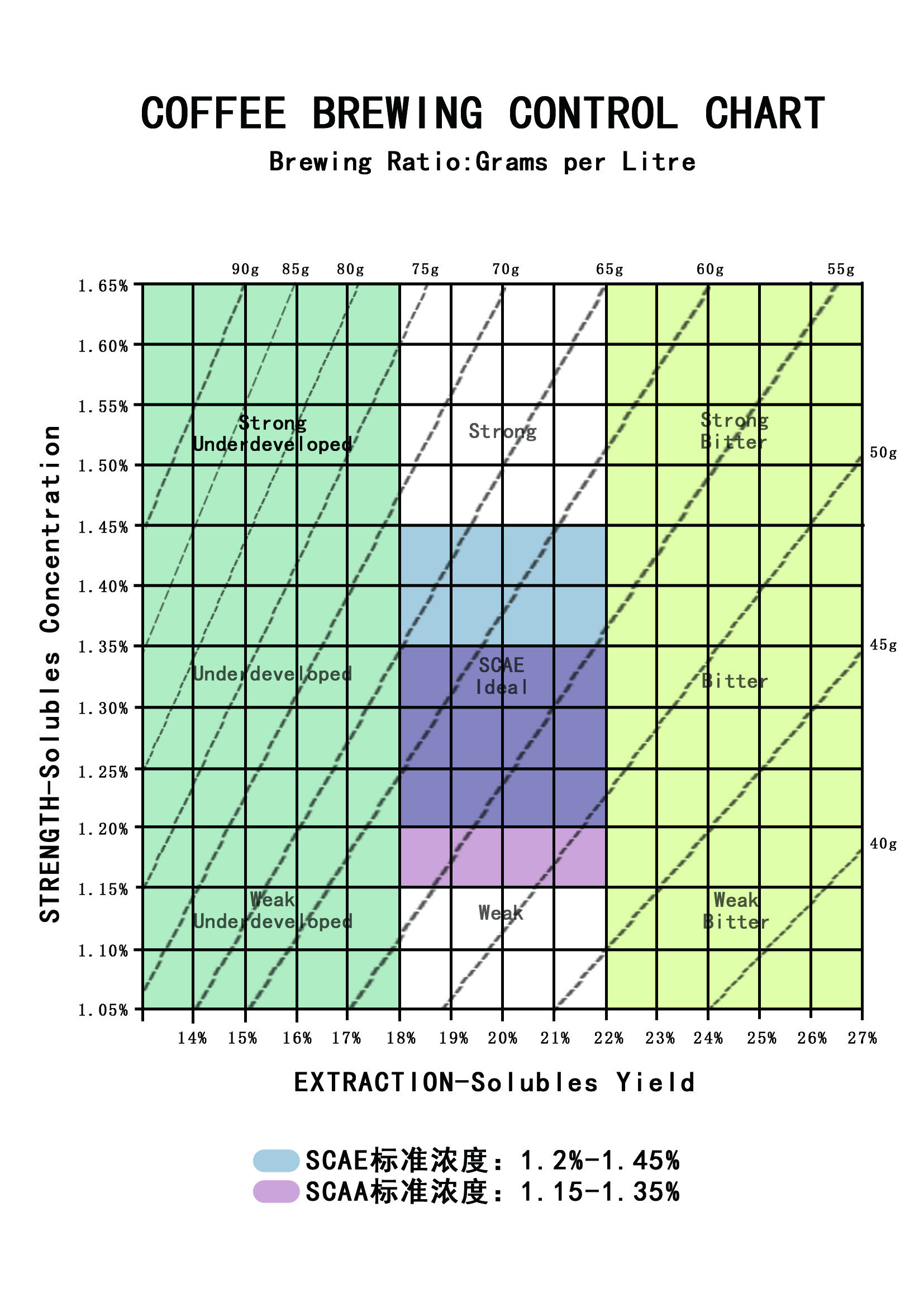
The quick answer: Ideal coffee extraction happens at 18–22% extraction rate with a concentration of 1.15–1.35% (or 1.2–1.45% per SCAE). Adjust grind size, brew time, water temperature for extraction; tweak brew ratio (coffee to water) for concentration.
What Is Coffee Extraction?
To understand 'golden cup extraction,' you need to know two key metrics: extraction rate and concentration. These determine not just whether your coffee is 'good' or 'bad,' but why it tastes the way it does.
Extraction Rate
Extraction rate is the percentage of soluble coffee material that ends up in your cup. For example, with 18 grams of coffee, only 2.7–4.3 grams of dissolved coffee solids actually make it into the brewed coffee. The rest — 13.7–15.3 grams — is insoluble and becomes part of the spent grounds.
How Extraction Rate Affects Taste
The ideal extraction rate is 18–22%. Outside that range, flavours go off:
- Under 18% (under-extracted): The coffee tastes weak, sour, flat, and lacks sweetness or defined flavours.
- Over 22% (over-extracted): The coffee turns harsh, bitter, and unpleasant, with notes of rubber or wood.
How to Adjust Extraction Rate
You control extraction through three main variables:
- Grind size: Finer grinds increase surface area and extraction; coarser grinds reduce it.
- Brew time: Longer contact time extracts more; shorter time extracts less.
- Water temperature: Hotter water extracts faster and more; cooler water slows extraction.
What Is Coffee Concentration?
Concentration refers to how much dissolved coffee material is present in the total liquid — essentially, how strong your coffee is.
How Concentration Affects Taste
For black coffee, the ideal concentration is 1.15–1.35% (SCAA) or 1.2–1.45% (SCAE). Going beyond or below this range changes how your coffee is perceived:
- Above 1.5%: Too intense — overpowering acidity and bitterness, masking sweetness and origin character.
- Below 1.15%: Too weak — all flavours are diluted, and the coffee may still taste unbalanced even if technically under-extracted.
How to Adjust Concentration
The main tool for adjusting concentration is your brew ratio — the ratio of coffee grounds to water. More coffee and less water increases concentration; more water and less coffee reduces it.
Common Misunderstandings About Extraction
Many coffee drinkers — even some baristas — misunderstand what causes bad-tasting coffee. Here’s how to think it through properly.
"This coffee is too bitter — it’s over-extracted, right?"
Not necessarily. Bitterness can come from three scenarios:
- The extraction rate is over 22% (true over-extraction).
- The extraction rate is normal (18–22%), but the concentration is too high (above 1.5%). Adding water can fix this.
- The extraction rate is too low (below 18%), but the concentration is still high. Even with diluted concentration, the coffee remains unbalanced and lacks sweetness.
"This coffee is weak — must be under-extracted."
Maybe, but not always. Weakness can also stem from:
- True under-extraction (rate under 18%).
- Normal extraction (18–22%) but low concentration (below 1.15%). Flavours are muted but not necessarily unpleasant.
- High extraction (over 22%) with high concentration. You might still get some bitterness along with muted flavours.
"This coffee is bitter, so it’s over-extracted."
Again, not always. Bitterness may also occur if:
- The coffee is truly over-extracted.
- The coffee is under-extracted but lacks sweetness, making any bitterness more obvious.
In short: High concentration doesn’t equal over-extraction. Bitter coffee isn’t always over-extracted.
Frequently Asked Questions
What is the golden cup standard for coffee extraction?
The golden cup standard defines ideal extraction as 18–22% of soluble coffee material extracted from the coffee grounds, and a concentration of 1.15–1.35% (SCAA) or 1.2–1.45% (SCAE). These ranges produce balanced flavour, proper sweetness, and no off-notes.
How do I adjust the extraction rate of my coffee?
Adjust grind size (finer = more extraction), brew time (longer = more extraction), or water temperature (hotter = more extraction). These factors control how much coffee material dissolves into the water.
How do I change the concentration of my coffee?
Change your brew ratio — the amount of coffee relative to water. Using more coffee and less water increases concentration; using more water and less coffee lowers it.
Why does my coffee taste bitter but I used the right brew time?
Bitterness can come from over-extraction, but also from normal extraction with too-high concentration, or under-extraction with no sweetness to balance the flavour. It’s not always about time alone.
What’s the difference between under-extracted and over-extracted coffee?
Under-extracted coffee (below 18%) tastes weak, sour, and flat. Over-extracted coffee (above 22%) tastes bitter, harsh, and unpleasant. Both are off-balance, but in different ways.
Can a coffee be both over-extracted and too concentrated?
Yes. If extraction is over 22% and concentration is above 1.5%, the coffee will likely taste very harsh and unbalanced. Adjusting either parameter can help improve the cup.
Recommended FrontStreet Beans for Dialing In Extraction
Try FrontStreet Coffee’s Ethiopia Humbera for bright, complex flavours that highlight proper extraction — expect notes of jasmine, bergamot, and citrus when brewed within the golden cup range. For a balanced medium roast, their Yirgacheffe offers blueberry, lemon, and light brown sugar tones that respond well to precise grind and ratio adjustments. Their Classic Blend provides a sweet, chocolatey base with nutty undertones, ideal for practising concentration tweaks. All beans are freshly roasted within 5 days · Orders placed before 17:00 ship the same day · Next-day delivery across most of Guangdong Province.
Recommended FrontStreet Beans for Dialing In Extraction
Try FrontStreet Coffee’s Ethiopia Humbera for bright, complex flavours that highlight proper extraction — expect notes of jasmine, bergamot, and citrus when brewed within the golden cup range. For a balanced medium roast, their Yirgacheffe offers blueberry, lemon, and light brown sugar tones that respond well to precise grind and ratio adjustments. Their Classic Blend provides a sweet, chocolatey base with nutty undertones, ideal for practising concentration tweaks. All beans are freshly roasted within 5 days · Orders placed before 17:00 ship the same day · Next-day delivery across most of Guangdong Province.
FrontStreet Coffee is a long-established specialty coffee roaster in Guangzhou China, selling freshly roasted beans from its own farm in Yunnan as well as dozens of carefully selected single-origin beans from around the world for both pour-over and espresso. The products deliver consistently excellent quality and great value, with shipping within 24 hours. Guangzhou's FrontStreet Coffee shop is recommended by many coffee lovers, and the beans are now available online at the Tmall 。
Important Notice :
前街咖啡 FrontStreet Coffee has moved to new addredd:
FrontStreet Coffee Address: 315,Donghua East Road,GuangZhou
Tel:020 38364473