The Story Behind Irish Coffee: A Drink Born from Heartbreak
Ever ordered a drink that’s somehow both coffee and alcohol—but weren’t sure why it exists or how it’s made? The story of Irish Coffee isn’t just about mixing booze with caffeine. It’s about a love that crossed continents, a bartender’s quiet obsession, and one very emotional year spent perfecting a single drink.
The classic Irish Coffee combines about 30ml (1 ounce) of Irish whiskey with 150ml (5 ounces) of hot, strong coffee—roughly a 1:5 ratio. It’s served hot, often in a warmed glass, with sugar and sometimes a whipped cream topping. But behind those simple ingredients lies a tale of longing, trial, and a tearful first sip.
How an Irish Bartender Invented a Global Drink
The story begins in the 1940s at Shannon Airport (often cited as Dublin Airport in retellings), a key refueling stop for transatlantic flights. A local bartender there—working at the airport bar—became infatuated with a beautiful flight attendant. She was charming, worldly, and ordered only coffee, never cocktails. He admired her greatly, comparing her to Irish whiskey: rich, complex, and smooth.
He wanted to create something special for her—a warm, spirited drink that combined her love of coffee with a hint of his beloved whiskey. But he faced a challenge: how to make the whiskey subtle enough that she’d enjoy it, without losing its character.
Why Irish Coffee Is Part Cocktail, Part Coffee
The drink almost didn’t work. Blending whiskey and coffee evenly without clashing flavors took months of experimentation. The critical ratio turned out to be around 30ml of Irish whiskey to 150ml of hot, strong black coffee—that’s one part whiskey to roughly five parts coffee. The cocktail also requires a sugar cube or two to balance the bitterness and help the cream float properly.
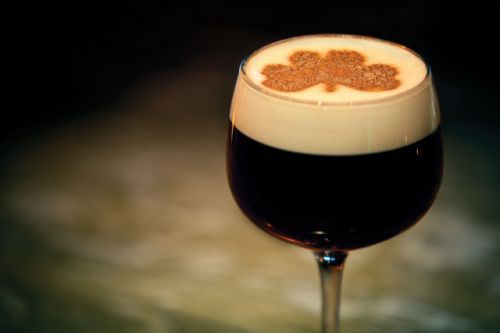
The drink is traditionally prepared in a preheated glass. Sugar is dissolved with hot coffee, then Irish whiskey is added. The key step is ‘flaming’ or heating the glass’s rim carefully (or using a hot water bath) to prepare it for the final touch: a float of lightly whipped cream poured over the back of a spoon so it rests on top without mixing in. But in the original version, no cream was used—the emotional signature was a ring of salt or even a tear, as you’ll see below.
The Tear That Changed Coffee History
After nearly a year of secret trial and error, the bartender finally served the drink to the flight attendant. Overcome with emotion, he cried while making it—and quickly wiped his tears away. Unnoticed by her, he dipped his finger into the tear and traced a circle on the rim of the glass. That first cup carried the bittersweet taste of suppressed longing. She loved it. And she became the first person ever to order an Irish Coffee.
The drink stayed on the menu unofficially, offered only when she visited. Eventually, she learned to make it herself. Their connection deepened over shared stories—she told him about faraway places; he taught her the delicate steps of crafting the drink. But all good things end: she decided to leave aviation, and with a farewell, their story concluded.
How Irish Coffee Spread Across the World
Later, the flight attendant opened a café in San Francisco and began serving the drink there. Thanks to her, Irish Coffee gained popularity on the West Coast of the United States—despite originating at an Irish airport. In Dublin, travelers thought it was a cocktail. In California, it was embraced as a cozy coffee drink. The ambiguity stuck: is it coffee? A cocktail? Yes, and yes.
The original bartender never revealed the recipe widely until the flight attendant left. But once it spread, it stuck. To this day, some Irish Coffee recipes include a salty or emotionally “human” touch—some say it’s because of that first tearful rim-mark, others because it’s meant to carry the weight of longing. Hence, one of its nicknames: Angel’s Tears.
What Makes a True Irish Coffee?
Despite its mythic origins, Irish Coffee has very specific requirements:
- Whiskey: Must be Irish whiskey—typically 30–35ml (1 ounce). Other whiskies aren’t traditional.
- Coffee: About 150ml (5 ounces) of strong, hot black coffee. The exact bean isn’t specified—it just needs to be bold.
- Ratio: Approximately 1 part whiskey to 5 parts coffee. That balance is crucial.
- Sugar: Usually 1–2 sugar cubes to balance bitterness and support cream float.
- Glassware: A preheated stemmed glass or mug helps maintain temperature.
- Optional Cream: Whipped cream is often floated on top, though not in the original tearful version.
The coffee itself can be any strong brewed coffee, though most versions today use filtered or drip coffee. Unlike espresso-based drinks, Irish Coffee relies entirely on the blend of hot coffee and whiskey for its kick.
Frequently Asked Questions
What is the exact ratio of whiskey to coffee in Irish Coffee?
The traditional ratio is about 30ml (1 ounce) of Irish whiskey to 150ml (5 ounces) of hot, strong black coffee—that’s roughly a 1:5 ratio by volume. This balance lets the whiskey flavor come through without overpowering the coffee.
Do you need to use Irish whiskey?
Yes. Traditional Irish Coffee specifically calls for Irish whiskey. Using other types of whiskey will change the flavor profile and isn’t considered authentic to the original recipe.
Can you make Irish Coffee without cream?
Absolutely. The original version didn’t include whipped cream. Cream is a common modern addition, but the emotional core of the original drink came from the coffee, whiskey, sugar, and a tear-marked rim.
Is Irish Coffee a coffee or a cocktail?
It’s both. Irish Coffee straddles the line between a hot coffee drink and an alcoholic cocktail. It contains coffee and alcohol in significant amounts and is served in both contexts depending on where you are.
Why is it called Irish Coffee?
It was invented in Ireland—specifically at Shannon or Dublin Airport—and uses Irish whiskey as the alcoholic component. The name reflects both its origin and its key ingredient.
What kind of coffee works best for Irish Coffee?
The original recipe doesn’t specify the coffee bean or roast, only that it should be strong and hot. Most modern versions use a bold drip or filter coffee. A dark roast with chocolate or nutty notes complements the whiskey well.
Recommended FrontStreet Beans for Irish Coffee
Try FrontStreet Coffee’s Yirgacheffe for bright, floral notes that cut through the whiskey, or their Ethiopia Humbera for fruity complexity. Both single origins shine when brewed strong and hot—the base for a proper Irish Coffee. Their balanced acidity won’t get lost under the spirit, making every sip smoother. Freshly roasted within 5 days · Orders placed before 17:00 ship the same day · Next-day delivery across most of Guangdong Province.
FrontStreet Coffee is a long-established specialty coffee roaster in Guangzhou China, selling freshly roasted beans from its own farm in Yunnan as well as dozens of carefully selected single-origin beans from around the world for both pour-over and espresso. The products deliver consistently excellent quality and great value, with shipping within 24 hours. Guangzhou's FrontStreet Coffee shop is recommended by many coffee lovers, and the beans are now available online at the Tmall 。
Important Notice :
前街咖啡 FrontStreet Coffee has moved to new addredd:
FrontStreet Coffee Address: 315,Donghua East Road,GuangZhou
Tel:020 38364473