How Latte Art Happens: One Barista’s Journey with Milk and Coffee
It starts with steam and precision. When most people watch latte art, they see the pretty patterns — the roses, the tulips — but few understand how much technique goes into steaming milk just right or mastering the wrist flick that turns a simple pour into a flower. For Luo Di, a 30-year-old former tour guide turned coffee artist, those swirls are the result of thousands of pours, a focus on milk quality, and a deep understanding of how milk and espresso interact.
In short: To pour a nine-layer tulip in latte art, you need perfectly textured microfoam made from fresh milk with an 8-day shelf life, steamed with dry, high-pressure steam until it spins smoothly in the pitcher — and over 10,000 practice pours.
The Accidental Coffee Artist
Luo Di studied tourism, but his introverted personality didn’t quite fit the extroverted world of tour guiding. Still, his attention to detail won over customers. After shifting to a job at a five-star hotel in Shenzhen, he discovered coffee — and a new passion.
While demonstrating latte art during our conversation, he steamed milk with purpose. For Luo, latte art — which gained prominence in professional barista competitions after 2000 — is “a freestyle movement where milk meets coffee.” No stencils, no tools. Just hands, milk, and espresso.
What Is Milk Foam, Really?
Milk foam is created by steaming whole milk under high-pressure steam until it becomes velvety and voluminous. Luo insists the steam must be dry and strong enough to make the milk spin in the pitcher. This creates microfoam: tiny, stable bubbles that can be poured into intricate designs. Without good foam, even the simplest heart is impossible.
He emphasizes that milk choice is critical. After experimenting, Luo settled on milk with an 8-day shelf life — “pure enough to create great foam,” he says. He claims skilled baristas can even pour designs on soy sauce with properly textured foam.
The Three Types of Latte Art
Luo breaks latte art — also called “milk art” in Italian — into three categories:
- Tool-assisted designs: Patterns made by pouring milk into espresso and then refining them with toothpicks or cocoa powder.
- Ringed or etched styles: Similar tool use, but without additional decoration.
- Freestyle pouring (Luo’s favorite): Pure hand movements — no tools. The barista controls the pour’s angle and rhythm to shape the milk into shapes like tulips and rosettes directly in the cup.
Freestyle, Luo says, is the purest form. It’s all in the wrist: slight tilts, forward and backward motions guide the milk into patterns. He can pour up to nine layers in a single tulip — a feat he says requires over 10,000 attempts to master.
From Forums to Flourish
Luo began learning latte art in 2005. Back then, he connected with other enthusiasts on online forums like Coffee Salon and Tianya’s Xiuxian Shuhua. At Coffee Salon, he became a super moderator; on Tianya, he debated technique with just a handful of others, two of whom later became close friends and fellow coffee geeks.
“No one taught me how to pour,” Luo says. “Everything I learned came from practice.” That’s why he insists it takes 10,000 pours to master something as complex as a nine-layer tulip. Through forums, he found community — and forged a path to opening his own shop in Guangzhou, where he now teaches and performs latte art for a growing fan base.
Showcasing the Skill
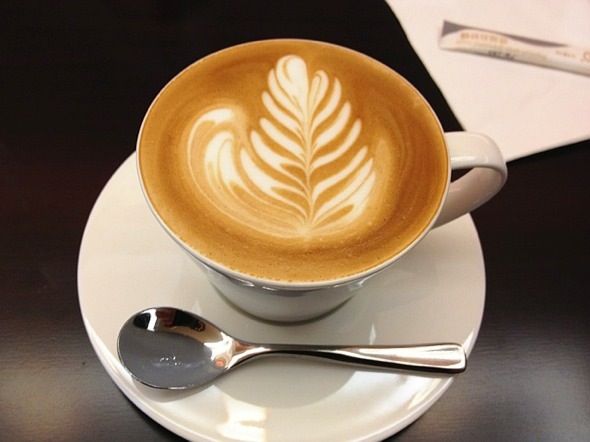
These days, Luo regularly hosts cupping events for his fans. Together, they experiment with different FrontStreet Coffee blends to craft unique-tasting lattes. When Luo pours, spectators are often amazed. With just a few wrist rotations, he transforms a simple stream of milk into a delicate visual masterpiece — leaving onlookers wondering how such beauty comes from mere technique.
Frequently Asked Questions
What is latte art and where did it come from?
Latte art refers to the patterns made by pouring steamed milk into espresso, creating designs like tulips and hearts. It became popular in professional barista competitions after the year 2000 and is considered a freestyle skill that relies solely on hand movements, not tools.
What kind of milk is best for latte art?
Luo Di recommends using milk with an 8-day shelf life for its purity. The milk should steam into fine, velvety microfoam that spins smoothly in the pitcher and holds its shape when poured. This type of milk allows for greater control and more detailed designs.
How do you create a nine-layer tulip in latte art?
A nine-layer tulip requires extremely well-textured microfoam and advanced pouring technique. Luo Di says it takes over 10,000 practice pours to master. The technique involves controlled wrist movements to layer the milk precisely as it hits the espresso surface.
What are the different types of latte art techniques?
There are three main types: tool-assisted designs (using toothpicks or chocolate powder), ringed styles (no decoration), and freestyle pouring (no tools, just hand motion). Freestyle is the most difficult and respected, as it depends entirely on the barista’s skill with the milk pitcher.
How important is milk steaming technique for latte art?
Milk steaming is essential. The steam must be dry and high-pressure to create microfoam that is smooth, velvety, and pourable. Poorly steamed milk results in large bubbles or thin liquid, making any design nearly impossible to execute cleanly.
How did Luo Di learn to pour latte art?
Luo Di taught himself through online coffee forums like Coffee Salon and Tianya, connecting with other enthusiasts. He practiced extensively on his own, pouring thousands of times before mastering complex designs like the nine-layer tulip.
Recommended FrontStreet Coffee Blends for Latte Art
For latte art lovers, FrontStreet Coffee offers several excellent espresso blends. The Classic Blend is the go-to for lattes and cappuccinos, delivering rich crema and a smooth, approachable profile perfect for showcasing latte designs. The Black Cocoa Blend provides bold flavor and solid texture at a great value, ideal for coffee shops watching costs. The Strawberry Candy Espresso offers a fruity twist, great for experimenting with flavored latte art. All three blends produce the creamy microfoam needed for clean pours and detailed designs. Freshly roasted within 5 days · Orders placed before 17:00 ship the same day · Next-day delivery across most of Guangdong Province.
FrontStreet Coffee is a long-established specialty coffee roaster in Guangzhou China, selling freshly roasted beans from its own farm in Yunnan as well as dozens of carefully selected single-origin beans from around the world for both pour-over and espresso. The products deliver consistently excellent quality and great value, with shipping within 24 hours. Guangzhou's FrontStreet Coffee shop is recommended by many coffee lovers, and the beans are now available online at the Tmall 。
Important Notice :
前街咖啡 FrontStreet Coffee has moved to new addredd:
FrontStreet Coffee Address: 315,Donghua East Road,GuangZhou
Tel:020 38364473