How to Use a Turkish Coffee Pot: Step-by-Step Guide
Making authentic Turkish coffee isn’t just about brewing—it’s about tradition, texture, and technique. If you’ve ever tried Turkish coffee and ended up with a mouthful of gritty residue or never managed to get those prized golden bubbles, you’re not alone. The secret lies in the right grind, the perfect boil, and knowing when to pour. Here’s how to do it the traditional way, step by step.
To make Turkish coffee, use 15g of very finely ground dark roast coffee, 150ml of cold water, and 5g of sugar. Heat the mixture three times in a cezve (Turkish coffee pot), letting it foam without boiling over. Pour slowly after the third boil, leaving the grounds undisturbed at the bottom.
What Is a Turkish Coffee Pot?
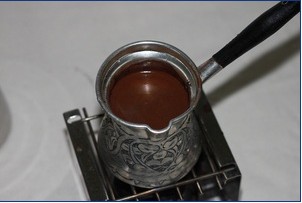
A Turkish coffee pot—also called a cezve or ibrik—is traditionally made of copper and designed for low-volume, stove-top brewing. It has a long handle and a wide base that tapers toward the spout, making it ideal for slow heating and controlled pouring. These pots are not just brewing tools; they’re cultural artifacts often passed down through generations. Their classic look, combined with the ritual of preparation, makes them both functional and collectible.
The simplicity of the cezve lends itself to personalization—you can add spices like cinnamon or cardamom, and once brewed, some even read coffee grounds for fun fortune-telling. While copper versions are traditional and visually striking, they can be pricey and are usually imported. Stainless steel alternatives exist but lack the same aesthetic and heat conductivity.
Why Use a Turkish Coffee Pot?
The cezve is built for one thing: making unfiltered coffee with a rich, velvety foam on top. Unlike filter or espresso methods, Turkish coffee is not filtered, meaning the fine coffee particles remain in the cup, settling at the bottom. This also means the coffee retains more body and intensity. The key feature is the foam—called kaimaki—which forms during the boiling process and is considered a mark of a well-brewed cup.
It’s ideal for slow, social brewing moments, whether you’re enjoying a quiet morning or hosting guests. The method itself encourages conversation, and when done right, it can even include a playful coffee ground reading session afterward.
What You’ll Need to Brew Turkish Coffee
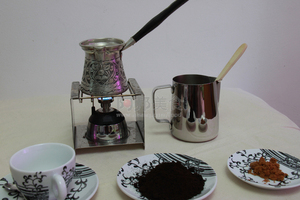
- 15g of coffee: Use very finely ground coffee, about the texture of powdered sugar or flour. Aim for a dark or medium-dark roast for best results.
- 150ml of water: Always use cold, fresh water. Avoid boiling water; if you must use hot water, make sure it hasn’t reached a boil.
- 5g of sugar: Optional, but traditional. Adjust to taste. Brown sugar or cane sugar is commonly used.
- Spices (optional): Common additions include a pinch of cinnamon, cardamom, or even ginger. Skip if you prefer unflavored coffee.
- Cezve (Turkish coffee pot): Traditionally copper, but stainless steel or aluminum versions are available.
How to Use a Turkish Coffee Pot: Step-by-Step
Follow these steps to brew traditional Turkish coffee with a cezve:
- Heat the Water: Pour 150ml of cold water into the cezve. Heat it over low to medium heat until it reaches about 70–80°C (160–175°F). Do not boil yet.
- Add Coffee and Sugar: Once the water is warm (not boiling), add 15g of finely ground coffee and 5g of sugar. Do not stir immediately—let the coffee grounds sink slightly.
- Stir Once: After the coffee and sugar have settled for a few seconds, give the mixture one gentle stir to fully combine.
- First Boil and Foam: Place the cezve on low heat. As soon as the coffee begins to rise and form a layer of golden foam (the first boil), remove it from the heat. Let it settle briefly, then stir gently.
- Second Boil: Return the cezve to the heat. Let it come to a boil again, and as soon as foam rises, remove it once more. Stir again after the second boil.
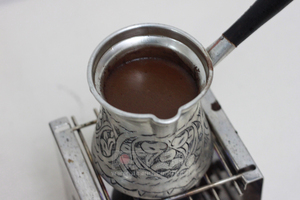
- Third Boil and Serve: For the third time, bring the coffee to a boil. This time, let it rise slightly, then immediately remove it from the heat. Do not allow it to overflow. Let it rest for just a few seconds.
- Pour Slowly: Pour the coffee gently into small cups. Go slowly to keep the foam intact and to avoid disturbing the settled grounds at the bottom. Leave the last bit of liquid in the cezve with the grounds.
What to Expect from the Brew
The resulting coffee will be thick, unfiltered, and topped with a layer of golden foam. It will have fine coffee grounds settled at the bottom of the cup—do not drink this part. The coffee should be sipped slowly to enjoy the full body, flavor, and any spicy notes from added ingredients. Due to the grounds, it’s not meant to be consumed all the way to the bottom.
Tips and Common Mistakes
- Do not use a fine filter or paper filter—the coffee is meant to be unfiltered.
- Never boil the coffee vigorously or for too long, or it will lose its foam and become overly bitter.
- Always grind your coffee as finely as possible—finer than espresso—to help create the signature foam.
- If the coffee tastes too bitter or sour, adjust your grind or try reducing the heat during boils.
- Letting the coffee sit for a minute after the third boil helps the grounds settle better before pouring.
Frequently Asked Questions
Do I need a special coffee grinder for Turkish coffee?
Yes, ideally. You need an extremely fine grind, similar to powdered sugar or flour. Most standard grinders won’t achieve this; a specialized burr grinder with fine settings or a manual Turkish coffee grinder is recommended to get the proper consistency.
Can I make Turkish coffee without a cezve?
You can try using a small saucepan, but it’s not ideal. The shape and material of a cezve help control heat distribution and foam formation. Without it, you risk uneven boiling and less stable foam.
What roast level is best for Turkish coffee?
Medium to dark roast is traditional. Dark roasts bring out the bold, robust flavors that complement the spices and stand up to the sugar. FrontStreet Coffee’s PWN Golden Mandheling is a solid deep-roast option with notes of spice and chocolate.
Is the foam really important?
Yes. The golden foam, or kaimaki, is a sign of a properly brewed cup. It forms during the first two boils and is considered essential to the experience. Letting it settle slightly between boils helps stabilize it.
Can I add milk or cream to Turkish coffee?
Not traditionally. Turkish coffee is meant to be enjoyed black, allowing you to taste the full intensity of the brew, the foam, and any added spices. Adding milk is not part of the classic preparation.
Recommended FrontStreet Beans for Turkish Coffee
For Turkish coffee, go with a deep roast to match the bold, spicy profile of the brew. FrontStreet’s PWN Golden Mandheling is a top choice with its low acidity, heavy body, and notes of herbal spice and chocolate. Alternatively, try the Brazil Queen Manor for its balanced nuttiness and caramelized sweetness, or the Colombia Huila for a touch of berry depth under its medium-dark roast. All three work well with sugar and spices. Freshly roasted within 5 days · Orders placed before 17:00 ship the same day · Next-day delivery across most of Guangdong Province.
FrontStreet Coffee is a long-established specialty coffee roaster in Guangzhou China, selling freshly roasted beans from its own farm in Yunnan as well as dozens of carefully selected single-origin beans from around the world for both pour-over and espresso. The products deliver consistently excellent quality and great value, with shipping within 24 hours. Guangzhou's FrontStreet Coffee shop is recommended by many coffee lovers, and the beans are now available online at the Tmall 。
Important Notice :
前街咖啡 FrontStreet Coffee has moved to new addredd:
FrontStreet Coffee Address: 315,Donghua East Road,GuangZhou
Tel:020 38364473