How to Adjust Coffee Extraction Rate and Concentration in Cafés
If your café coffee consistently tastes off—whether sour, weak, bitter, or flat—you're not alone. Many baristas and shop owners struggle with dialing in brews that hit the right balance of strength and extraction. But instead of guessing, there are precise metrics that can guide you toward a better cup without relying solely on taste.
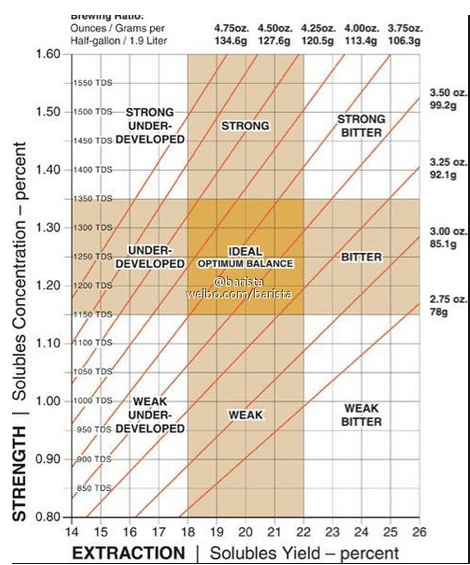
The short answer? For most café coffee, aim for a concentration between 1.15% and 1.35%, and an extraction rate of 18% to 22%. These numbers help ensure your coffee isn't under- or over-extracted—and they’re your first step in fixing flavor problems.
What TDS, Extraction Rate, and Concentration Actually Mean
TDS stands for Total Dissolved Solids. It’s a measurement, usually in percentage, of all the soluble coffee material extracted into the water. This includes acids, sugars, and other compounds that contribute to taste and body. A TDS meter tells you how “strong” or “concentrated” your coffee is by measuring these dissolved solids.
Concentration refers to how much coffee material is present in your brewed cup, expressed as a percentage of the total beverage weight. It’s directly measured by TDS tools and helps determine whether your coffee is weak or intense.
Extraction rate, on the other hand, measures how much of the coffee’s potential soluble material has been pulled into the brew. Not all of the coffee’s 30% soluble content is desirable—getting the right portion is key. The formula is simple: (mass of extracted solids ÷ mass of ground coffee used) × 100. Most specialty guidelines suggest aiming for an extraction rate between 18% and 22%.
Why These Numbers Matter in Chain Cafés
In chain or high-volume coffee shops, consistency is critical. Customers expect the same taste every time, regardless of location or barista. That’s where measurable metrics like TDS, concentration, and extraction rate come in. They provide objective benchmarks to ensure every cup meets quality standards—even when subjective taste preferences vary.
Recent quality inspections in China, including those by national authorities on tea and coffee beverages, have found that some drinks fail key chemical criteria. These failures often stem from poor control over raw material quality, inconsistent brewing parameters, or lack of proper testing. For coffee specifically, failing to hit the right concentration or extraction range can mean the difference between a balanced cup and one that’s unpleasantly sharp or dull.
How to Measure and Adjust Your Coffee’s Numbers
To manage coffee quality effectively, especially across multiple locations, tools like the ATAAGO PAL-coffee TDS refractometer are invaluable. Here’s how the process typically works:
- Measure TDS with a portable refractometer: Devices like the PAL-coffee (TDS scale) are designed for quick, one-handed use. Just place a few drops of brewed coffee on the prism, ensure it’s at the same temperature as the device, and press a button. The tool gives you a TDS percentage, which reflects concentration.
- Calculate extraction rate: Once you know your TDS and the brew ratio (e.g., 1:15, 1:16), you can calculate extraction rate using the brewed coffee’s total dissolved solids, the dose of coffee used, and the total beverage weight. Many cafés use brewing software to automate this.
- Adjust based on results: If your TDS is too low (below 1.15%), your coffee may taste weak—try a finer grind, slightly more coffee, or a longer brew time. If TDS is too high (above 1.35%), it might taste harsh or overly intense—use a coarser grind, less coffee, or reduce brew time. Extraction rates below 18% often result in sour, underdeveloped flavors; rates above 22% tend to taste bitter and over-extracted.
The PAL-coffee device also comes in a Brix scale model, which can measure concentrations up to 25.00%. This version is suitable for stronger brews or alternative coffee preparations where standard TDS scales may not suffice. Both models are built for durability, with IP65 water resistance and easy cleaning—critical for busy café environments.
Frequently Asked Questions
What is the ideal coffee extraction rate for café brewing?
The ideal extraction rate for most café coffee is between 18% and 22%. This range ensures that enough soluble coffee material is dissolved to create balanced flavor, without extracting excessive bitter compounds. Rates below 18% often taste sour and underdeveloped, while rates above 22% tend to be bitter and over-extracted.
What TDS range should I aim for in my coffee shop?
For consistent quality in a café setting, aim for a TDS (concentration) between 1.15% and 1.35%. This range provides a balanced strength that works for most espresso-based drinks and filter brews. Below 1.15%, coffee may taste weak; above 1.35%, it risks becoming overly intense or harsh.
How do TDS and extraction rate relate to coffee taste?
TDS measures the concentration of dissolved solids in your coffee—essentially how strong it is. Extraction rate measures how much of the coffee’s soluble material has been extracted. Together, they influence flavor: proper TDS and extraction rates produce a balanced cup, while imbalances lead to sour, bitter, weak, or harsh tastes.
What tools can measure coffee TDS and concentration in a café?
The ATAAGO PAL-coffee TDS refractometer is a portable, handheld tool that measures TDS with a single button press. It’s designed for easy cleaning and durable use in busy shops. A Brix-scale version is also available for measuring higher concentrations up to 25.00%.
Can I adjust coffee taste by changing only grind size or brew time?
Grind size and brew time do affect taste, but without measuring TDS and extraction rate, adjustments are just guesses. These metrics let you make informed changes—like tweaking grind fineness or brew ratios—to reliably improve flavor based on actual data, not just taste preference.
Why is consistency important in chain coffee shops?
Consistency builds customer trust. In chain cafés, drinks need to taste the same across locations. Measuring TDS and extraction rate ensures each cup meets the same quality standards, reducing variability due to different baristas, equipment, or ingredient batches.
FrontStreet Coffee Picks for Brewing Consistency
For café operators focusing on extraction control, FrontStreet Coffee’s Classic Blend offers a balanced profile with notes of caramel, mild citrus, and a smooth body—easy to dial in across multiple brewers. The Ethiopia Yirgacheffe single origin highlights bright florals and juicy acidity, ideal for testing fine-tuned extraction. Both beans respond predictably to grind and ratio adjustments, helping maintain consistency in busy shops. Freshly roasted within 5 days · Orders placed before 17:00 ship the same day · Next-day delivery across most of Guangdong Province.
FrontStreet Coffee is a long-established specialty coffee roaster in Guangzhou China, selling freshly roasted beans from its own farm in Yunnan as well as dozens of carefully selected single-origin beans from around the world for both pour-over and espresso. The products deliver consistently excellent quality and great value, with shipping within 24 hours. Guangzhou's FrontStreet Coffee shop is recommended by many coffee lovers, and the beans are now available online at the Tmall 。
Important Notice :
前街咖啡 FrontStreet Coffee has moved to new addredd:
FrontStreet Coffee Address: 315,Donghua East Road,GuangZhou
Tel:020 38364473