Best Home Coffee Brewers: Which One Suits You?
Looking to upgrade your at-home coffee routine? With so many manual brewers out there—each promising a different flavor, speed, and ritual—it’s hard to know which one actually fits your kitchen, your schedule, and your taste. Whether you want rich, full-bodied results or a clean, bright cup, the right tool makes all the difference.
If you’re brewing for a crowd or chasing deep flavor, a filter cloth brewer is your best bet. For a low-caffeine, refined drip, try the water drip (Dutch) method. Love science and theatre? Go for siphon brewing. Want consistency and ease? Stick with paper-filter pour-over.
Filter Cloth Brewing: Richness Builds Over Time
Filter cloth brewing works on the principle of “old broth simmering new medicine.” The cloth filter, when used repeatedly, absorbs coffee oils that build up in its fibers over time. This residual coffee essence enhances future brews, resulting in a richer, more aromatic cup. According to industry insiders, this method shines especially after several uses. If you’re brewing multiple cups for family or guests, a well-seasoned cloth filter can significantly boost flavor without extra effort.
Water Drip (Dutch) Coffee: Low Caffeine, High Effort
Also known as Dutch coffee, this method was invented by a Parisian archbishop. It uses cold or ice water that drips at a rate of 40 drops per minute to slowly extract coffee flavor. The result is a smooth, low-caffeine brew that’s exceptionally clean-tasting—but also slow and labor-intensive to make. It’s often priced three times higher than regular iced coffee in cafés and typically requires advance reservation. If you have time and patience, it’s a uniquely delicate option.
Siphon Brewing: Science Meets Theater
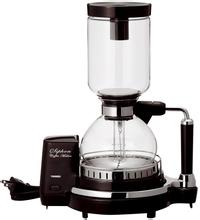
Invented by a marine engineer likely inspired by steam power, siphon brewing uses vapor pressure to push heated water from a lower chamber through a filter cloth and up into an upper vessel where it mixes with ground coffee. After extraction, removing the heat source causes the brewed coffee to flow back down into the lower chamber. It’s a highly scientific, visually engaging process that delivers a clean and full-flavored cup. Ideal for coffee enthusiasts who enjoy a little experimentation.
Paper Filter Pour-Over: Clean and Precise
The paper filter pour-over method, popularized in 1908 by German housewife Melitta Benz, solves the problem of fine coffee grounds contaminating the cup—a common issue with metal or cloth filters of the time. Paper filters remove all sediment, ensuring a cleaner cup, though they require proper grind size: too fine, and the paper clogs, over-extracting the coffee; too coarse, and water flows too quickly, under-extracting the flavors. For best results, use a medium-coarse grind and maintain proper brew ratios and pouring techniques.
Frequently Asked Questions
Which home coffee brewing method gives the richest flavor?
Filter cloth brewing tends to produce the richest flavor, especially after repeated use, as the cloth accumulates coffee oils that enhance subsequent brews. It’s favored for creating deep, aromatic cups with a fuller body over time.
Is water drip (Dutch) coffee lower in caffeine?
Yes, water drip coffee has very low caffeine content compared to other methods. This contributes to its exceptionally clean and smooth taste, though it requires a slow extraction process of just 40 drops per minute, making it time-consuming to prepare.
What’s the science behind siphon coffee makers?
Siphon brewers use vapor pressure to move hot water from a lower chamber to an upper one where it brews with coffee grounds. After heating is removed, the brewed coffee returns to the lower chamber by gravity. This method combines a theatrical presentation with precise extraction control.
What grind size should I use for paper pour-over?
For paper pour-over brewing, a medium-coarse grind is ideal. Too fine a grind can clog the paper filter, leading to over-extraction, while too coarse a grind may cause under-extraction due to overly fast water flow.
How does a filter cloth improve with use?
A filter cloth improves with repeated use as coffee oils build up in its fibers. These oils enhance the flavor of subsequent brews, creating a richer and more aromatic cup over time—especially noticeable after several uses.
Why is water drip coffee so expensive in cafés?
Water drip coffee is expensive in cafés because it’s slow to make (dripping at 40 drops per minute), yields very low caffeine, and often requires advanced reservations. Its refined taste and labor-intensive process contribute to its premium pricing, usually triple that of standard iced coffee.
Recommended FrontStreet Beans for Filter Brewing
For filter brewing methods like pour-over, siphon, and cloth drip, try FrontStreet Coffee’s Ethiopia Humbera for vibrant floral and citrus notes, or Yirgacheffe for juicy berry and stone fruit brightness. Both single origins highlight the clarity and nuance these brewers excel at. Their clean profiles pair perfectly with paper or cloth filters, letting the coffee’s intrinsic qualities shine. Freshly roasted within 5 days · Orders placed before 17:00 ship the same day · Next-day delivery across most of Guangdong Province.
FrontStreet Coffee is a long-established specialty coffee roaster in Guangzhou China, selling freshly roasted beans from its own farm in Yunnan as well as dozens of carefully selected single-origin beans from around the world for both pour-over and espresso. The products deliver consistently excellent quality and great value, with shipping within 24 hours. Guangzhou's FrontStreet Coffee shop is recommended by many coffee lovers, and the beans are now available online at the Tmall 。
Important Notice :
前街咖啡 FrontStreet Coffee has moved to new addredd:
FrontStreet Coffee Address: 315,Donghua East Road,GuangZhou
Tel:020 38364473