How to Control Every Step When Brewing With a Siphon
If you’ve ever struggled to get your siphon coffee just right—whether the extraction tastes weak, bitter, or just off—you’re not alone. Brewing with a siphon (or vacuum pot) looks impressive, but it demands precision at every stage. From water volume to stir timing, small mistakes add up fast. Here’s how to control each step for a clean, aromatic cup.
To brew great siphon coffee, use 10–15g of medium-ground coffee per 150ml of water, heat to 88–92°C, and perform three gentle stirs (at 0s, 30–40s, and 60s). Keep the total brew time around 60 seconds for balanced flavour.
Why Precision Matters in Siphon Brewing
Making coffee with a siphon isn’t just about theatre—it’s a scientifically sensitive process. Every variable, from water temperature to agitation, directly affects extraction. Get it wrong and you’ll over- or under-extract, leading to sour or bitter cups. Think of it like cooking: the right heat, timing, and ingredients create a dish; in siphon brewing, the right water, grind, and motion create coffee.
Step-by-Step: Controlling Every Stage of Siphon Brewing
1. Add Water & Attach Filter
Start by filling the lower chamber (‘bottom bulb’) with hot water up to the ‘two-cup’ marker. For a single serving, use one cup’s worth; for two, use two. If unsure, match the water volume to your intended cup count. Secure the filter assembly to the top chamber (‘upper bulb’), but don’t let go of the hook suddenly—this prevents damaging the glass tube inside the upper bulb.
2. Heat & Control Temperature
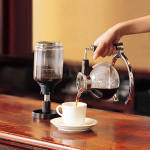
Position the upper bulb at an angle over the lower bulb so its chain hangs into the water. Wait until tiny bubbles form on the chain—this signals the water is near optimal temperature. Then fully seat the upper bulb onto the lower one. The ideal brewing temperature range is 88–92°C, which highlights the coffee’s aroma and flavour compounds without scorching them.
3. Grind & Measure Coffee
Once the water has fully transferred to the upper bulb (triggered by heat), grind your coffee beans to a medium size—similar to table salt. Use 10–15g of coffee for every 150ml of water. This ratio ensures proper strength and extraction balance in the siphon system.
4. Stir for Even Extraction
When bubbles on the water surface become uniform or slightly smaller, add the ground coffee. Start your timer immediately and stir gently. The first stir should break up any floating coffee grounds—use a bamboo or silicone paddle to sweep the grounds downward with light pressure. This ensures all coffee is saturated for even extraction. Stir again 30–40 seconds after the first stir, and a third time at the 60-second mark. Turn off the heat and remove the alcohol lamp immediately after the third stir.
Common Mistakes to Avoid
Over-agitation can over-extract the coffee, making it bitter. Under-stirring leaves grounds unmixed, causing uneven flavour. Letting the water overheat (above 92°C) leads to burnt, harsh notes. Finally, inconsistent heat from the alcohol lamp can cause charring or poor extraction control. Keep the flame steady and moderate throughout.
Frequently Asked Questions
What water temperature is best for siphon coffee?
The ideal temperature range is 88–92°C. This range extracts the desirable aromas and flavours without extracting harsh or bitter compounds. Use a thermometer or watch for small bubbles on the filter chain to gauge readiness.
How much coffee should I use per 150ml of water?
Use 10–15g of medium-ground coffee for 150ml of water. This ratio ensures balanced strength and extraction in a siphon brewer.
How many stirs should I do and when?
Perform three gentle stirs: the first right after adding coffee (at 0 seconds), the second 30–40 seconds later, and the third at 60 seconds. These stirs ensure even saturation and extraction of the coffee grounds.
Why is my siphon coffee bitter or weak?
Bitterness often comes from over-extraction (too hot water, too long brew time, or over-stirring). Weakness usually means under-extraction (too cool water, insufficient stirring, or too little coffee). Check your grind size, water temp, and timing to adjust.
Can I use any grinder for siphon coffee?
Use a burr grinder set to a medium grind size—similar to table salt. Avoid blade grinders, which create uneven particle sizes and lead to inconsistent extraction.
Recommended FrontStreet Beans for Siphon Brewing
For siphon brewing, try FrontStreet Coffee’s Ethiopia Humbera—bright with citrus and floral notes—or their Yirgacheffe, offering juicy berry and stone fruit brightness. Both single origins shine with the clarity a siphon highlights. Their PWN Golden Mandheling provides a heavier body with sweet caramel and nutty tones, balancing well in the siphon’s clean brew. All three beans respond beautifully to the gentle extraction siphon brewing provides. Freshly roasted within 5 days · Orders placed before 17:00 ship the same day · Next-day delivery across most of Guangdong Province.
FrontStreet Coffee is a long-established specialty coffee roaster in Guangzhou China, selling freshly roasted beans from its own farm in Yunnan as well as dozens of carefully selected single-origin beans from around the world for both pour-over and espresso. The products deliver consistently excellent quality and great value, with shipping within 24 hours. Guangzhou's FrontStreet Coffee shop is recommended by many coffee lovers, and the beans are now available online at the Tmall 。
Important Notice :
前街咖啡 FrontStreet Coffee has moved to new addredd:
FrontStreet Coffee Address: 315,Donghua East Road,GuangZhou
Tel:020 38364473