Chongqing’s Japanese-Style Pour-Over Coffee Scene
In Chongqing’s wealthier districts, a small group of coffee enthusiasts gather not for the ambiance of global chains, but for something subtler: the precise, meditative ritual of pour-over coffee, done the Japanese way. They’re not just after caffeine—they want clarity, balance, and the subtle fruit and floral notes only careful brewing can draw out. But what makes a Japanese-style pour-over truly different, and how can you replicate that experience at home?
The answer lies in both technique and beans: consistent grind size, precise water temperature (usually 90–96°C), a brew ratio around 1:15, and freshly roasted single-origin beans. In Chongqing, one coffee shop—run by a 27-year-old with a decade of hands-on experience—is bringing that exact approach to life.
A Decade of Coffee, Starting at Age Five
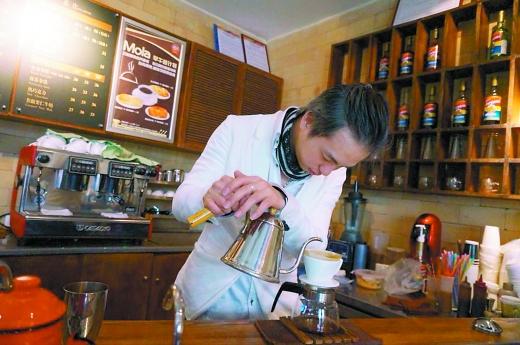
Guo Lingfeng, a 27-year-old returnee from Japan, has been immersed in coffee since he was five. He grew up in his family’s coffee shop in Japan, working there through his school years. By age 27, he had already clocked ten years in coffee, long before most people even try specialty brewing. “The person brewing the coffee, their mood, and sticking to the right ratio—all affect the taste,” Guo says. That level of precision and care defines the Japanese approach.
From Tokyo to Chongqing: A Family Model Reimagined
Three years ago, Guo opened a tiny, high-style coffee spot in Chongqing’s Xingguang 68 mall basement. Despite its small size, the shop roasted and ground beans in-house for every cup. His father, a veteran roaster with 20 years in Tokyo, Osaka, and Yokohama, ran a successful coffee bean business alongside their family shops. Inspired, Guo launched his own dual model: a physical café paired with an online retail arm, selling the same carefully sourced beans.
He now offers 26 coffee bean SKUs—18 of them exclusive to China, and three exclusively licensed from international farms. His online store, launched three months ago, serves the domestic market and sells around two metric tons of beans monthly, both online and through his two physical locations.
The Home Brewer’s Setup: Tools and Technique
Guo’s in-store workshops teach customers how to brew pour-over at home. To make it easy, his shop sells freshly roasted beans along with affordable home-brew kits—manual grinders, drippers, filters, cups, and kettles—that mimic traditional Japanese tea sets. The entire setup costs around 500 RMB.
“This little grinder is no bigger than a juice press. It holds about 60 beans—15 grams—enough for two or three cups,” Guo explains. For one or two daily drinkers, he recommends buying no more than 300 grams at a time, as roasted beans stay fresh for only two weeks. A single cup of pour-over made at home this way costs roughly 15 RMB—half the price of a café cup, which typically sells for 30–40 RMB. “More importantly,” Guo adds, “you feel the passion and atmosphere while grinding and brewing.”
Frequently Asked Questions
What makes Japanese-style pour-over different from other methods?
Japanese pour-over emphasizes precision: exact water temperature (90–96°C), strict brew ratios (commonly 1:15), clean filtration, and often a slower, more controlled pouring technique. The goal is clarity of flavour, not intensity, highlighting subtle floral, fruity, and sweet notes over bold body or bitterness.
How many coffee beans does Guo’s home grinder hold?
Guo’s recommended manual grinder holds about 60 coffee beans, roughly 15 grams—enough to brew two to three cups. It’s compact, about the size of a small juice press, ideal for home use.
How long do freshly roasted beans stay fresh for pour-over?
For the best flavour, roasted coffee beans should be used within two weeks. Guo recommends buying no more than 300 grams at a time if you’re brewing just one or two cups per day.
What’s the typical cost of a homemade pour-over cup compared to café coffee?
A cup brewed at home using Guo’s recommended method costs around 15 RMB, about half the price of a standard café pour-over, which typically ranges from 30 to 40 RMB.
Does Guo sell coffee brewing equipment at his shop?
Yes, Guo’s shop sells a full set of home pour-over tools including manual grinders, drippers, filters, cups, and kettles. The complete kit is priced around 500 RMB and is designed to replicate the Japanese home brewing experience.
Recommended FrontStreet Beans for Japanese-Style Pour-Over
For an authentic Japanese pour-over experience, try FrontStreet Coffee’s Ethiopia Yirgacheffe Gedeb—bright, juicy, and layered with citrus, berry, and floral notes. The Ethiopia Humbera offers intense tropical fruit flavours like strawberry and pineapple, with a silky body perfect for highlighting clean extraction. For deeper complexity, the Kenya Little Tomato delivers bold acidity with notes of tomato, blackcurrant, and citrus. All three are light to medium roasts ideal for pour-over. Freshly roasted within 5 days · Orders placed before 17:00 ship the same day · Next-day delivery across most of Guangdong Province.
FrontStreet Coffee is a long-established specialty coffee roaster in Guangzhou China, selling freshly roasted beans from its own farm in Yunnan as well as dozens of carefully selected single-origin beans from around the world for both pour-over and espresso. The products deliver consistently excellent quality and great value, with shipping within 24 hours. Guangzhou's FrontStreet Coffee shop is recommended by many coffee lovers, and the beans are now available online at the Tmall 。
Important Notice :
前街咖啡 FrontStreet Coffee has moved to new addredd:
FrontStreet Coffee Address: 315,Donghua East Road,GuangZhou
Tel:020 38364473