Latte Art Pouring: Proper Handle and Cup Grip Techniques
If you’ve ever struggled to pour a clean heart or tulip into your latte, the issue might not be your steaming or pouring technique — it could be how you’re holding the tools. Many beginner baristas waste months fiddling with awkward grips that make fluid movement nearly impossible. Getting your hands in the right place from the start saves time and frustration.
To pour great latte art, you’ll typically use one consistent pitcher grip and adapt your cup hold based on the pattern. Most baristas settle on one pitcher grip and rotate between four common cup holds depending on the design.
The Three Most Common Milk Pitcher Grips
There’s no universal right way to hold a milk pitcher, but three grips stand out for their control, stability, and suitability for different styles. Choosing the right one helps you pour cleaner lines, sharper edges, and more complex shapes.
1. Thumb-and-Index Finger Grip (Standard Handle Hold)
This is the most widely taught grip: you hold the pitcher’s handle between your thumb and index finger, with other fingers providing light support. It gives you fine control over milk flow, making it ideal for detailed designs and Korean-style layered patterns. Due to the grip strength required, it’s especially popular among male baristas.
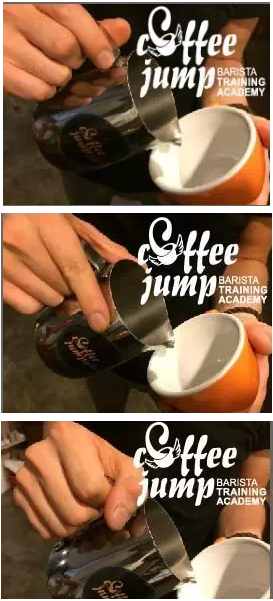
2. Palm-on-Body Grip (For Wide Movements)
Here, you grip the lower body of the pitcher with your thumb and index finger, rather than the handle. This lets you make larger, sweeping motions, useful for broader strokes or dynamic designs. It sacrifices some precision but adds flexibility for expressive pours.
3. Full Handle Grip (For Stability and Delicate Lines)
In this high-control grip, all fingers wrap around the pitcher’s handle. The full-hand grip boosts stability, which is essential for intricate, small-scale patterns like Japanese-style microfoam designs. It’s also favoured by many female baristas due to its balance of control and comfort.
How to Hold the Cup for Different Latte Art Patterns
Your cup grip isn’t fixed — it should change based on the latte art design you’re creating. The way you hold the cup affects how easily you can tilt, rotate, and manoeuvre it during pouring.
1. Full Palm Grip (For Single-Direction Patterns)
Hold the cup with your whole hand wrapped around it. This is best for straightforward, one-way designs like hearts, leaves, or tulips, where you tilt in a single consistent direction.
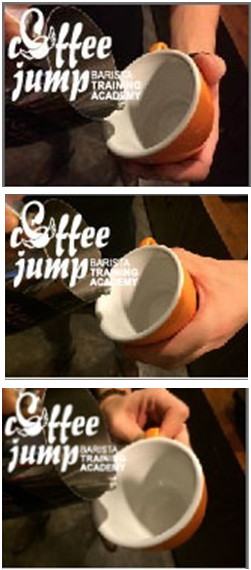
2. Thumb-and-Index (Mouth) Grip (For Complex, Rotational Patterns)
Grip the cup at the base of the handle, where your thumb and index finger naturally meet (the “thumb groove” or “v” of the hand). This 360-degree rotational grip allows you to turn the cup smoothly in any direction mid-pour. It’s essential for multi-part or challenging designs that shift angles.
3. Finger-on-Handle Grip (For Simple Rotation)
Grab the cup’s handle with your fingers. This offers moderate control and limited rotation — not ideal for highly complex patterns, but good enough for basic shapes and it keeps your fingers away from the hottest part of the cup.
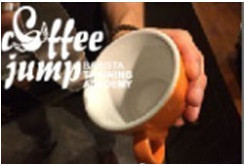
4. Reverse Cup Hold (For Reverse-Pour Designs)
This is a specialised grip: instead of the cup’s handle facing left (toward the barista), it faces right. It’s used for reverse-pour techniques, where you lay down a base layer, then flip the cup orientation mid-pour. Once finished, the cup returns to the standard left-facing position so the design is correctly oriented toward the customer.
Why Your Grip Matters in Latte Art
Many beginners focus solely on pour height, wrist flicks, or steaming technique — but if your hands aren’t in the right place, even perfect milk won’t save your pour. The right grip ensures stability, fluid motion, and control. Once you’ve mastered a grip (reaching what baristas call “person and pitcher as one”), you can experiment or adjust. But until then, consistency is key.
Frequently Asked Questions
What’s the best way to hold a milk pitcher for latte art?
The most common and beginner-friendly grip is using your thumb and index finger on the pitcher’s handle, with other fingers supporting the body. It gives you good flow control for detailed patterns and is suitable for most standard latte art designs. Other grips include holding the pitcher body itself for wider movements, or wrapping all fingers around the handle for maximum stability.
How should I hold the cup when pouring latte art?
It depends on the pattern. For single-direction designs like hearts or tulips, hold the cup with your whole palm. For complex, rotating patterns, use the thumb-and-index groove grip to turn the cup freely. For simpler rotation, grip the handle with your fingers. For reverse-pour techniques, hold the cup with its handle facing right instead of the usual left.
Does the pitcher grip affect the type of latte art I can pour?
Yes. A stable, controlled grip like the full-handle grip helps with fine, detailed patterns such as Japanese-style designs. A looser grip like the body grip lets you make big, expressive strokes. Using the wrong grip for your desired design can make clean pours much harder to achieve.
Why do some baristas hold the cup differently?
Different cup grips allow for different types of movement. Some grips let you rotate the cup more freely for advanced designs, while others are better for simple, one-direction pours. The cup hold you choose should match the complexity and style of the latte art you're aiming to create.
Is there a single best grip for all latte art?
No. Most baristas settle on one pitcher grip they’re comfortable with, but cup holds vary based on the design. Consistency in your chosen pitcher grip helps build muscle memory, while cup holds should be adapted to each pattern’s requirements.
Can my grip affect milk flow or pour stability?
Definitely. A proper grip gives you better control over how milk exits the spout, affecting pour speed, angle, and pattern sharpness. An awkward or unstable grip often leads to uneven pours, wobbly lines, or failed designs even with well-steamed milk.
Recommended FrontStreet Coffee Beans for Latte Art
For latte art that pops with rich crema, FrontStreet Coffee’s Commercial Blend is a reliable choice — it’s designed to produce thick, glossy microfoam and a balanced body that holds intricate patterns well. For a fruitier twist, try the Strawberry Candy Espresso, which brings a smooth crema and notes of berry and floral sweetness without sacrificing texture. Both blends are optimised for steady extractions that support smooth milk integration and stable latte art pours. Freshly roasted within 5 days · Orders placed before 17:00 ship the same day · Next-day delivery across most of Guangdong Province.
FrontStreet Coffee is a long-established specialty coffee roaster in Guangzhou China, selling freshly roasted beans from its own farm in Yunnan as well as dozens of carefully selected single-origin beans from around the world for both pour-over and espresso. The products deliver consistently excellent quality and great value, with shipping within 24 hours. Guangzhou's FrontStreet Coffee shop is recommended by many coffee lovers, and the beans are now available online at the Tmall 。
Important Notice :
前街咖啡 FrontStreet Coffee has moved to new addredd:
FrontStreet Coffee Address: 315,Donghua East Road,GuangZhou
Tel:020 38364473