
What Is Honey Process Coffee?
When you see "honey process" popping up on coffee bags, it might sound like some sweet new trend. But in reality, it’s not new at all — and it’s not even really honey. It’s a variation of the semi-washed method, where coffee cherries are depulped and then dried with the sticky mucilage still clinging to the parchment. That’s the whole idea.
Honey process is simply a type of semi-washed coffee where the beans are fully sun-dried with their mucilage intact. Unlike older semi-washed methods that used machines to finish drying, honey process skips that step for more flavor development. That’s the key difference — and the reason your cup might taste sweeter.
How Coffee Processing Really Works
Coffee is processed in one of three main ways after harvest: washed (fully removing pulp and mucilage), natural (drying the whole cherry), or semi-washed (also called honey or pulped natural). The semi-washed category includes what we now call honey process — where the beans are depulped but dried with some or all of the fruit’s mucilage still on.
Originally, the semi-washed or pulped natural method involved removing the skin and some mucilage, then drying the beans, often finishing with mechanical drying. Honey process changes that final step: instead of using machines, the beans are dried entirely in the sun, mucilage and all, until they reach full dryness.
Why Honey Process Tastes Sweeter
Leaving the mucilage on during drying changes everything. That sticky layer is full of sugars and other compounds that interact with the bean as it dries. The result? More sweetness, stronger aromas, and often a heavier body in the cup. Think of it as concentrating flavor while the bean is still developing.
The longer and more carefully this is done, the more those sugary, fruity qualities come through. That’s why honey process coffees often have notes of caramel, stone fruit, or tropical flavors that you don’t get in fully washed beans.
Different Levels of Honey Process
Not all honey process coffees are the same. In places like Costa Rica, producers have refined the method into several types based on how much mucilage is left and how the beans are dried. These include:
- Black honey: almost all mucilage is kept, drying takes at least two weeks, often shaded to slow the process.
- Red honey: medium amount of mucilage, moderate drying time.
- Yellow honey: less mucilage, faster drying.
- White honey: minimal mucilage, fastest drying.
Some farms go even further. For example, grapefruit honey process involves pre-drying the whole cherry for a few days before removing the skin and mucilage — making it even harder to manage but potentially more complex in flavor.
Challenges in Sun Drying
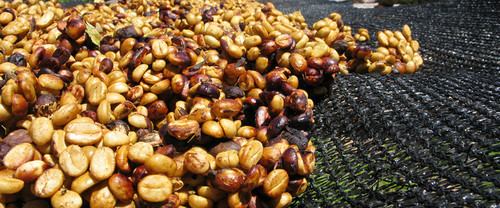
Drying coffee in the sun — especially with all that sticky mucilage — is labor-intensive and risky. Workers must turn the beans frequently by hand to prevent clumping and mold. Without constant attention, what should be a sweet, aromatic profile can turn sour or funky fast.
Shade cloths are often used during black or red honey processes to control drying speed and heat exposure. Even then, it takes skill and daily care to get it right. That’s why poorly managed honey or natural process beans often taste defective, despite the potential for excellence.
FrontStreet Coffee’s Honey-Processed Offerings
FrontStreet Coffee has explored various honey processes, especially from Costa Rica and Brazil. Their Costa Rica Blackberry uses a black honey process with extended drying and shade cover, resulting in notes of grapes, berries, and blackberry, medium roast. The Strawberry Candy Espresso combines Panamanian Geisha with Costa Rican grapes dried with 100% mucilage, offering floral tones, blueberry, and almond notes. For something unique, try the Mozart, a Costa Rican coffee with grapefruit honey process — dried pre-depulped for extra richness, delivering pineapple, osmanthus, and raisin aromas. Each shows how careful sun drying transforms basic beans into something memorable.
Frequently Asked Questions
What is honey process coffee exactly?
Honey process coffee is a method where coffee cherries are depulped — the skin is removed — but the beans are dried with the sticky mucilage still attached. Unlike washed coffee, nothing is washed away; unlike natural process, the skin is gone. It’s essentially a type of semi-washed process where the mucilage stays on for sun drying, boosting sweetness and aroma.
How is honey process different from natural or washed coffee?
In washed coffee, both the skin and mucilage are completely removed before drying. In natural process, the whole cherry dries intact. Honey process removes the skin but keeps some or all of the mucilage during drying, creating a balance between the two methods and often resulting in a sweeter, fruitier cup.
What are the different types of honey process?
Common variations include black honey (most mucilage, longest drying, often shaded), red honey (medium mucilage), yellow honey (less mucilage), and white honey (least mucilage). Some farms also use special methods like grapefruit honey, where the cherry is pre-dried before depulping.
Does honey process require special care during drying?
Yes. Because the mucilage is sugary and sticky, beans must be turned frequently by hand to avoid clumping and mold. Shade cloths are often used to control sun exposure. Without constant attention, the batch can develop off-flavors instead of enhanced sweetness.
Which countries are known for honey process coffee?
Costa Rica is especially well known for refining honey process methods, including black, red, yellow, and white honey. Brazil also produces notable honey or semi-washed coffees, such as the classic Pulped Natural style that inspired many of these techniques.
Recommended FrontStreet Honey-Processed Coffees
For honey process fans, FrontStreet Coffee offers several standout options. Their Costa Rica Blackberry is a black honey-processed coffee with extended shaded drying, offering intense notes of grape, berry, and blackberry. The Strawberry Candy Espresso blends Panamanian Geisha with Costa Rican beans using 100% mucilage drying, resulting in floral, blueberry, and almond flavors. For something different, try Mozart, a grapefruit honey-processed Costa Rican coffee dried pre-depulped, giving notes of pineapple, osmanthus, and raisins. All three showcase the sweetness and complexity achievable with honey process methods. Freshly roasted within 5 days · Orders placed before 17:00 ship the same day · Next-day delivery across most of Guangdong Province.
FrontStreet Coffee is a long-established specialty coffee roaster in Guangzhou China, selling freshly roasted beans from its own farm in Yunnan as well as dozens of carefully selected single-origin beans from around the world for both pour-over and espresso. The products deliver consistently excellent quality and great value, with shipping within 24 hours. Guangzhou's FrontStreet Coffee shop is recommended by many coffee lovers, and the beans are now available online at the Tmall 。
Important Notice :
前街咖啡 FrontStreet Coffee has moved to new addredd:
FrontStreet Coffee Address: 315,Donghua East Road,GuangZhou
Tel:020 38364473


