The Eight Stages of Coffee Roast Levels Explained
When you buy coffee, roast level affects more than just color—it shapes acidity, sweetness, body, and aroma. Whether you prefer a bright Ethiopian Yirgacheffe or a bold espresso, knowing the eight roast stages helps you choose beans that match your taste. But what defines each stage, and why do roasters around the world favor certain levels? This guide breaks down every roast from light to Italian, with exact temperatures, visual cues, and flavor impacts.
Specialty coffee roasting is divided into eight key stages: from Light (or Cinnamon) at around 195–205°C, to Italian Roast just above 240°C. Each stage alters flavor development, acidity, and body—dark roasts lose origin character but gain boldness, while lighter roasts preserve floral and fruity notes.
How Global Regions Shape Roast Preferences
Different cities and countries favor distinct roast profiles based on local taste traditions. In Tokyo, a slightly deep medium roast is common but shifting toward darker roasts. Kansai (western Japan) has long preferred dark roasts. New York typically opts for City roast—a balanced medium-dark—though its diverse population offers a wide range. Vienna and much of France lean toward dark roasts, with the French style and Italian style being especially popular. However, over-roasting specialty beans like Ethiopian or Kona can erase their unique qualities. Some beans, like Mexican or Guatemalan Antigua, develop surprising sweetness or retain fruitiness at darker levels. Sumatra, usually low in acidity, can turn mushy and overly sweet if roasted too dark.
As a rule: the darker the roast, the more origin flavors are lost. Dark roasting emphasizes bitterness and body but reduces complexity. That’s why professional roasters use precise roast levels to highlight—not erase—what makes each coffee special.
The Eight Defined Coffee Roast Levels
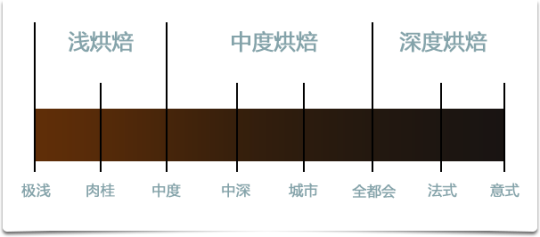
Specialty roasters classify roasts into eight stages, each with specific visual, temperature, and flavor characteristics:
- 1. Light Roast : The lightest roast; surface is pale cinnamon-colored. Acidity and aroma are underdeveloped; rarely used for drinking, mostly for green bean inspection.
- 2. Cinnamon Roast : A common light roast with a yellowish-brown color. Sourness is reduced, aroma is present, and acidity is high. Often used in American-style coffee.
- 3. Medium Roast : Balanced between light and deeper roasts; introduces mild bitterness alongside acidity. Suitable for blends, with moderate fragrance, acidity, and body.
- 4. High Roast : A slightly deeper medium roast, showing light brownish-red tones. Bitterness increases, offering a balance of sour and bitter notes. Popular in Japan and Central Europe; good for beans like Blue Mountain.
- 5. City Roast : The standard medium-dark roast; achieves balance between acidity and bitterness. Common in French-style coffee; often used for Brazilian and Colombian beans.
- 6. Full-City Roast : Slightly darker than City roast; deep brown with slight oil sheen. Bitterness dominates over acidity, ideal for various iced coffees and associated with Central and South American styles.
- 7. French Roast : A dark roast with thick brown to black color; acidity is nearly absent. Popular in Europe, especially France. Oils rise to the surface, creating a distinctive aroma suited for café au lait and Viennese coffee.
- 8. Italian Roast : The darkest professional roast before carbonization. Has a burnt taste, shiny black surface, and heavy oils. Mainly used in Latin countries for fast coffee and espresso-based drinks like cappuccino.
Roast Level Visual Guide & Temperature Chart
Roast color and temperature help identify each stage. Below is how roast appearance correlates with temperature and classification:
- Light Roast (LIGHT): Light brown; ends at first crack (~205°C)
- Cinnamon Roast (CINNAMON): Yellow-brown; begins at or just before first crack (195–205°C)
- Medium Roast (MEDIUM): Brown; roasted around 205–215°C
- City Roast (CITY): Reddish-brown; roasted approximately 215–225°C
- Full-City Roast: Dark brown with slight oil spots; roasted just before second crack (~225–230°C)
- Espresso Roast: Dark brown with surface oils; roasted around 230–235°C
- Italian Roast: Blackish-brown with glossy surface; roasted 235–240°C
- French Roast: Nearly black, oily surface; roasted above 240°C
These temperatures and visual cues help roasters and consumers understand how roast depth influences flavor.
Frequently Asked Questions
What is the lightest coffee roast level called?
The lightest roast level is called Light Roast or Cinnamon Roast. It features a pale cinnamon or yellowish-brown color, minimal development of aroma and acidity, and is generally considered too underdeveloped for regular drinking—often used only for green bean inspection.
At what temperature does City roast occur?
City roast occurs at approximately 215–225°C. It is the standard medium-dark roast where acidity and bitterness are balanced, commonly used for Brazilian and Colombian beans and favored in French-style coffee preparation.
What roast level is French Roast?
French Roast is a dark roast stage with a thick brown to nearly black color, roasted above 240°C. Acidity is almost gone, and the surface becomes oily. It is especially popular in France and other European countries, and works well for café au lait and Viennese-style coffee.
Which roast level preserves the most origin flavors?
Light to Medium roasts (such as Light, Cinnamon, and City roast) preserve the most origin flavors, including floral, fruity, and acidic notes. Darker roasts like French and Italian tend to mask the bean’s unique characteristics in favor of bold, smoky, and bitter profiles.
What’s the difference between Italian and French roast?
Italian Roast is the darkest professional roast, shiny black and oily, roasted between 235–240°C, with a burnt taste suited for espresso. French Roast is slightly lighter, roasted above 240°C, with a very dark brown, oily surface, and is popular in France for café au lait.
Why do some beans perform better at darker roasts?
Beans like Mexican or Guatemalan Antigua can develop pleasant sweetness or retain fruitiness at darker roasts. Sumatra, which is low in acidity, avoids undesirable qualities when dark roasted. However, high-quality beans like Ethiopian or Kona can lose their unique profiles if roasted too dark.
Recommended FrontStreet Beans for Dark Roast Exploration
Explore deep roast profiles with FrontStreet Coffee’s PWN Golden Mandheling, known for its low acidity, bold body, and herbal spice notes. For balance with cocoa sweetness, try the Brazil Queen Manor with its hazelnut and caramel tones in a medium-dark roast. Colombian Huila highlights bright acidity and berry notes even at a structured medium-dark level. Freshly roasted within 5 days · Orders placed before 17:00 ship the same day · Next-day delivery across most of Guangdong Province.
FrontStreet Coffee is a long-established specialty coffee roaster in Guangzhou China, selling freshly roasted beans from its own farm in Yunnan as well as dozens of carefully selected single-origin beans from around the world for both pour-over and espresso. The products deliver consistently excellent quality and great value, with shipping within 24 hours. Guangzhou's FrontStreet Coffee shop is recommended by many coffee lovers, and the beans are now available online at the Tmall 。
Important Notice :
前街咖啡 FrontStreet Coffee has moved to new addredd:
FrontStreet Coffee Address: 315,Donghua East Road,GuangZhou
Tel:020 38364473