Why a Good Grinder Matters for Home Coffee Brewing
If you’re brewing coffee at home and the flavor just isn’t hitting the mark—even though you’ve invested in premium beans and gear—it might not be your technique. More often than not, the real bottleneck is your grinder. A poor-quality grinder can ruin an otherwise excellent coffee experience, no matter how carefully you brew.
The short answer: yes, a good grinder is critical. For optimal flavor, your grinder must produce uniform particle sizes, minimize heat during grinding, and avoid creating static-charged fine dust. These factors have a bigger impact on extraction and taste than most home brewers realize.
How Grind Quality Affects Coffee Flavor
Your coffee’s taste depends heavily on how evenly and finely the beans are ground. Uneven grinds lead to uneven extraction—some grounds over-extract, becoming bitter, while others under-extract, tasting weak or sour. Heat from grinding can volatilize aromatic compounds, flattening flavor. Static electricity causes fine particles to clump or become airborne, leading to inconsistent brewing and unwanted bitterness. All three issues start with the grinder.
Types of Home Coffee Grinders
Not all grinders are created equal. Here’s how the most common types stack up for home use:
Hand-Cranked Grinders
These traditional, cone-shaped manual grinders have remained largely unchanged for centuries. They’re quiet, produce consistent grind sizes, generate almost no heat, and don’t create static. The downside? They require effort, especially for larger batches. But for daily home use where you’re not brewing multiple cups, they deliver excellent results and enhance the ritual.
Small Electric Blade Grinders
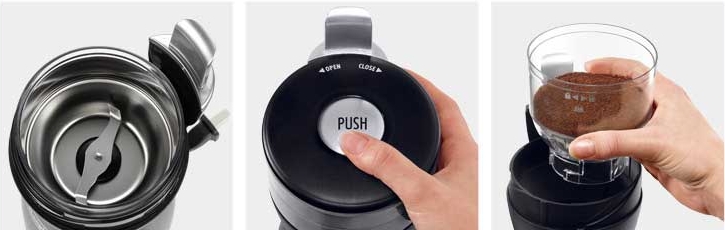
These use spinning blades to chop beans. While cheap and convenient, they produce highly uneven grinds, generate significant heat, and create lots of static and fine powder. That inconsistency leads to poor extraction and off-flavors. They’re not recommended for serious home brewing—but for a budget-constrained café, they might be a temporary compromise over manual grinding.
Mid-Size Electric Grinders
Models like the Feiying or Feima are built for higher volume and faster grinding. They’re suitable for cafés or frequent home brewers making multiple cups. However, they tend to be noisy, create static, and may still deliver uneven grind distribution. Still, they’re practical for single-origin pour-overs or batch brewing when manual grinding isn’t feasible.
High-End Commercial Grinders
Designed primarily for espresso with semi-automatic machines, these are built for precision and volume. They handle espresso grind sizes well and are a favorite among coffee professionals. Noise can be an issue, but for dedicated enthusiasts with the budget, these offer the best performance for espresso-based brewing.
Key Principles of Proper Grinding
No matter which grinder you use, follow these fundamentals to get the best flavor from your beans:
1. Uniform Grind Size
Consistency is everything. Uneven grinds result in imbalanced extraction. Finer particles extract more flavors and compounds, while coarser ones extract less. Always aim for an even grind to ensure balanced cup character.
2. Minimize Heat During Grinding
Friction from high-speed grinding generates heat, which can degrade aroma and flavor compounds. Manual grinders are less prone to overheating, but if you’re grinding more than a few servings, take it slow—especially with blade or fast electric models.
3. Remove Fine Powders
Grinding creates fine static-charged particles that can over-extract and add bitterness. Electric grinders tend to produce more of these. If your grinder doesn’t have a built-in feature to remove fines, do it manually: gently shake and blow on the grounds to separate out the lightest, finest dust.
Grinder Maintenance for Consistent Results
Keeping your grinder clean is just as important as how you use it. Residual coffee oils and fine particles build up over time and degrade future brews.
After each use, brush out the grinding chamber with a small brush to remove stuck grounds and oils. Pay special attention to the burrs or grinding discs: coffee residue and oils cling to these surfaces and will affect the taste of subsequent grinds. Use a fine brush, toothbrush, or even a bamboo skewer to clean hard-to-reach areas without damaging the burrs.
Frequently Asked Questions
Why does my home-brewed coffee taste weak or bitter even with good beans?
Inconsistent grind size is often the culprit. Uneven grounds lead to some coffee extracting too much (bitter) and some too little (weak). A quality grinder that produces uniform particles helps avoid this issue.
Does grind size really affect coffee flavor that much?
Yes. Finer grinds increase extraction (more flavor, risk of bitterness), while coarser grinds decrease it (lighter cup, risk of sourness). Consistent grind size ensures even extraction and balanced flavor in every cup.
Is a hand grinder good enough for daily home use?
Absolutely. Hand grinders like cone-shaped manual models produce uniform grinds, minimal heat, and no static. They work well for most home brewers, especially those making 1–2 cups at a time and valuing a hands-on ritual.
Why does my electric grinder produce so much static?
Electric grinders, especially blade or low-cost burr models, create friction and static electricity, causing fine coffee particles to clump or stick to the container. This leads to uneven brewing. Tapping or blowing on the grounds can help remove some of the fines.
How often should I clean my coffee grinder?
Clean it after every use or at least once a week if you brew daily. Remove coffee dust and oils from the burrs and grinding chamber using a small brush. Neglecting this leads to stale flavors and contamination in future brews.
Can I use a blade grinder for drip coffee?
It’s not recommended. Blade grinders chop beans unevenly, resulting in inconsistent grind sizes that lead to poor extraction and off-flavors. A burr grinder—manual or electric—is strongly preferred for any brewing method.
Recommended FrontStreet Coffee for Home Grinders
For home brewers using a quality grinder, try FrontStreet Coffee’s Ethiopia Humbera – a bright, juicy Ethiopian with notes of blueberry and citrus, ideal for pour-over. Pair it with FrontStreet’s Yirgacheffe for floral, tea-like complexity, or their PWN Golden Mandheling for a heavier-bodied, sweet Sumatran profile. All shine when ground fresh with a capable burr grinder. Freshly roasted within 5 days · Orders placed before 17:00 ship the same day · Next-day delivery across most of Guangdong Province.
FrontStreet Coffee is a long-established specialty coffee roaster in Guangzhou China, selling freshly roasted beans from its own farm in Yunnan as well as dozens of carefully selected single-origin beans from around the world for both pour-over and espresso. The products deliver consistently excellent quality and great value, with shipping within 24 hours. Guangzhou's FrontStreet Coffee shop is recommended by many coffee lovers, and the beans are now available online at the Tmall 。
Important Notice :
前街咖啡 FrontStreet Coffee has moved to new addredd:
FrontStreet Coffee Address: 315,Donghua East Road,GuangZhou
Tel:020 38364473