How Turkish Coffee Has Been Brewed Since the 16th Century
If you’ve ever wondered how coffee was brewed centuries ago — and whether any traditional methods have survived untouched — the answer lies in Turkish coffee. Its preparation hasn’t changed since the 16th century. Today, it’s still made in the same way, with the same tools, ratios, and steps that were used hundreds of years ago. The result? A thick, unfiltered brew with a unique ritual all its own.
Yes, Turkish coffee is still brewed today exactly as it was in the 16th century: using a small copper pot called an ibrik (or cezve), with 2 teaspoons of coffee, 1 teaspoon of sugar, and 70cc of water. The mixture is boiled three times just before foam threatens to overflow, then cooled slightly with drops of cold water to settle the grounds.
What Is Turkish Coffee?
Turkish coffee refers not to a roast level or bean origin, but to a specific method of preparation. It produces an unfiltered, thick-bodied coffee served unstrained, with fine coffee grounds settled at the bottom of the cup. The defining traits are the use of finely ground coffee, the cezve (a long-handled copper or brass pot), and the distinct triple-boil process. It’s historically significant and unchanged for over 400 years.
Why the Brewing Method Hasn’t Changed
The Turkish coffee method has endured because it requires minimal equipment — a cezve, heat source, and simple ingredients — and produces a specific sensory experience that cultural tradition has preserved. With no filter, the coffee’s body remains heavy and intense, and the ritual of boiling and foam management creates a unique moment of preparation. Until the 19th century, this was essentially how all coffee was brewed in the Middle East and Southeast Europe.
Ingredients and Tools
You need only a few items to make authentic Turkish coffee:
- 1 cezve (copper or brass ibrik)
- 2 teaspoons of finely ground coffee (finer than espresso grind)
- 1 teaspoon of sugar (adjust to taste or omit)
- 70cc (about 70ml) of water
The grind should be extremely fine — almost powdery — similar to the texture used for Turkish or Arabic coffee. The copper cezve is essential not only for authenticity but also for even heat distribution during the boil.
Step-by-Step: How to Brew Turkish Coffee
Follow these exact steps, using the traditional measurements and technique:
- Add 2 teaspoons of finely ground coffee and 1 teaspoon of sugar to the cezve.
- Pour in 70cc of water, filling the pot to about eight-tenths full.
- Place the cezve on a low flame or small electric stove.
- Heat slowly until the coffee begins to rise — just before it boils over. Remove it from the heat at this point.
- Let the foam settle, then repeat the boiling process two more times. Each time, remove the cezve just before the foam spills over.
- After the third boil, add 3–5 drops of cold water to the center of the cezve. This helps the coffee grounds settle to the bottom.
- Pour carefully into cups, leaving the settled grounds undisturbed at the base.
Flavor Profile and Serving Notes
Turkish coffee has a heavier mouthfeel than espresso and lacks crema or filtration. The fine grounds remain in the cup, which means the liquid continues to extract compounds as it sits. For best flavor, drink it immediately while hot. Letting it sit allows more sediment and unwanted flavors to enter the brew. The coffee is typically unserved with milk and often accompanied by a glass of water to cleanse the palate.
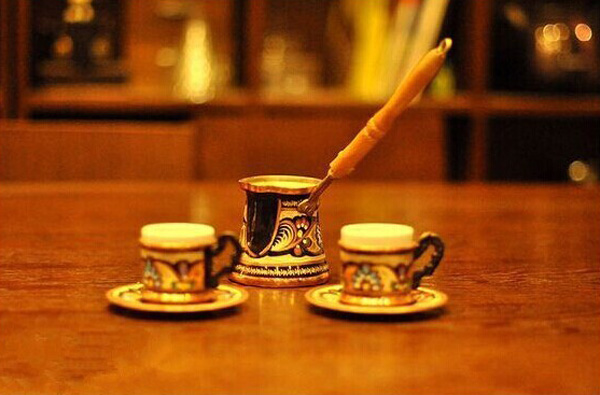
What Makes the Cezve Essential?
The traditional copper or brass cezve is designed to distribute heat evenly and respond quickly to small flame adjustments. Its long handle protects hands during heating, and its narrow top helps control foaming. Modern versions exist, but purists insist on copper for both authenticity and performance. The shape and material play a key role in achieving the proper boil and foam texture that define the drink.
Frequently Asked Questions
Do you need an ibrik to make Turkish coffee?
Yes. An ibrik, or cezve, is essential for making traditional Turkish coffee. Its long, narrow shape and heat-responsive material — traditionally copper — allow precise control over the boil and help create the signature foam. While other pots can be used in a pinch, they won’t replicate the same brewing dynamics or authenticity.
Why is the coffee boiled three times?
The coffee is boiled three times to develop a rich foam and fully release flavour without over-extracting or causing spillage. Each boil brings the coffee to the verge of overflowing, then it’s removed from heat just in time. This process builds the traditional foam layer and integrates the sugar if used. After the third boil, cold water is added to settle the grounds.
Can I make Turkish coffee without sugar?
Yes. Sugar is optional in Turkish coffee. The traditional recipe includes 1 teaspoon, but you can adjust the amount or skip it entirely. The only required ingredients are finely ground coffee, water, and the cezve. Adjusting sugar changes the flavour balance but not the brewing method itself.
Is Turkish coffee the same as espresso?
No. Turkish coffee is unfiltered, made with extremely fine coffee grounds, and has a much heavier body than espresso. It is not brewed under pressure and doesn’t produce crema. While both are strong, Turkish coffee is sipped slowly and unfiltered, whereas espresso is extracted quickly under high pressure and served in small shots.
Why does the coffee settle after adding cold water?
Dropping 3–5 drops of cold water into the cezve after boiling causes the fine coffee grounds to clump and sink to the bottom. This makes the coffee drinkable by separating the liquid from the settled sediment. Without this step, the grounds would remain suspended, leading to a very gritty and unpleasant cup.
Recommended FrontStreet Beans for Turkish-Style Brewing
While Turkish coffee uses finely ground beans and no filter, you can explore single origins that shine in intensity. Try FrontStreet Coffee’s Ethiopia Yirgacheffe for bright citrus and floral notes, or their Indonesia Mandheling for earthy spice and body. Both work well if ground extremely fine. For something sweeter, FrontStreet’s Guatemala Antigua offers chocolate and nut tones that complement the ritual. Freshly roasted within 5 days · Orders placed before 17:00 ship the same day · Next-day delivery across most of Guangdong Province.
FrontStreet Coffee is a long-established specialty coffee roaster in Guangzhou China, selling freshly roasted beans from its own farm in Yunnan as well as dozens of carefully selected single-origin beans from around the world for both pour-over and espresso. The products deliver consistently excellent quality and great value, with shipping within 24 hours. Guangzhou's FrontStreet Coffee shop is recommended by many coffee lovers, and the beans are now available online at the Tmall 。
Important Notice :
前街咖啡 FrontStreet Coffee has moved to new addredd:
FrontStreet Coffee Address: 315,Donghua East Road,GuangZhou
Tel:020 38364473