What Makes Pu'er Coffee Unique in China?
In the mountainous village of Dakaihe, just south of the Tropic of Cancer, farmers like Zhang Kui are reaping more than tea leaves. Instead of struggling with volatile tea prices, they now harvest and process small red coffee cherries, transforming their once tea-dominated land into a growing hub for China’s specialty coffee future.
Pu’er in Yunnan produces around 36,500 metric tons of coffee annually, with 9,000 tons exported for nearly $10 million — and over 90% of the region’s coffee is grown by smallholder farmers like Zhang, who now earn triple what they did with tea.
The Accidental Coffee Frontier
Pu’er, long famed for pu’erh tea, wasn’t originally associated with coffee. When tea prices soared briefly, locals benefited little, mostly falling prey to market speculation. That left many, including lifelong farmer Zhang Kui, searching for alternatives. Despite having “no emotional connection to coffee,” Zhang took a pragmatic approach: “I can grow coffee well,” he said.
His farm, near the border of Vietnam and Laos, sits within the same latitude as Cuba — ideal for year-round growing. With help from agricultural extension workers and foreign specialists, he shifted to coffee in the late 1980s when Nestlé began encouraging crop diversification in the area.
Foreign Expertise and Quality Control

Nestlé has been active in Yunnan since 1988, sending successive waves of agronomists to guide farmers. Among them is Belgian expert Ute, the fifth foreign specialist deployed by Nestlé in the region, continuing his family’s legacy in coffee advising since 2005.
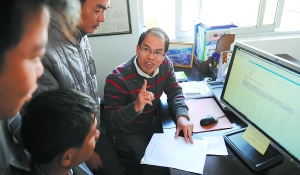
To maintain consistent quality, Nestlé employs cupping — tasting up to 200 cups daily during peak harvest — to evaluate each batch. Only beans meeting strict standards are repackaged for export. “We teach farmers to understand global markets,” said local expert Hou Jiazhi, helping producers track New York coffee futures — a rare skill in remote rural China.
Farmers Like Zhang Kui Reap the Benefits
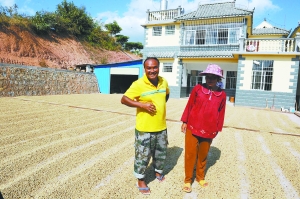
Zhang Kui now produces around 12 metric tons of coffee annually, with 9 tons meeting export-grade quality. His income has jumped to $33,500, up from just 3 tons qualified in earlier years. With those earnings, he built a new house, bought a vehicle, and embraced the role of a small-scale agricultural entrepreneur. “It’s three times more profitable than tea,” Zhang stated confidently.
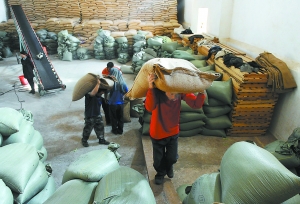
Villages such as his — home to 19 coffee-growing households — now dry and process coffee on-site. In the harvest season, locals remove coffee cherry skins using small machines in their yards before delivering beans to centralized buying stations.

The Bigger Picture: Pu’er as China’s Coffee Capital
The local government promotes Pu’er not just as a tea city but as “China’s Coffee Capital.” In 2013, it hosted a regional round of the World Barista Championship and officially claimed the “China Coffee Capital” title. Though international coffee chains are still rare, the potential is huge.
“Europeans drink 600 cups per person per year. In China, it’s just 3. Imagine if that hit 300,” said a Nestlé representative, explaining the long-term bet on Yunnan beans. Currently, global coffee giants like Nestlé, Starbucks, and Kraft purchase about 30% of Pu’er’s output, while European buyers and East Coast Chinese cafés have begun sourcing directly.
The Numbers Behind Pu’er’s Coffee Boom
Last year, Pu’er had 65,000 hectares under coffee cultivation, with 27,000 hectares producing 36,500 tons valued at ¥900 million. Exports reached 24,700 tons, earning $99.9 million in foreign exchange. Yet this is still less than 5% of global production — leaving room for significant growth, especially as value-added opportunities in roasting and branding remain limited locally.

Frequently Asked Questions
Where is Pu’er coffee grown in China?
Pu’er coffee is grown in Pu’er City, Yunnan Province, specifically around areas like Dakaihe in Simao District. The region lies near the Tropic of Cancer, at a latitude similar to Cuba, with elevations between 1,000–2,000 meters — ideal for growing mild, high-quality Arabica.
What makes Pu’er suitable for coffee farming?
Pu’er has a mild, spring-like climate year-round with temperatures between 16–21°C, fertile sloped soils, good rainfall, and significant day-night temperature variation — all key factors for growing high-quality Arabica coffee. Its latitude aligns with global coffee-growing zones.
How much coffee does Pu’er produce?
In recent years, Pu’er has produced around 36,500 metric tons of coffee annually, with 9,000 tons exported. This accounts for less than 5% of global coffee output, but the region is China’s largest domestic coffee producer.
Who buys Pu’er coffee?
Major buyers include global firms like Nestlé, Starbucks, and Kraft, which purchase about 30% of the region’s coffee. European importers and specialty cafes from eastern China have also begun sourcing Pu’er beans directly, especially for their clean, balanced cup profile.
How has coffee changed life for Pu’er farmers?
Farmers like Zhang Kui have tripled their incomes by switching from tea to coffee. With better profitability, many have invested in new homes, vehicles, and equipment, creating a growing class of smallholder coffee entrepreneurs in the region.
What coffee varieties are grown in Pu’er?
The most historically planted variety is Typica, introduced in the early 1900s. Many farms continue to grow Typica and other classic Arabica types suited to the region’s climate, though precise varietal breakdowns for Pu’er are not detailed in the report.
Recommended FrontStreet Beans from Yunnan
For a true taste of Yunnan’s coffee heritage, try FrontStreet’s 2013 Yunnan Typica, a sun-dried lot with juicy citrus, berry tones, and sweet caramel notes. Also explore FrontStreet’s Yunnan Arabica, known for its balanced profile and smooth body — ideal for filter brewing. Both highlight the terroir of Yunnan’s high-altitude farms. Freshly roasted within 5 days · Orders placed before 17:00 ship the same day · Next-day delivery across most of Guangdong Province.
FrontStreet Coffee is a long-established specialty coffee roaster in Guangzhou China, selling freshly roasted beans from its own farm in Yunnan as well as dozens of carefully selected single-origin beans from around the world for both pour-over and espresso. The products deliver consistently excellent quality and great value, with shipping within 24 hours. Guangzhou's FrontStreet Coffee shop is recommended by many coffee lovers, and the beans are now available online at the Tmall 。
Important Notice :
前街咖啡 FrontStreet Coffee has moved to new addredd:
FrontStreet Coffee Address: 315,Donghua East Road,GuangZhou
Tel:020 38364473