How Often Should You Clean Your Espresso Machine?
Ever wonder why your morning espresso sometimes tastes dull, bitter, or just ‘off’—even though you’re using the same beans, dose, and grind? One major culprit might be your espresso machine’s cleanliness—or lack of it. Many baristas and home users get conflicting advice: some say clean daily, others weekly, and a few claim you only need to rinse unless something looks wrong. But without solid evidence, how do you know what really works?
The short answer: to keep your espresso tasting its best, clean your machine’s brew group daily with detergent. At a bare minimum, clean it thoroughly at least once a week. Our controlled 19-day experiment found that machines cleaned daily produced significantly better-tasting espresso compared to those cleaned weekly or not at all.
The Question: How Often Should You Really Clean an Espresso Machine?
Coffee professionals frequently hear some version of: “How often should I clean my espresso machine?” Common answers include ‘once a day,’ ‘once a week,’ or ‘depending on how much coffee you make.’ But none of these answers are backed by published, controlled research. So we set out to find out for ourselves: does cleaning frequency actually affect the taste of the espresso you pull?
The Experiment: Testing Three Cleaning Frequencies Over 19 Days
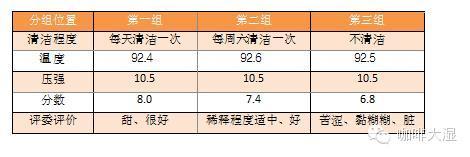
We designed a rigorous, 19-day experiment with three identical groups of espresso machines, grinders, and trained operators. The only variable? The cleaning schedule of the brew group (also called the group head or shower screen area—the most critical contact point for coffee and machine). The three groups were:
- Group 1: Cleaned with detergent powder once per day
- Group 2: Cleaned with detergent powder once per week
- Group 3: Not cleaned at all during the entire experiment
All other variables were strictly controlled. Machines were rotated to ensure equal usage across groups. Temperature and pressure readings were monitored throughout using a machine pressure and temperature gauge—no significant fluctuations were detected that could skew taste results. Each machine maintained consistent thermal performance.
The Tasting Panel: How We Judged Espresso Flavor
A panel of three trained expert judges evaluated the espresso from each group. To ensure fairness, one designated barista handled all espresso extractions and prepared all the cappuccinos used in the test. The coffee used was a standard Italian-style espresso blend, used at 22 days post-roast. Every shot was randomly assigned to the judges.
Judges scored each espresso on a standard 1–10 scale across six criteria:
- Crema color, consistency, and retention
- Taste balance
- Technical execution
- Overall flavor impression

The scores from all three judges were averaged for each group, and final results were compiled after 19 days of testing.
The Results: Cleaner Machines Make Better Espresso
The findings were clear. The group cleaned daily had significantly higher average scores across all taste metrics. The weekly-cleaned group performed noticeably worse, and the completely uncleaned group scored the lowest—with judges consistently noting off-flavors, dull crema, and a general decline in mouthfeel and balance over the course of the experiment. The conclusion? A cleaner brew group means better-tasting espresso. Residual coffee oils, old grounds, and espresso residue build up over time and degrade extraction quality—even if you can’t see them.
What This Means for Home and Shop Baristas
If you’re pulling espresso regularly—whether at home or in a cafe—daily cleaning with a proper detergent powder is strongly recommended. At the very least, aim for a full clean once a week. Neglecting regular group head cleaning doesn’t just risk hygiene; it actively harms the flavors in your cup by allowing old coffee oils and debris to taint fresh shots.
How to Clean Your Espresso Machine’s Brew Head (Step-by-Step)
To maintain the best possible extraction and flavor, follow these essential steps:
- After each session (or at minimum once daily): backflush the group head using a cleaning tablet or detergent powder specifically made for espresso machines.
- Remove and clean the portafilter, basket, and group gasket regularly—do not let coffee oils build up.
- Wipe the shower screen and group head with a clean cloth after each use.
- Weekly: perform a deep clean of all removable parts, including the shower screen, group handle, and any rubber or plastic components that contact coffee.
- Use only the correct dose of cleaning powder and follow manufacturer instructions for backflushing.
Remember: even if your shots look fine and the machine seems to run normally, invisible buildup is still affecting your coffee’s taste.
Frequently Asked Questions
How often should I clean my espresso machine’s group head?
Clean your espresso machine’s group head with detergent at least once a day if you’re making espresso regularly. At minimum, clean it thoroughly once a week. Our experiment showed that daily cleaning produces the best-tasting espresso, while weekly or no cleaning leads to noticeable flavor degradation.
Can I just rinse my espresso machine instead of using detergent?
No. Rinsing alone does not remove coffee oils, old grounds, or residue that build up inside the brew group. These substances impact taste and hygiene. Use a proper espresso machine detergent or cleaning tablet for effective cleaning.
Does the type of coffee I use affect how often I need to clean?
No—the need for regular cleaning is universal regardless of coffee bean origin or roast level. All espresso extraction leaves behind oils and particles that accumulate in the group head, necessitating frequent cleaning to avoid flavor contamination.
What’s the biggest mistake people make with espresso machine hygiene?
The biggest mistake is neglecting regular group head cleaning. Many assume that if the machine looks clean or the shots run fine, it doesn’t need servicing. In reality, invisible coffee residue builds up quickly and ruins flavor—even if nothing looks dirty.
How long does it take for an uncleaned espresso machine to affect taste?
Our 19-day test showed clear taste differences between daily, weekly, and no-cleaning groups. Even within that short timeframe, uncleaned machines produced notably worse-tasting espresso. In real-world use, decline can begin in as little as a few days.
Is backflushing enough to keep my machine clean?
Backflushing with detergent is essential, but it’s not the only step. You also need to regularly clean the portafilter, basket, shower screen, and gaskets. A full cleaning routine includes both backflushing and manual part cleaning.
Recommended FrontStreet Blends for Consistent Espresso
For the best home espresso results, try FrontStreet Coffee’s Classic Blend, known for its balanced profile with notes of dark chocolate and caramel. The Specialty Blend offers a more vibrant cup with hints of red fruit and nuts, ideal for those who prefer brighter espresso. Both blends are freshly roasted and designed to perform well under consistent brewing conditions—especially when paired with a clean group head. Freshly roasted within 5 days · Orders placed before 17:00 ship the same day · Next-day delivery across most of Guangdong Province.
FrontStreet Coffee is a long-established specialty coffee roaster in Guangzhou China, selling freshly roasted beans from its own farm in Yunnan as well as dozens of carefully selected single-origin beans from around the world for both pour-over and espresso. The products deliver consistently excellent quality and great value, with shipping within 24 hours. Guangzhou's FrontStreet Coffee shop is recommended by many coffee lovers, and the beans are now available online at the Tmall 。
Important Notice :
前街咖啡 FrontStreet Coffee has moved to new addredd:
FrontStreet Coffee Address: 315,Donghua East Road,GuangZhou
Tel:020 38364473