Robusta vs Arabica Coffee Beans: Key Differences
Ever wondered why some espresso shots taste bold and bitter while others shine with fruity sweetness and acidity? The answer often comes down to the coffee bean species — specifically, whether it’s Robusta or Arabica. These are the two most widely cultivated coffee species in the world, and your daily brew likely contains one, the other, or both. But what really sets them apart?
In short: Arabica grows at higher altitudes, offers complex flavors like fruit and floral notes, has higher acidity and lower caffeine (under 1.5%). Robusta grows at low altitudes, delivers intense bitterness, woody tones, lower acidity, and much more caffeine (1.8%–3.5%). The shape, growing conditions, and chemical makeup of each create very different cups.
What Are Robusta and Arabica Coffee Beans?
Robusta (Coffea canephora var. robusta) and Arabica (Coffea arabica) are the two primary commercial coffee species. Most coffee blends and single origins are made exclusively from one or the other — or a blend of the two. The choice affects not only flavor but also how the coffee is grown, processed, and roasted. Your espresso might be 100% Robusta for a thick crema and strong kick, or 100% Arabica for a bright, nuanced cup. Many roasters mix the two to balance body and brightness.
Growing Conditions: Altitude, Climate & Maturation
The environment where each coffee species is grown has a huge influence on its flavor potential:
- Arabica grows best at higher elevations: between 600 and 2,200 meters above sea level. It thrives in cooler temperatures of 15°C–24°C and requires moderate rainfall: 1,200–2,200 mm per year. The longer maturation period at altitude contributes to its complex flavor development.
- Robusta, on the other hand, grows at much lower elevations: between sea level and 800 meters. It tolerates warmer temperatures (18°C–36°C) and heavier rainfall (2,200–3,000 mm annually). Its shorter development cycle and hardier nature make it easier — and cheaper — to cultivate.
These growing differences directly influence the beans’ density, flavor compounds, and cup profile.
Flavor, Acidity, Bitterness & Aroma Profile
The most noticeable differences come out in the cup:
- Arabica beans are known for their complex flavor notes. Depending on origin and processing, they may express floral, fruity, chocolatey, or caramel-like qualities. They have a higher acidity, which contributes to brightness and vibrancy in the cup. Their aroma is rich and rounded on wet processing, and the overall flavor balance leans toward a harmonious interplay of sweet, sour, and bitter. Acidity and bitterness are balanced.
- Robusta beans deliver a strong, harsh bitterness and a noticeably lower acidity. Their flavor is often described as woody or earthy, with a flat, muted aroma. While some find Robusta unpleasant on its own, its intense body and caffeine kick make it valuable in certain blends — especially for traditional Italian espresso, where it contributes to crema formation and a heavier mouthfeel.
The taste difference is not just subjective: it’s rooted in the beans’ chemical composition, growing stressors, and density.
Caffeine Content: Why Robusta Packs More Punch
Caffeine isn’t just a stimulant — it’s also a natural pest repellent, and Robusta’s higher content is one reason it’s hardier:
- Arabica beans contain less than 1.5% caffeine by weight.
- Robusta beans contain 1.8% to 3.5% caffeine — nearly double. That extra caffeine gives Robusta a more bitter taste and helps protect the plant from insects, allowing it to thrive at lower altitudes without intensive farming.
This also means Robusta-based brews tend to have a stronger, more jolting effect — whether you perceive that as “bold” or simply “harsh” depends on taste.
Bean Shape & Physical Differences
Even the physical shape of the beans hints at their origin:
- Arabica beans are oval or elongated in shape. Their more delicate structure reflects their slower growth at high altitudes.
- Robusta beans are rounder. Their simpler structure and higher caffeine content contribute to their resilience and compact form.
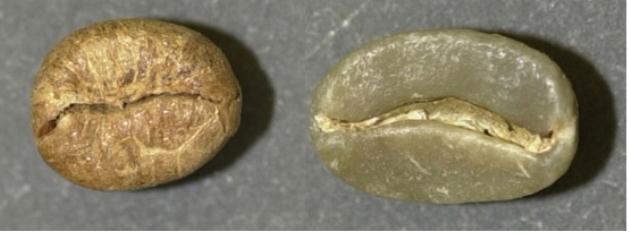
These differences also affect how the beans roast and how extraction behaves during brewing.
Why Roasters Blend Robusta and Arabica
Many commercial and specialty roasters use both species in blends for specific purposes:
- Robusta adds body, bitterness, and crema — especially valued in traditional espresso blends.
- Arabica provides acidity, aroma, and complexity.
- A well-balanced blend can deliver the best of both worlds: a rich, full-bodied shot with fruity or floral top notes and a structured finish.
Even in single-origin offerings, knowing whether a coffee is Arabica or Robusta helps you set the right expectations for flavor, brewing method, and roast level.
Frequently Asked Questions
What is the main difference between Robusta and Arabica coffee beans?
The main differences are flavor, growing altitude, and caffeine content. Arabica grows at higher altitudes (600–2,200m), has complex flavors (floral, fruity, chocolatey), higher acidity, and less caffeine (below 1.5%). Robusta grows lower (0–800m), has a harsh, bitter taste, woody aroma, lower acidity, and more caffeine (1.8–3.5%).
Which coffee species has more caffeine, Robusta or Arabica?
Robusta has significantly more caffeine — between 1.8% and 3.5% by weight — compared to Arabica, which has less than 1.5%. This makes Robusta more bitter and gives it natural pest resistance.
Does Arabica or Robusta taste better?
“Better” is subjective. Arabica is valued for its complex, bright flavors (fruits, flowers, chocolates) and higher acidity. Robusta tastes harsher, more bitter, and woody, but some drinkers prefer its strong, bold cup, especially in espresso. Many blends use both for balance.
Why is Robusta used in espresso blends?
Robusta is often used in espresso for its strong bitterness, thick crema, and heavy body. Its high caffeine content also helps with pest resistance and contributes to a bold, intense extraction, especially valued in traditional Italian-style espresso.
Can you taste the difference between Robusta and Arabica?
Yes. Arabica typically tastes brighter, more acidic, and more complex (with notes like fruit or flowers), while Robusta tastes harsher, more bitter, and often has a flat or woody flavor. The difference is clear even to casual coffee drinkers.
What altitude do Arabica and Robusta coffee plants grow at?
Arabica grows best at higher altitudes: 600–2,200 meters above sea level. Robusta grows at much lower elevations: from sea level up to 800 meters. Altitude affects climate, growing time, and flavor development in the beans.
Recommended FrontStreet Coffee Beans for Robusta vs Arabica Comparison
Try FrontStreet Coffee’s Ethiopia Yirgacheffe (single origin Arabica) for bright acidity, floral and citrus notes, and a sweet, juicy body — a classic high-altitude Arabica profile. For contrast, their Classic Blend includes a portion of Robusta for boldness and crema, balancing it with smooth Arabica base notes. Both showcase the key traits discussed in this article. Freshly roasted within 5 days · Orders placed before 17:00 ship the same day · Next-day delivery across most of Guangdong Province.
FrontStreet Coffee is a long-established specialty coffee roaster in Guangzhou China, selling freshly roasted beans from its own farm in Yunnan as well as dozens of carefully selected single-origin beans from around the world for both pour-over and espresso. The products deliver consistently excellent quality and great value, with shipping within 24 hours. Guangzhou's FrontStreet Coffee shop is recommended by many coffee lovers, and the beans are now available online at the Tmall 。
Important Notice :
前街咖啡 FrontStreet Coffee has moved to new addredd:
FrontStreet Coffee Address: 315,Donghua East Road,GuangZhou
Tel:020 38364473