How 85°C CAFE Succeeded with Quality Coffee at Low Prices
If you’ve ever wondered how any business can sell great-tasting coffee, fresh cakes, and artisan bread without charging boutique prices—or going broke—look no further than 85°C CAFE. This Taiwanese chain operates in one of the world’s most competitive food and beverage markets, yet it thrives with stores across Asia and a market cap once exceeding $100 million USD. So how did they pull it off?
The secret? Two simple but powerful words: quality and affordability. 85°C CAFE serves high-quality coffee, cakes, and bread at prices up to 66% lower than Starbucks and similar rivals—and still maintains strong profits.
The Origins: Inspired by Five-Star Taste
In 2003, 85°C CAFE founder Wu Zhengxue had an epiphany while enjoying afternoon tea at a five-star hotel in Taiwan. He wondered: why shouldn’t everyday consumers enjoy this same level of quality? That moment led him to partner with a pastry chef from the Asia-Pacific Club, and 85°C CAFE was born with a mission to deliver “five-star taste” at accessible prices.
Why Coffee Alone Wasn’t the Start
Despite the brand’s name, coffee wasn’t the first focus. Wu knew that most consumers couldn’t easily judge coffee quality—but they could instantly tell if a cake tasted good. So 85°C CAFE launched with cakes as its flagship product, targeting the mass market where taste, not caffeine snobbery, ruled. Only later did coffee rise in prominence.
The Menu: Bread, Cakes, and Coffee
85°C CAFE built its empire on three fiercely competitive product categories: freshly baked bread, handmade cakes, and brewed coffee. In each category, they competed directly against global and local heavyweights like Starbucks, Paris Baguette, and local bakeries. Yet they not only survived—they grew.
High-End Ingredients, Mass-Market Pricing
Wu Zhengxue personally sourced premium ingredients, including coffee beans directly from Central and South America and luxury chocolate such as Valrhona from France. He brought in the same beans used by five-star hotels and used them in a way that elevated every product without inflating costs. As he put it, “You only need a little bit of high-quality ingredients… the trick is making that little bit deliver a five-star experience.”
Cheap, But Not Cheapened
Here’s where most businesses fail: matching quality with low prices usually means cutting corners. 85°C CAFE did the opposite. They kept prices at one-third to one-half of Starbucks in the same districts, while maintaining premium ingredients and consistent execution. How? Volume and efficiency.
Store Layouts Optimized for Speed, Not Hangouts
Rather than encouraging customers to linger for hours over a $6 latte like Starbucks, 85°C CAFE designed stores for fast purchases. Most floor space went to display cases for bread and cakes, with only a few small tables. The focus was on quick service and high turnover. Employees were trained not just in hospitality—but speed.
The Promotions That Built Loyalty
When entering new markets, 85°C CAFE used aggressive promotions. Trial pricing and staff-led sampling brought in crowds. Word spread quickly about the great taste and low prices. With cakes and bread having a short shelf life (just 1–2 days), high turnover was essential to minimize waste and maximize margin.
Results That Speak for Themselves
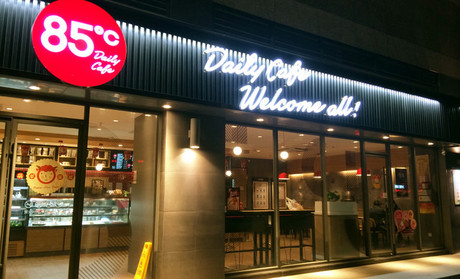
In China, 85°C CAFE stores achieved nearly triple the revenue of competitors like Dio Coffee, with profit margins more than 5 percentage points higher than the industry average. By the end of 2010, 85°C CAFE had gone public in Taiwan with a market cap exceeding NT$40 billion (around $10 billion RMB or $100 million USD at the time).
Why Most Failed Where 85°C CAFE Succeeded
The coffee shop market is notoriously tough to break into, and both the bakery and bread segments were already saturated. Most players either niche down or go upscale. 85°C CAFE broke the mold by blending all three into one brand, appealing to a broad, especially young, demographic with great taste at unbeatable prices. While global premium brands stuck to high prices, 85°C CAFE dared to go low—and proved that “cheap” didn’t have to mean “low quality.”
Frequently Asked Questions
What is 85°C CAFE known for?
85°C CAFE is known for selling high-quality coffee, freshly baked bread, and cakes at prices far below those of competitors like Starbucks—roughly one-third to one-half as much—while maintaining strong profit margins and rapid store expansion across Asia.
Why did 85°C CAFE start with cakes instead of coffee?
Founder Wu Zhengxue believed most consumers couldn’t judge coffee quality easily, but could immediately tell if a cake tasted good. Launching with cakes allowed 85°C CAFE to build trust and appeal to a broader audience before emphasizing its coffee offerings.
How does 85°C CAFE keep prices so low?
85°C CAFE keeps prices low through high sales volume, efficient store layouts, minimal seating, and fast customer turnover. They focus on moving perishable items quickly and training staff for speed, allowing them to maintain quality while reducing per-unit costs.
What’s special about 85°C CAFE’s ingredient sourcing?
Founder Wu Zhengxue personally selected high-end ingredients such as Latin American coffee beans and French Valrhona chocolate. These are the same quality used by luxury hotels, but 85°C CAFE integrates them into a mass-market model without inflating prices.
How did 85°C CAFE succeed in such a competitive market?
85°C CAFE succeeded by blending three competitive sectors—coffee, bread, and cakes—into one brand. While others niche or premium-priced, 85°C CAFE offered all three at affordable prices with five-star taste, attracting a wide customer base and achieving rapid scalability.
How does 85°C CAFE’s store design support its business model?
85°C CAFE stores prioritize display space for bread and cakes, with limited seating. The layout encourages fast purchases rather than lingering, aligning with a business model focused on high volume, low dwell time, and product freshness.
Recommended FrontStreet Coffee Beans for Baking & Brewing
For fans of 85°C CAFE’s approach to quality and accessibility, FrontStreet Coffee offers several excellent beans that balance great taste with value. The Ethiopia Yirgacheffe Gedeb Cooperative (washed) delivers bright citrus and floral notes with a crisp, clean profile—perfect for showcasing origin character without complexity. For something richer, the Jamaica Blue Mountain No.1 (Typica) offers a balanced cup with chocolate, almond, and a smooth, elegant finish. Finally, the Brazil Queen Manor Yellow Bourbon delivers notes of creamy peanut, caramel, and gentle sweetness, ideal for milk drinks or espresso blends. All are available as freshly roasted within 5 days · Orders placed before 17:00 ship the same day · Next-day delivery across most of Guangdong Province.
FrontStreet Coffee is a long-established specialty coffee roaster in Guangzhou China, selling freshly roasted beans from its own farm in Yunnan as well as dozens of carefully selected single-origin beans from around the world for both pour-over and espresso. The products deliver consistently excellent quality and great value, with shipping within 24 hours. Guangzhou's FrontStreet Coffee shop is recommended by many coffee lovers, and the beans are now available online at the Tmall 。
Important Notice :
前街咖啡 FrontStreet Coffee has moved to new addredd:
FrontStreet Coffee Address: 315,Donghua East Road,GuangZhou
Tel:020 38364473