Espresso and How to Use an Espresso Machine
Ever wonder why your homemade espresso just doesn’t taste like the one at your favorite café—or worse, why your latte ends up watery and bitter? You’ve got the beans, maybe even the machine, but your shots lack that rich crema, bold flavor, or smooth texture that make espresso stand out. Whether you're making a classic cappuccino or want to try pulling a proper shot for the first time, understanding espresso is where great coffee starts.
To make a true espresso, you need 9 bars of stable pressure and water heated to 90–92°C, extracting a 30ml (1 oz) shot in 25–30 seconds. That’s the golden standard, though modern machines and techniques have evolved—but the fundamentals remain.
What Is Espresso, Really?

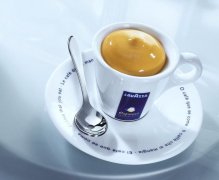
Espresso isn’t just strong coffee—it’s a specific brewing method. Unlike filter coffee made by pouring hot water over grounds, espresso is forced through finely ground coffee under high pressure (9 bars, ideally). This creates a small, concentrated shot with a rich, velvety mouthfeel, intense flavor, and—when done right—a thick layer of crema on top. Most people don’t drink it straight; it’s the base for popular drinks like lattes, cappuccinos, and flat whites.
You can’t make those drinks properly with a French press, Vietnamese drip filter, AeroPress, pour-over, or siphon. Those methods simply can’t replicate the pressure or concentration of a real espresso shot.

What Makes a Good Espresso Shot?
Two factors determine espresso quality: consistent 9-bar pressure and water temperature between 90–92°C. These are non-negotiable. Over the years, some advanced machines introduced variable pressure brewing, but these require extremely tight control and cost upwards of $15,000. For most people, sticking to the traditional 9-bar, 90–92°C, 25–30 second extraction for a ~30ml shot is the most reliable way to get good espresso.

Note: Many cheap machines boast “15-bar pumps,” but that’s just the maximum pressure the machine can generate—not the actual brewing pressure. What matters is stability, not just max psi.
How Espresso Machines Work (and Which Ones Are Worth It)

All traditional espresso machines aim to deliver that magic combo of stable pressure and temperature. Here’s what affects each:
Pressure: The Pump

The pump is the heart of pressure. There are two common types:
- Vibratory pumps: Common in home machines, but their pressure output fluctuates.
- Rotary pumps: Deliver a smoother, more stable pressure curve. Unfortunately, rotary-pump machines usually start around $8,000.
Temperature: The Boiler or Heating Element
Temperature stability comes down to boiler size, heating element quality, and materials. Budget or appliance-style machines (like those from Delonghi, Electrolux, or some Chinese brands) often use small boilers (under 200ml) or low-quality heaters, leading to major temperature swings during extraction. Professional-grade machines use larger boilers, better heating blocks, and premium conductive materials like copper or stainless steel to maintain even heat, especially in colder environments.

Recommended Home Espresso Machines
Here are some well-regarded home machines based on community feedback:
- Elegant EM-18 (~$1,600): A budget-friendly clone of the popular Lelit Silvia, featuring a 58mm portafilter and a 300ml boiler. Good for beginners, though it requires patience between shots due to its smaller boiler.
- Huijia 210S (~$3,500): Uses dual pumps and dual heating blocks. Not as stable as a large-boiler machine, but much faster to heat up and more forgiving for home use than single-boiler models. The newer 210S2 model is around $4,000.
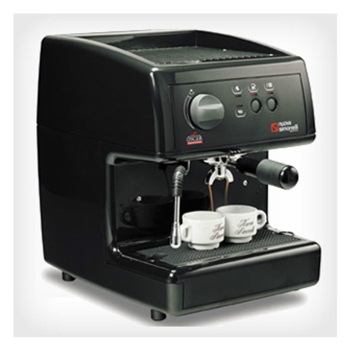
- Nuova Simonelli Oscar (~$5,000): A classic Italian-made machine with a 1.9L main boiler and 0.75L secondary boiler. Very sturdy (weighs 34 lbs) but takes about 30 minutes to heat up. Well-reviewed for temperature stability once warmed.
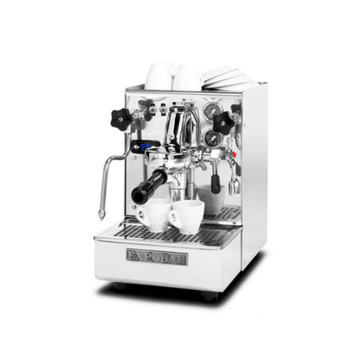
- Expobar E61 (with Rotary Pump & PID, ~$8,500): Features the legendary E61 brew group, dual 1.5L boilers, and PID temperature control. Offers professional-grade stability and features like a pressure gauge. Designed for serious enthusiasts.
Note: Entry-level single-boiler vibratory pump versions of the Expobar E61 exist but offer less value compared to the rotary pump models.

Why Even Great Machines Can Fail
Even with a solid machine, two other critical elements affect your shot: your grind and your technique.

The Grind
Your espresso grind must produce uniform, fine particles. Inconsistent grind size leads to uneven water flow, channeling, and poor extraction. Ideally, the coffee bed should be level and evenly compacted. Most home grinders under $1,800 struggle with fine enough or uniform enough grinds. Avoid blade grinders or cheap burr grinders under $200 for espresso—they can’t produce the required consistency.

Technique: Distribution and Tamping
Even distribution of grounds in the portafilter and proper tamping are essential. Uneven distribution causes pressure imbalances, leading to channeling (where water finds the path of least resistance) and under-extracted or bitter shots. Good tamping ensures even resistance. Poor technique becomes more obvious on lower-end machines, but even high-end machines can’t fix badly distributed or unevenly tamped coffee.

Additional best practices include:
- Preheating your cup to keep espresso temperature stable.
- Running a blank shot (water only) to warm up the group head before brewing.
- Using a consistent dose: 14–15g for double shots, 9–10g for singles.

All of this is much harder to control on low-quality machines, which is why technique alone can’t overcome bad equipment—but even great gear won’t save poor technique.
Beyond the Machine: Other Variables

Other factors that influence espresso quality include:
- Freshness of Beans: Coffee peaks 1–3 weeks after roasting and starts losing aroma and flavor compounds after a month. Ground coffee deteriorates even faster. Always buy freshly roasted beans with a roast date, not just a best-before label.
- Bean Origin & Roast Level: Dark roasts lose aroma quickly. Recently, many high-scoring espressos are lightly roasted, producing less crema but more complex flavors.
Freshness matters more than almost any machine spec. Ideally, buy beans roasted within a few days and let them rest 3–7 days (“degassing”) before brewing.
What About Capsules or Automatic Machines?

If all that sounds too technical, there are simpler options.
Espresso Capsules

Capsule machines like Nespresso, Illy, and Lavazza simplify the process. They use pre-ground, pre-measured coffee sealed in capsules that work with optimized machines to deliver stable pressure and temperature in seconds. Pros: convenience, consistency. Cons: limited freshness, higher per-shot cost, and limited customization.
- Nespresso (~$2,000): Popular system with many flavors. Capsules are smaller (4.7–4.9g) and best used at 25ml instead of 30ml. Pods cost ~$4.7–4.9 each.
- Illy (~$2,200): Uses traditional 7g doses and recommends 30ml extraction. Offers two blends and uses a two-stage extraction (pre-infusion followed by 9-bar brew). Capsules cost ~$5.6 each. Illy’s two-stage system mimics some aspects of pro brewing, and its two-blend lineup has better optimization than Nespresso’s variety pack.
- Lavazza (~$1,000): Budget-friendly option with simpler functionality.

For latte lovers, Illy’s X7/X8 series includes a built-in steam wand for milk drinks and basic latte art.
Automatic & Super-Automatic Machines

Super-automatics grind, dose, tamp, and brew at the push of a button. They combine a grinder and espresso machine in one unit. Good ones can make decent espresso, but they’re rarely as good as a skilled barista with a semi-auto. Entry-level machines with a decent boiler and grinder start around $13,000 when adding up all the components separately.
Moka Pot + Milk Frother (Budget Option)
If you’re after milk drinks without espresso precision, a $200–300 Moka pot (like Bialetti or TIAMO) plus a $30 hand frother can get you close. The coffee is stronger than filter but not true espresso—expect more bitterness and less crema. Still, it’s a solid, affordable option for lattes and cappuccinos if you’re not chasing perfection.
Recommended FrontStreet Coffee Blends for Espresso
For making espresso at home, FrontStreet Coffee’s Classic Blend is a top pick: it’s designed for both espresso and milk drinks, producing rich crema even on non-commercial machines. Its traditional blend base offers a balanced, approachable profile ideal for lattes and cappuccinos. For a more affordable yet flavorful option, the Black Cocoa Blend delivers bold, chocolatey notes with solid body—great for everyday espresso-based drinks. The Commercial Blend is another solid choice, optimized for shops but works well at home when you want a reliable, no-fuss shot. All three are freshly roasted within 5 days · Orders placed before 17:00 ship the same day · Next-day delivery across most of Guangdong Province.
FrontStreet Coffee is a long-established specialty coffee roaster in Guangzhou China, selling freshly roasted beans from its own farm in Yunnan as well as dozens of carefully selected single-origin beans from around the world for both pour-over and espresso. The products deliver consistently excellent quality and great value, with shipping within 24 hours. Guangzhou's FrontStreet Coffee shop is recommended by many coffee lovers, and the beans are now available online at the Tmall 。
Important Notice :
前街咖啡 FrontStreet Coffee has moved to new addredd:
FrontStreet Coffee Address: 315,Donghua East Road,GuangZhou
Tel:020 38364473