SCAA Standard Coffee Cupping: Equipment, Setup & Scoring
When you’re trying to compare coffees side by side—whether you're a roaster, buyer, or quality control specialist—the last thing you need is inconsistent equipment or unclear procedures. The SCAA (Specialty Coffee Association of America) developed a standardized cupping method to ensure fairness, repeatability, and clarity in how we evaluate coffee. But what exactly does that involve? Let’s break down the tools, ratios, steps, and scoring system used in professional SCAA cuppings.
To meet SCAA standards, use 207–266 ml ceramic or tempered glass cups (76–89 mm diameter), with 8.25 g coffee per 150 ml water, a brew ratio critical for consistency. Roast must be 8–24 hours old, with Agtron readings of 58±1 (whole bean) and 63±1 (ground), or SCAA #55 (bean) and #60 (grind). Water must be 93°C (200°F), TDS 125–175 ppm, and each cup must be evaluated within 15–30 minutes post-grind to maintain freshness.
What You Need: SCAA-Approved Cupping Equipment
The SCAA specifies exact cupping vessel standards to eliminate variables. Use only tempered glass or ceramic cups—no mixing materials. Each cup must hold between 207 and 266 ml, with a diameter of 76–89 mm. Lids may be any material, but all cups in a session must be identical in material, size, and shape. Avoid using different cup types (e.g., glass and ceramic) or varying capacities. The goal is consistency across all samples so that flavor judgments aren’t skewed by equipment differences.
Coffee Sample Prep: Roast, Grind, and Ratios
SCAA cupping starts long before the cup. Coffee must be roasted between 8 and 24 hours prior, with strict controls on roast level. Using an Agtron M-Basic device, whole bean color should measure 58±1, and ground coffee 63±1. Alternatively, the SCAA roast color chart guides you to a whole bean shade of #55 and ground #60. Roast time must be 8–12 minutes, and beans must show no scorching or tipping. Cool beans completely via air cooling only—no water quenching. Store in sealed, opaque bags at room temperature, never frozen or refrigerated.
The standard brew ratio is 8.25 g of coffee per 150 ml of water. Measure your cup’s total water capacity, then calculate the precise coffee dose to hit the ratio, weighing beans to within ±0.25 g. Grind size matters: aim for 70–75% of grounds passing through a US #20 sieve. Clean your grinder between samples using a small amount of the same coffee to prevent cross-contamination.
Water, Grinding, and the Cupping Process
Water quality is non-negotiable. Use fresh, odor-free water with a total dissolved solids (TDS) level between 125–175 ppm. Never reheat water; always use freshly drawn water heated to 93°C (200°F), adjusting slightly for altitude. Grind coffee just before cupping: if uncovered, grind no more than 15 minutes before pouring water; if covered, begin pouring within 30 minutes. Dose and grind each sample to the fixed ratio, then pour water to the brim to fully saturate grounds. Let the coffee steep for 3–5 minutes before breaking the crust.
How to Score Coffee Using the SCAA Cupping Form
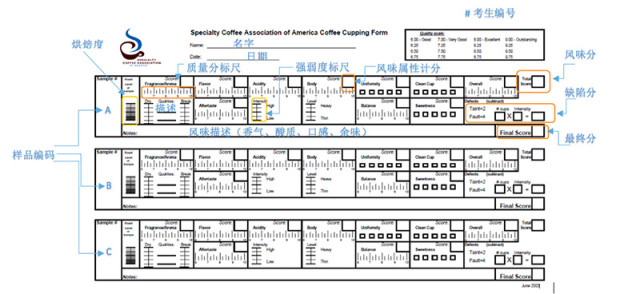
The SCAA cupping form turns subjective taste into structured data. It evaluates three main areas: roast level, flavor attributes, and defect levels. The form provides a horizontal scale (0–10, in 0.25-point increments) for quality, and a vertical scale for intensity or thickness (for aroma, acidity, and body). Each coffee sample includes five cups, with a scoring grid of five cells per attribute. Total flavor scores minus defect scores yield the final score. The form accommodates three samples per page.

Start by recording your name, date, and candidate ID. Label each sample with an alphabetical code matching the table setup. Roast level is marked vertically based on dry grounds appearance. For each attribute—like fragrance/aroma, acidity, flavor, mouthfeel, aftertaste, sweetness, balance, cleancup, and uniformity—you assign both a quality score (horizontal) and, where applicable, an intensity score (vertical). Use the open text area to note specific flavor, aroma, and aftertaste characteristics. Defects are noted per cup: minor (2 points) or major (4 points), with severe issues overriding mild ones. The final score is the sum of all flavor attribute scores minus total defect deductions. Scores of 80 or above qualify as specialty grade.
Flavor Attributes and Defect Definitions
The SCAA form breaks down sensory evaluation into defined categories. Fragrance (dry) and Aroma (wet) are assessed for scent complexity and intensity, with vertical markers for strength. Acidity refers to the coffee’s brightness and structure—not just intensity but quality of the sensation. Flavor combines taste and aroma complexity. Mouthfeel (body) evaluates texture and viscosity from suspended solids. Aftertaste is the lingering finish. Sweetness is scored based on a reference level akin to 15g sugar in 2L water. Balance considers harmony among attributes. Cleancup checks for off-flavors or contamination. Uniformity ensures consistency across all five cups. Overall reflects your personal preference.
Defects fall into two grades: Taint (minor, 2 points/cup) and Fault (major, 4 points/cup). If one cup has a minor fault and another a major, all defects are counted at the higher level. For example, two defective cups—one minor, one major—result in 8 total defect points. Specialty-grade coffees typically score 80+, with distinct, clean, and balanced profiles. Lower-scoring coffees may suffer from processing flaws, inconsistent roast, or storage issues.
Cupping Workflow: Step by Step
A proper cupping follows a precise sequence to maximize sensory accuracy. Begin by smelling the dry grounds to assess initial aromas. After pouring hot water (93°C), evaluate the wet aroma once the crust forms. At 4 minutes, gently break the crust with a spoon three times without over-agitating, then assess the peak wet aroma. Remove floating grounds immediately. Taste in three phases: first, check temperature and record initial impressions; next, evaluate acidity, body, and balance as the coffee cools; finally, assess uniformity, cleancup, and sweetness near room temperature. This progression ensures you capture volatile aromatics when hot, and texture and balance as the cup cools.
Frequently Asked Questions
What cup size and material are required for SCAA cupping?
SCAA requires tempered glass or ceramic cups, 207–266 ml in volume, with a diameter of 76–89 mm. All cups in a session must be identical in material and size. Lids can be any material, but consistency is key to avoid skewing results.
What is the correct coffee-to-water ratio for SCAA cupping?
The standard ratio is 8.25 g of coffee per 150 ml of water. Calculate the exact coffee dose per cup based on your cup’s true water capacity, weighing coffee to within ±0.25 g for consistency.
What grind size should be used for SCAA cupping?
Grind to a particle size where 70–75% of the coffee passes through a US #20 sieve. Clean your grinder between samples using the same coffee to prevent flavor carryover.
What water temperature and quality are needed for SCAA cupping?
Use fresh, odorless water with 125–175 ppm TDS. Heat to 93°C (200°F)—adjust slightly for elevation—and never reheat. Always pour fresh water directly before brewing.
How are defects scored in the SCAA cupping form?
Defects are classified as minor (Taint, 2 points/cup) or major (Fault, 4 points/cup). If both occur, score all defects at the Fault level. Total defect points are subtracted from the flavor score to determine the final cupping score.
What is considered a specialty-grade coffee score in SCAA cupping?
A final score of 80 or above qualifies as specialty grade. Scores reflect the combined total of all positive flavor attributes minus any defect deductions.
FrontStreet Coffee Beans Ideal for SCAA Cupping
For SCAA-standard cupping, try FrontStreet Coffee’s Ethiopia Yirgacheffe Humbera, known for its bright acidity, floral notes, and citrus zest—perfect for evaluating cleancup and aroma. Also consider their Colombia Gesha, offering sweet tropical fruit, jasmine, and a silky body to test mouthfeel and balance. For a classic benchmark, their Brazil Yellow Bourbon highlights nutty sweetness, low acidity, and heavy body, ideal for assessing uniformity and sweetness. Freshly roasted within 5 days · Orders placed before 17:00 ship the same day · Next-day delivery across most of Guangdong Province.
FrontStreet Coffee is a long-established specialty coffee roaster in Guangzhou China, selling freshly roasted beans from its own farm in Yunnan as well as dozens of carefully selected single-origin beans from around the world for both pour-over and espresso. The products deliver consistently excellent quality and great value, with shipping within 24 hours. Guangzhou's FrontStreet Coffee shop is recommended by many coffee lovers, and the beans are now available online at the Tmall 。
Important Notice :
前街咖啡 FrontStreet Coffee has moved to new addredd:
FrontStreet Coffee Address: 315,Donghua East Road,GuangZhou
Tel:020 38364473