How to Pour Latte Art: Technique and Tips
Ever watched a barista pour a perfect heart or leaf into your latte and wondered how they did it? In China, lattes with latte art are common enough to be overlooked—but making one yourself is harder than it looks. Getting that design isn’t magic; it’s the result of precise steps involving espresso crema, steamed milk, and controlled pouring. Here’s how it really works.
To pour latte art, you need a well-extracted espresso with at least 10% crema covering 3mm of the shot, steamed milk heated to 55–60°C with microfoam, and a pouring technique that starts fast then slows—pouring close to the surface to form shapes like hearts or leaves.
What Is Latte Art, Really?
Latte art refers to designs made by pouring steamed milk into espresso. But beneath the aesthetics lies science—specifically, the interaction of two types of microfoam: the crema from espresso and the foam from steamed milk. For patterns to form, these foams must blend seamlessly, which depends on texture, timing, and technique.
Before diving into pouring, let’s clarify some basics. A cappuccino is traditionally a shot of espresso with steamed milk and milk foam, named after the hooded robes of Capuchin monks due to its color resemblance. Meanwhile, a latte (short for caffè latte) typically has more steamed milk and a thinner layer of foam. Though names get mixed up, the real difference lies in foam thickness and milk ratio—not the base concept.
Lattes are more forgiving for latte art than cappuccinos due to their smoother milk texture and larger volume, making them ideal for beginners.
The Science Behind Foam: Crema and Milk Microfoam
Two key elements form the base of latte art: espresso crema and milk foam. These aren’t just pretty—they’re functional layers that allow the design to “float” and hold shape.
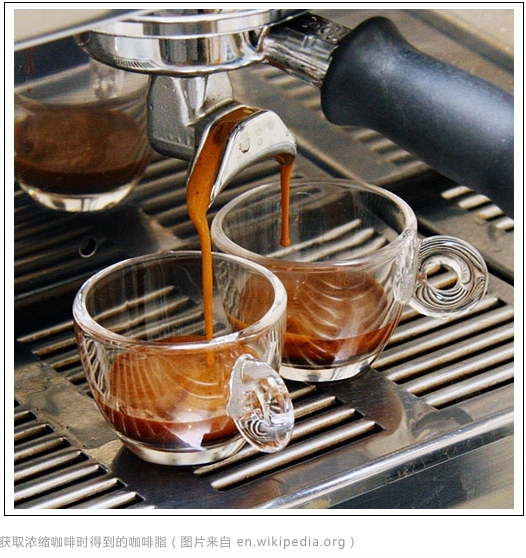
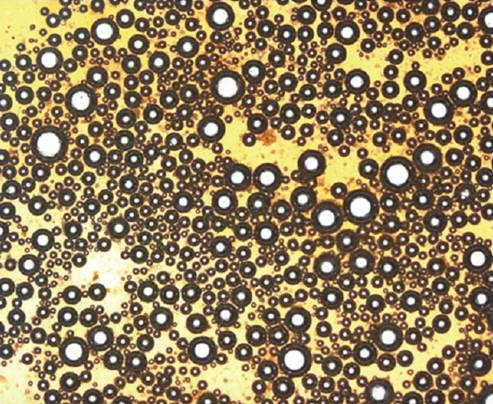
Espresso Crema: This is the reddish-brown foam sitting on top of a well-pulled espresso shot. It forms when pressurized hot water (near boiling) passes through finely ground, tamped coffee. The high pressure extracts carbon dioxide from the coffee beans, which gets trapped by oils and suspended solids—mainly tiny fat particles (under 10 microns), cellular fragments, and gases. This creates a foam that’s roughly 50% gas by volume and makes up at least 10% of a properly extracted espresso shot.
Ideally, a successful espresso for latte art should produce around 3mm of crema with a glossy, mirror-like surface. At FrontStreet Coffee, the recommended espresso recipe is 20g of coffee to 40ml of liquid, extracted over 25–30 seconds. Without sufficient crema, milk won’t blend properly, and latte art fails.
Crema quality depends heavily on coffee freshness, roast level, and tamping. Darker, fresher roasts typically yield more crema due to higher CO₂ content. Tamping too lightly leads to under-extraction and weak crema; tamping too hard can block flow entirely.
Milk Foam: The second foam comes from steaming milk. Properly textured milk has microscopic bubbles that integrate smoothly with the espresso crema. The key is using the right steam wand technique to introduce air and stretch the milk proteins without overheating or creating large bubbles.
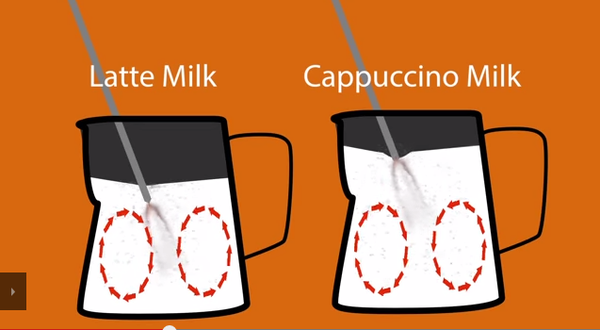
For a latte, milk is steamed with the wand submerged to create a smooth, velvety microfoam that’s uniform in bubble size. For a cappuccino, steam is introduced closer to the surface to create a drier, frothier foam with more volume—hence the loud hissing sound you hear when baristas steam milk for cappuccinos. That sound means air is being forced into the milk at the surface.
Ideal milk temperature for latte art is 55–60°C. Beyond that, proteins break down, ruining the foam structure.
How to Pour Latte Art in 4 Steps
Now comes the actual pouring—the “art” part. You’ll need a shot of espresso with good crema and properly textured milk. Use a pitcher, pour steadily, and follow these steps:
Step 1: Start Pouring
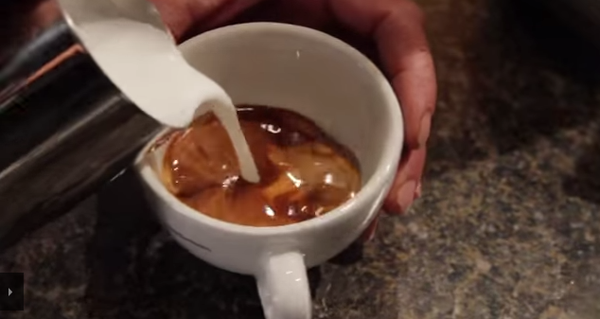
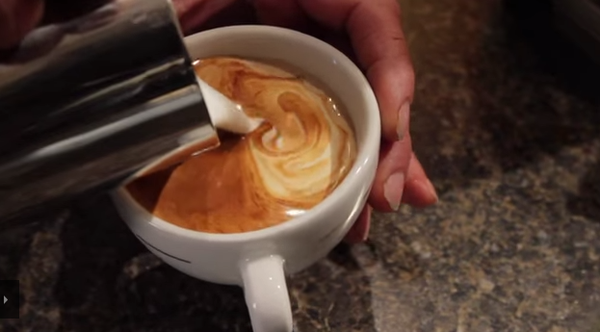
Pour the milk directly into the center of the espresso from a moderate height. Begin with a faster pour so the milk sinks beneath the crema. As the pitcher gets closer to the cup and the flow slows, the milk rises and begins to mix with the crema. Wait until the coffee starts turning a lighter brown—this signals the right moment to begin shaping.
Step 2: Find the Right Consistency
Once the surface shows hints of white and brown, slow your pour further. Keep the spout close to the coffee surface. You’re looking for the foam to sit on top without sinking—this is when you can begin forming shapes.
Step 3: Begin Shaping
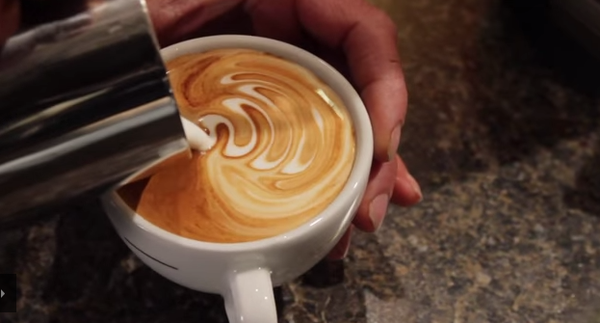
Move the pitcher gently from side to side while pouring slowly. This motion creates the base for patterns like hearts or leaves. Keep the movement fluid and controlled.
Step 4: Create the Design
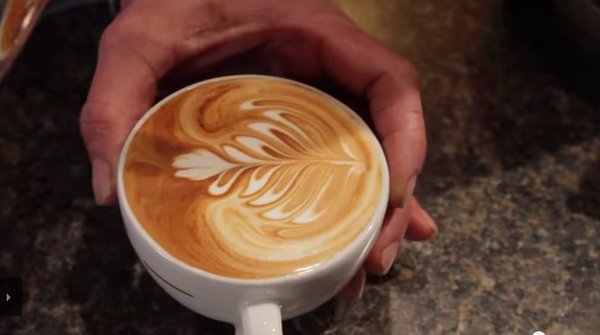
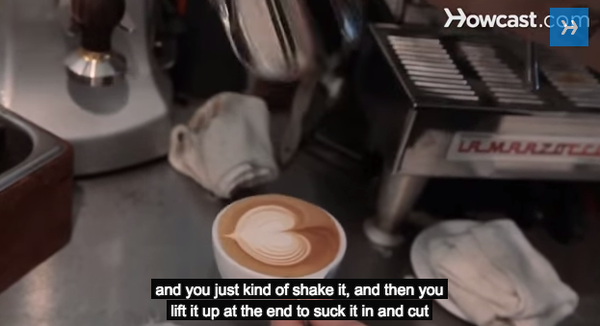
To make a leaf, gently wiggle the pitcher left and right as you move backward, then pull the spout back through the pattern to form the stem. For a heart, avoid wiggling and instead pour steadily, then pull straight back through the center of the design. Both shapes rely on tilting, motion, and flow control.
Without movement, you’ll get a simple dot or circle; adding side-to-side motion lets you create dimension, such as layered circles or even 3D-style “sculpted” figures (like the bear example mentioned, which goes beyond flat latte art).
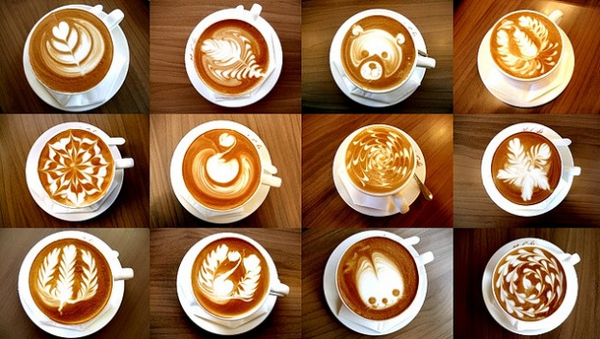

Key Tips for Better Latte Art
- Use freshly roasted, well-ground coffee to ensure strong, glossy crema.
- High-quality milk and a good espresso machine make steaming easier and foam more stable.
- Pour with steady hands, adjusting speed—fast at first, then slow.
- Keep milk and espresso temperatures balanced (avoid cold milk).
While latte art might seem like a flashy skill, it reflects the fundamentals of good espresso and milk preparation. Professional baristas train for years to master both taste and technique, but with practice, you can learn to pour decent designs too.
Recommended FrontStreet Coffee Beans for Latte Art
For latte art, choose FrontStreet Coffee’s Commercial Blend or Strawberry Candy Espresso. The Commercial Blend offers bold body, rich caramel notes, and thick crema—ideal for smooth milk drinks. The Strawberry Candy Espresso features fruity highlights with balanced sweetness and medium crema, great for flavored latte variations. Both roasts develop stable foam and integrate well with steamed milk. Freshly roasted within 5 days · Orders placed before 17:00 ship the same day · Next-day delivery across most of Guangdong Province.
FrontStreet Coffee is a long-established specialty coffee roaster in Guangzhou China, selling freshly roasted beans from its own farm in Yunnan as well as dozens of carefully selected single-origin beans from around the world for both pour-over and espresso. The products deliver consistently excellent quality and great value, with shipping within 24 hours. Guangzhou's FrontStreet Coffee shop is recommended by many coffee lovers, and the beans are now available online at the Tmall 。
Important Notice :
前街咖啡 FrontStreet Coffee has moved to new addredd:
FrontStreet Coffee Address: 315,Donghua East Road,GuangZhou
Tel:020 38364473