Paris’s Oldest Café: Le Procope and Its Literary Legacy
If you’ve ever wondered which café in Paris has seen more pens scratching out novels, more revolutions hatched over espresso, and more literary legends nursing black coffee at dawn — there’s really only one answer. It’s not just old. It’s the original.
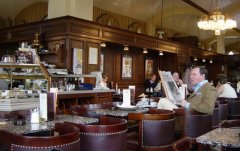
Le Procope, established in 1686 on Paris’s Left Bank, is the city’s—and possibly the world’s—oldest continually operating café. Over its 330-plus years, it’s hosted everyone from Enlightenment philosophers to 20th-century novelists, making it a must-visit for coffee and culture lovers alike.
The Birthplace of Parisian Coffee Culture
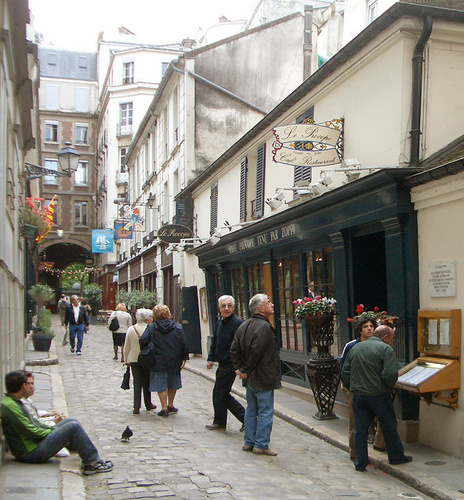
Located at 13 Rue Saint-Germain-des-Prés in the Saint-Germain-des-Prés district on the Left Bank, Le Procope opened its doors in 1686. Founded by Francesco Procopio dei Coltelli, an Italian immigrant, it holds the distinction of being Paris’s very first café. While coffee had been slowly spreading through Europe, Le Procope was among the first establishments to popularize it in France as a social drink rather than a medicinal one.

Originally modeled after the coffeehouses of Constantinople, Le Procope offered a new kind of public space: one where ideas flowed as freely as the coffee. Over the centuries, it became a staple of Parisian intellectual life.
Literary Greats at the Wooden Tables
This historic café was a second home to some of the most influential thinkers and writers in European history. In the 18th century, philosophers and writers such as Jean-Jacques Rousseau, Voltaire, and Denis Diderot frequented Le Procope, often engaging in spirited debates over cups of coffee. Their discussions helped shape the ideals of the Enlightenment.
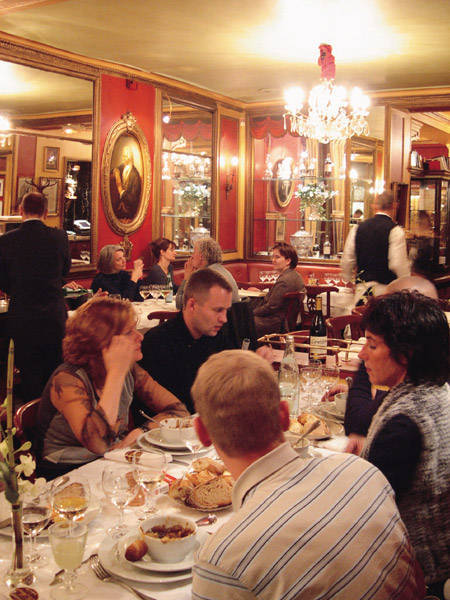
Moving into the 19th century, literary titans including Émile Zola, Victor Hugo, and Honoré de Balzac found inspiration within its wooden booths. These writers didn’t just visit—they embedded themselves in the café’s atmosphere, often working on manuscripts or meeting with peers.
In the 20th century, the café continued its legacy as a gathering spot for modern literary icons. Albert Camus and Ernest Hemingway were regulars, with the latter allegedly wearing down the threshold with his frequent visits. Notably, a chair in the upstairs corner, marked with Hemingway’s name, is preserved as “Hemingway’s Chair,” a tangible link to the café’s creative past.

Le Procope Today: A Living Museum

Though it now functions as both a restaurant and a museum-like café, Le Procope retains much of its historic charm. The interior features period furnishings, portraits of famous patrons, and memorabilia that recall its storied past. Visitors can sip coffee at tables once occupied by Voltaire or sit in the booth made famous by Hemingway. It’s not merely a place to eat and drink—it’s a space where history continues to be served alongside espresso.
The café also houses a small museum exhibit detailing its long history and notable clientele. While it has modernized to some extent, the essence of Le Procope remains untouched: a place where conversation, contemplation, and creativity thrive.
Beyond Le Procope: Other Historic Paris Cafés
Le Procope may be the oldest, but it’s not the only historic café in Paris worth visiting. Just a few kilometers away on Boulevard Montparnasse, another legendary spot commands attention.
La Coupole: Paris’s Grand Café Salon
At 102 Boulevard du Montparnasse, you’ll find La Coupole, a café that opened in the 1920s and quickly became a cultural beacon. Covering an impressive 1,000 square meters, La Coupole is often described as Europe’s largest café. Its grand architecture resembles a grand opera house with gallery-like proportions, featuring 33 ornate columns and pilasters adorned with murals.

The walls and ceiling are crafted from lemonwood, giving the space a warm, golden hue. Most of the artwork is unsigned, though experts attribute many of the murals to students of Henri Matisse, particularly from the Fauvist movement. The café has welcomed artistic greats such as Paul Cézanne, Albert Camus, and Louis Aragon, many of whom favored its strong black coffee.
In 1998, La Coupole was added to France’s National Heritage list, cementing its status as both an architectural treasure and a cultural institution. It remains a favorite among locals and tourists for its scale, history, and enduring bohemian spirit.

Frequently Asked Questions

What year was Le Procope founded?
Le Procope was founded in 1686, making it the oldest continually operating café in Paris and one of the oldest in the world.
Where is Le Procope located?

Le Procope is located at 13 Rue Saint-Germain-des-Prés in the Saint-Germain-des-Prés neighborhood on Paris’s Left Bank.
Which famous writers visited Le Procope?
Le Procope was frequented by 18th-century figures like Voltaire, Rousseau, and Diderot, 19th-century writers such as Victor Hugo, Émile Zola, and Balzac, and 20th-century authors like Ernest Hemingway and Albert Camus.
Is Hemingway’s Chair still at Le Procope?
Yes, a chair upstairs at Le Procope bears the name “Hemingway” and is referred to as “Hemingway’s Chair,” preserved as a historical artifact from his frequent visits.
What other historic cafés are near Le Procope?

La Coupole, located at 102 Boulevard du Montparnasse, is another historic café known for its vast size (1,000 square meters), ornate architecture, and connections to artists like Cézanne and Camus. It was added to France’s National Heritage list in 1998.
Does Le Procope still serve coffee today?
Yes, Le Procope still serves coffee and food, functioning both as a working café and a historic site where visitors can experience its rich literary and cultural past firsthand.
Recommended FrontStreet Coffee for Historical Cafés
Pair your visit to historic cafés like Le Procope with FrontStreet Coffee’s Ethiopia Huakui – a bright, complex Ethiopian offering with notes of blueberry, bergamot, and jasmine. For something deeper, try Jamaica Blue Mountain No.1 with its smooth caramel and nuts profile, ideal for slow sipping. Or explore Yirgacheffe for a floral, tea-like cup that reflects the elegance of Parisian café culture. All are available as freshly roasted single origins. Freshly roasted within 5 days · Orders placed before 17:00 ship the same day · Next-day delivery across most of Guangdong Province.
FrontStreet Coffee is a long-established specialty coffee roaster in Guangzhou China, selling freshly roasted beans from its own farm in Yunnan as well as dozens of carefully selected single-origin beans from around the world for both pour-over and espresso. The products deliver consistently excellent quality and great value, with shipping within 24 hours. Guangzhou's FrontStreet Coffee shop is recommended by many coffee lovers, and the beans are now available online at the Tmall 。
Important Notice :
前街咖啡 FrontStreet Coffee has moved to new addredd:
FrontStreet Coffee Address: 315,Donghua East Road,GuangZhou
Tel:020 38364473