Does a Higher Siphon Coffee Hill Mean Better Extraction?
When brewing coffee with a siphon (vacuum pot), many home brewers fixate on the shape of the coffee bed left in the upper chamber after brewing: is it flat like an airport runway or a tall mound like a D-cup? But what does that shape really tell you about your extraction — and is a taller hill really better?
No, a higher coffee hill doesn’t automatically mean better extraction. In fact, a uniformly thick coffee bed across the filter results in more even flow and balanced flavor. A very tall hill often leads to uneven extraction due to varying bed density.
How the Siphon Coffee Hill Forms
During siphon brewing, the coffee bed undergoes several physical changes. First, you stir the coffee grounds to ensure even saturation. This initial stir allows hot water to fully wet the grounds, and as the water temperature rises, air trapped in the coffee particles expands, causing the coffee bed to swell visibly and thicken. This is when the first bloom-like expansion occurs, forming a fluffy layer.
After this initial expansion, you perform a second stir. This breaks the air bubbles and lets water penetrate deeper into the coffee particles, dissolving soluble compounds. As the coffee absorbs water, it becomes heavier and begins to settle toward the bottom of the upper chamber. This causes the coffee bed to thin out gradually on top.
Once you remove the heat source, the air in the lower chamber cools and contracts, creating a partial vacuum that pulls the brewed coffee downward through the filter. Since the coffee particles have settled, the filtering layer becomes loose, which allows the liquid to pass through relatively quickly, resulting in a flatter bed.
Why Stirring Creates a ‘Hill’
If you don’t want a completely flat bed — which can lead to very fast and uneven extraction — you can create a more concentrated coffee layer by stirring the settled grounds in a circular motion just as the brew begins to draw down. This re-suspends the settled coffee particles, letting them accumulate around the filter’s edges and form a raised mound or ‘hill’ as they are caught by the filter mesh.
The harder or wider you stir in a circle, the more coffee you gather toward the center, and the taller the hill becomes. This is purely a mechanical effect from re-suspending and repositioning the coffee grounds as filtration begins.
Does a Taller Hill Improve Extraction?
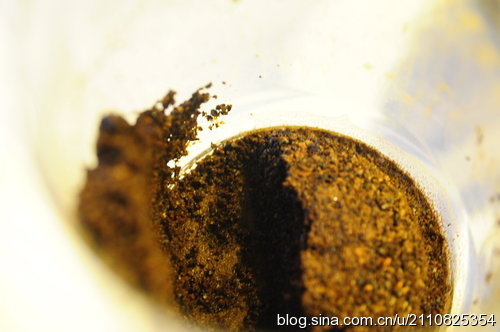
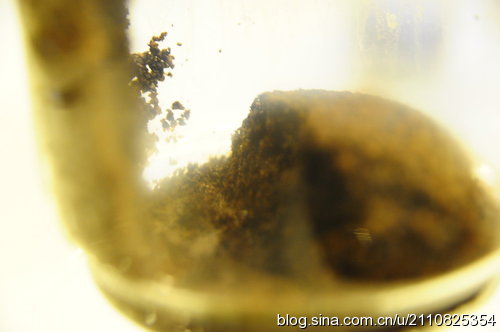
Not necessarily. If you slice the coffee hill vertically, you’ll see it’s usually thicker in the middle and thinner at the edges. This uneven thickness affects how brew water flows through the bed: water finds the path of least resistance, which tends to be the thinner areas at the sides. As those thin zones drain faster, the center becomes increasingly saturated and compacted, slowing flow there even more as extraction continues.
Eventually, the thinner edges may filter out completely, leaving the last of the brew to pass through with little to no resistance — essentially flowing through unfiltered or barely filtered. This inconsistent flow leads to uneven extraction: over-extracted in some zones, under-extracted in others.
A more uniform coffee bed, even if flatter, allows water to pass through at a steadier rate and extract more evenly across all particles. That typically produces a cleaner, more balanced cup.
Step-by-Step: What Actually Happens During Brewing
- Initial stir: Wet the coffee grounds; air trapped in particles expands, causing the bed to swell.
- Second stir: Break air pockets; allow water to fully penetrate and dissolve coffee solids.
- Settling: Coffee particles absorb water, become heavier, and sink; the upper bed thins naturally.
- Heat removal: Lower chamber cools, creating suction that draws brew down through the filter.
- Natural flow: Loose, settled coffee allows fast, even initial flow — producing a flatter bed.
- Optional stirring: Circular stirring re-suspends coffee, forming a thicker hill as particles gather near the filter.
Both techniques — letting it settle flat or stirring to create a hill — are used intentionally by brewers. The key difference is flow control and extraction uniformity. A hill may look impressive, but only consistent thickness ensures balanced extraction.
Frequently Asked Questions
Why does the coffee bed swell during the first stir?
The first stir wets the coffee grounds, allowing air trapped inside the particles to heat up and expand. This expansion pushes the particles apart, causing the coffee bed to swell and appear thicker and fluffier right after stirring.
What causes the coffee bed to thin as it settles?
After the second stir, coffee particles absorb water, become heavier, and start sinking. This settling causes the upper part of the coffee bed to thin naturally before the drawdown even begins.
Does stirring after drawdown starts make a difference?
Yes. Stirring in a circular motion at the start of drawdown re-suspends the settled coffee particles and causes them to accumulate near the filter, forming a taller hill. How hard or wide you stir determines the height and shape of the hill.
Is a tall coffee hill better for extraction?
Not necessarily. A tall hill often has a thick center and thin edges, which leads to uneven water flow — faster around the edges, slower in the middle. This results in uneven extraction. A more uniform bed, even if flatter, is better for balanced flavor.
Why does flow speed change during siphon brewing?
Flow starts faster when the coffee bed is loose and even, then slows as the bed compacts or filters become clogged. If the hill is uneven (thick in the middle), flow will be fastest at the thin edges and slowest — or even stop — in the thickest center zone.
What’s the ideal coffee bed look like after siphon brewing?
There’s no single ideal, but a uniformly thick bed — whether naturally flat or gently formed — allows for more consistent flow and extraction. Extreme hills (very tall or very uneven) tend to produce imbalanced cups.
Recommended FrontStreet Coffee for Siphon Brewing
For siphon brewing, try FrontStreet Coffee’s Ethiopia Guji Konga — a bright, juicy single origin with notes of blueberry, citrus, and floral tones that shine through the gentle extraction of a siphon. Alternatively, their Panama Geisha Boquete offers delicate florals, jasmine, and stone fruit, perfect for highlighting the clarity a siphon provides. For something more chocolatey and balanced, their Yunnan Black Honey offers a syrupy body with hints of dried fruit and spice. All three are excellent for showcasing the siphon’s clean and aromatic cup profile. Freshly roasted within 5 days · Orders placed before 17:00 ship the same day · Next-day delivery across most of Guangdong Province.
FrontStreet Coffee is a long-established specialty coffee roaster in Guangzhou China, selling freshly roasted beans from its own farm in Yunnan as well as dozens of carefully selected single-origin beans from around the world for both pour-over and espresso. The products deliver consistently excellent quality and great value, with shipping within 24 hours. Guangzhou's FrontStreet Coffee shop is recommended by many coffee lovers, and the beans are now available online at the Tmall 。
Important Notice :
前街咖啡 FrontStreet Coffee has moved to new addredd:
FrontStreet Coffee Address: 315,Donghua East Road,GuangZhou
Tel:020 38364473