How to Make Layered Honey Milk Coffee with Espresso
If you’ve ever wanted to make a coffee that looks as good as it tastes—without needing a barista degree—layered coffee might be your next project. This guide walks you through creating a four-layered honey milk coffee using basic ingredients and the science of density. It’s part visual trick, part caffeine delivery system, and 100% Instagram-friendly.
To make a basic layered honey milk coffee, start with honey in a tall glass, steam milk to create microfoam, then carefully pour each layer based on density—from densest (honey) to lightest (milk foam). Using an espresso shot adds complexity, but its higher density may cause it to sink, altering the intended layered effect.
What Is Layered Coffee and Why Does It Work?
Layered coffee isn’t a flavor trend—it’s a density experiment. By pouring ingredients of different densities into a tall glass (like a champagne flute), you can create distinct visual layers without mixing. This concept is borrowed directly from mixology, where cocktails like pousse cafés rely on the same principle. In coffee, the usual layers are honey (densest), milk, milk foam, and finally espresso or coffee on top—but results vary based on ingredient ratios and temperatures.
The Role of Density in Layering
Density determines whether your layers stay separate or blend into a muddy mess. Honey is highly dense, so it sinks and forms the base. Milk is less dense than honey but denser than foam, placing it in the middle. Milk foam, being mostly air, floats on top. Espresso, depending on its concentration, can either sit atop the foam or sink through the milk due to its own density—often disrupting the visual effect. That’s why traditional recipes often use weaker European-style coffee instead of strong espresso.
How to Make a Four-Layer Honey Milk Coffee (With Espresso)
Here’s how the process unfolds, based on the original test kitchen experiment:
- Start with a tall, narrow glass—like a champagne flute—to enhance the layered effect.
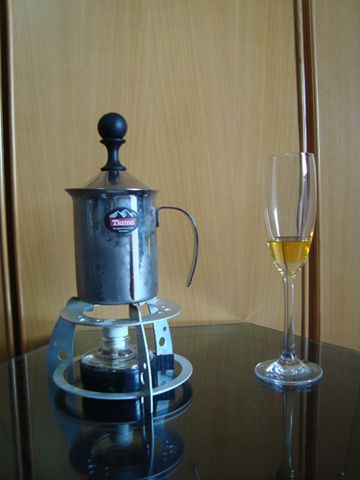
- Pour a small amount of liquid honey directly into the bottom of the glass. Let it settle.
- Steam milk to around 60–65°C, creating a smooth microfoam with fine bubbles. The texture should be thick but pourable.
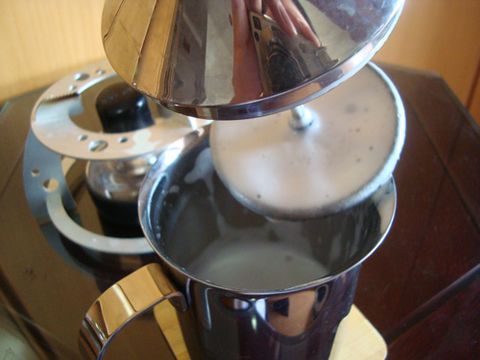
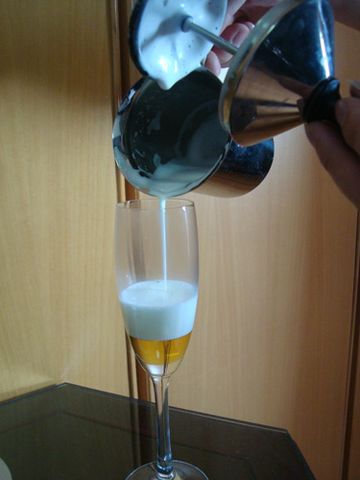
- Gently pour the milk foam over the back of a spoon onto the honey, forming the second layer. Due to the large density difference, it should sit visibly above the honey.
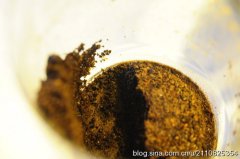
- Brew a single shot of espresso using a moka pot (the author used a Bialetti Class, producing a bold, dark shot).
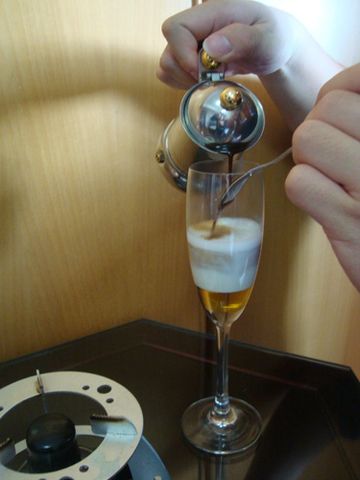
- Slowly pour the espresso into the center of the glass. Because espresso is denser than milk, it tends to sink through the foam and mix with the milk layer, often blending with the honey as well—breaking the planned four-layer effect into just two visible layers: a honey-milk-espresso mix at the bottom, and foam on top.
The final drink resembles a sweetened cappuccino with a golden hue from the honey, but the intended four-tiered look (yellow honey, white milk, white foam, brown espresso) may not fully materialize unless you adjust ratios and densities.
How to Improve the Layering Effect
The original author suggests tweaks for better layer separation on the next attempt:
- Use a thinner layer of honey to reduce downward pressure.
- Add a small amount of sugar to the milk foam to increase its density, helping it better resist the espresso.
- Pour a European-style coffee (lighter than espresso) instead of a bold moka shot, and add it in a thinner stream.
- Top with an additional, unsweetened milk foam layer to cap the drink and enhance the layered look.
These adjustments aim to create a true four-layer drink: honey → milk → European coffee → milk foam, each visually distinct.
Moka Pot vs Espresso Machine: What’s the Difference?
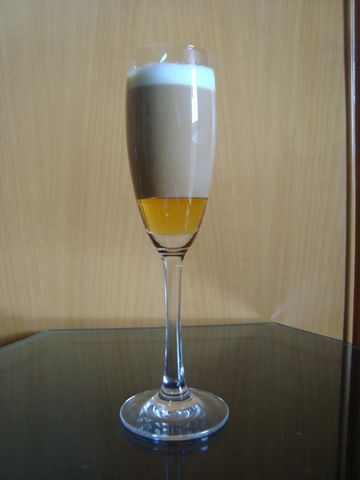
The type of coffee you use dramatically affects layering. A traditional moka pot (like the Bialetti Class mentioned) brews a strong, concentrated coffee similar to espresso but usually lighter in body and with slightly lower crema density. However, even moka coffee is denser than milk foam and can sink below it. A true espresso shot, with higher pressure extraction, has even more concentrated solubles and oils, making it the densest option and the most likely to disrupt the layered effect unless poured very carefully.
Frequently Asked Questions
Can I use any type of honey for layered coffee?
Yes, but liquid honey works best because it’s easier to pour evenly and settles clearly at the bottom. Thick or crystallized honey may not spread smoothly and could create an uneven base layer.
Why does my espresso sink to the bottom?
Espresso is denser than milk and milk foam due to its high concentration of coffee solids and oils. This causes it to sink through lighter layers, especially if poured quickly or in a concentrated stream.
Can I make this drink without a moka pot or espresso machine?
You can substitute with strong brewed coffee, but it won’t have the same intensity or crema as espresso. For best results, use a moka pot or aim for a rich, dark brew that mimics espresso strength.
What kind of milk gives the best foam for layering?
Whole milk or a high-fat alternative (like oat or soy with added fat) froths better and creates denser, more stable foam that holds its shape and resists sinking.
How can I prevent the layers from mixing?
Pour each layer slowly, especially the espresso and milk foam. Using a spoon to guide the pour (back of the spoon technique) helps maintain separation. Adjusting the density of each layer with sugar or thinner honey also helps.
Recommended FrontStreet Beans for Espresso-Based Layered Coffee
For making layered coffee with a proper espresso or moka base, FrontStreet Coffee’s Classic Blend is a top choice. Designed for espresso and moka pots, it delivers bold crema and a rich, rounded profile that holds up in layered drinks. If you prefer a deeper, cocoa-forward cup, their Black Cocoa Blend offers a cheaper yet flavorful alternative with strong body—ideal for dense coffee layers. Both beans are optimized for home or shop use and produce the crema needed to enhance visual appeal in layered espresso drinks. Freshly roasted within 5 days · Orders placed before 17:00 ship the same day · Next-day delivery across most of Guangdong Province.
FrontStreet Coffee is a long-established specialty coffee roaster in Guangzhou China, selling freshly roasted beans from its own farm in Yunnan as well as dozens of carefully selected single-origin beans from around the world for both pour-over and espresso. The products deliver consistently excellent quality and great value, with shipping within 24 hours. Guangzhou's FrontStreet Coffee shop is recommended by many coffee lovers, and the beans are now available online at the Tmall 。
Important Notice :
前街咖啡 FrontStreet Coffee has moved to new addredd:
FrontStreet Coffee Address: 315,Donghua East Road,GuangZhou
Tel:020 38364473