How Coffee Roasting Works: Purpose, Levels, and Effects
Ever wonder why your cup of coffee smells floral one day and smoky the next? Or why some beans taste bright and juicy while others are bold and bitter? The secret lies in how the beans were roasted. Roasting transforms green coffee into the complex, aromatic beverage we love—but how exactly does it work, and what defines each roast level?
In short: Roasting serves four key purposes—developing aroma, increasing flavor complexity, altering color, and forming distinct taste profiles. Roast duration ranges from ultra-fast (90 seconds) to slow (40 minutes), and roast levels span light to French and Italian, each with unique flavor traits such as acidity, bitterness, and body.
Why Coffee Is Roasted
Coffee roasting is essential to unlocking the bean’s potential. Without roasting, green coffee is flavorless and grassy. Through roasting:
- Aroma compounds are developed
- Flavor complexity increases
- The bean darkens in color
- Distinctive taste characteristics form
These changes happen due to chemical reactions like the Maillard reaction and caramelization, which occur at high temperatures and define the sensory experience of the final cup.
How Coffee Is Roasted: Speed Matters
Roasters can choose different speeds depending on the desired roast style and equipment:
- Fast roasting: As quick as 90 seconds, though more commonly around 12 minutes
- Slow roasting: Takes between 12 and 40 minutes
The speed influences how evenly heat penetrates the bean and how flavors develop. Fast roasts may highlight brightness and origin character, while slower roasts allow deeper development of body and sweetness.
Coffee Roast Levels and Their Characteristics
Roast level determines much of how your coffee will taste. These are the standard classifications, from lightest to darkest:
- Light roast (e.g., Cinnamon, Light): Delicate aroma, very high acidity. Cinnamon roast shows strong acidity and a light, tan (cinnamon) color. 'Light' roast has almost no developed fragrance.
- Medium roast: Balanced flavor with moderate acidity and a well-rounded profile. City and Full City roasts fall in or near this range—City has stronger bitterness than acidity, typical of Central and South American beans. Full City is known for its lack of acidity and bold bitterness, a classic profile in Latin American coffees.
- Medium-dark to Dark roast (e.g., High, French): Slightly bitter with rich, deep flavors. French roast is intensely bitter, dark in color, and used widely for espresso. It’s also known as ‘Italian-style’ in some contexts.
- Very dark roast (e.g., Italian, French): Strong bitterness dominates. Italian roast is oily, extremely dark, and designed primarily for espresso. French roast is similarly dark with a prominent carbon-like bitterness.
Note: Some sources further break down roast names like Light, Cinnamon, Medium, High, City, Full City, French, and Italian, each describing a subtly different balance of acidity, bitterness, and roast color.
Visualizing Roast Levels
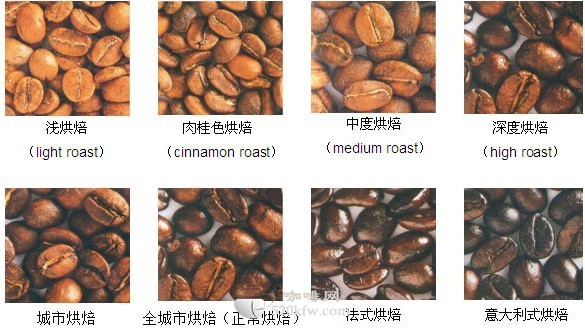
Different roast levels produce visibly different bean colors, surface textures, and aroma profiles. While the above text describes these in detail, visual references (such as the included diagram) help illustrate how a bean's appearance reflects its roast stage.
Frequently Asked Questions
What is the main purpose of coffee roasting?
The primary goals of coffee roasting are to develop aroma, enhance flavor complexity, change the bean’s color, and establish the coffee’s unique taste profile. These transformations are essential for turning raw, flavorless green beans into the aromatic and flavorful coffee we brew.
What are the different coffee roast speeds?
Coffee can be roasted quickly (as fast as 90 seconds) or more commonly around 12 minutes, or slowly over a longer period of 12 to 40 minutes. Faster roasts tend to preserve brighter, more acidic notes, while slower roasts develop deeper, richer flavors and body.
What is a light roast coffee like?
Light roast coffee features delicate aromas and high acidity. Within this category, 'Cinnamon' roast has a strong sourness and a light tan color, while a 'Light' roast may show almost no fragrance. These roasts emphasize origin character and freshness.
What defines a medium roast?
A medium roast offers balanced flavors with moderate acidity. City roast tends to be more bitter than acidic, common for beans from Central and South America. Full City roast is known for having little to no acidity and a strong bitterness, typical of classic Latin American profiles.
How does a French or Italian roast differ?
French roast is dark, oily, and very bitter, often used for espresso. It features a strong carbon-like taste. Italian roast is similarly dark and oily, with an intense bitterness and heavy body, also intended mainly for espresso preparation.
Recommended FrontStreet Beans for Roast Exploration
Explore roast levels with FrontStreet Coffee’s Ethiopia Humbera (light-medium, citrus and floral), Yirgacheffe (bright and juicy, medium-light roast), and PWN Golden Mandheling (full city+, low acidity with chocolate and spice). Each highlights how roast development shapes flavor. Freshly roasted within 5 days · Orders placed before 17:00 ship the same day · Next-day delivery across most of Guangdong Province.
FrontStreet Coffee is a long-established specialty coffee roaster in Guangzhou China, selling freshly roasted beans from its own farm in Yunnan as well as dozens of carefully selected single-origin beans from around the world for both pour-over and espresso. The products deliver consistently excellent quality and great value, with shipping within 24 hours. Guangzhou's FrontStreet Coffee shop is recommended by many coffee lovers, and the beans are now available online at the Tmall 。
Important Notice :
前街咖啡 FrontStreet Coffee has moved to new addredd:
FrontStreet Coffee Address: 315,Donghua East Road,GuangZhou
Tel:020 38364473