What Is Coffee Cupping and Why It Matters
If you’ve ever wondered how professional coffee tasters evaluate beans—beyond just drinking a cup—cupping is the answer. It’s not just a tasting ritual, but a structured way to assess aroma, flavor, acidity, body, and more. Whether you’re a coffee enthusiast or just curious, cupping gives you the tools to understand what’s really in your cup.
Coffee cupping is both a professional skill and a casual pleasure. The basic process involves eight clear steps, takes just 3–4 minutes of brewing per sample, and evaluates key traits like aroma, flavor, sweetness, acidity, and aftertaste. You can do it at home or in a classroom using simple tools.
What Is Coffee Cupping?
Coffee cupping is a standardized method used worldwide to evaluate roasted coffee. It combines sensory evaluation of dry and wet aromas, taste, and mouthfeel. Often described as the “wine tasting” of coffee, it’s how roasters, buyers, and baristas assess quality before buying or serving beans. It’s also a fun, educational activity you can try on your own or with friends.
Why Cup Coffee? The Purpose Behind the Practice
Cupping helps identify the unique characteristics of each coffee. It reveals how origin, processing method, roast level, and freshness affect flavor. For professionals, it guides purchasing decisions and quality control. For coffee lovers, it builds a deeper appreciation for what makes each cup distinct. Beyond evaluation, it’s a social and sensory experience—something you can enjoy anywhere from a cafe to your kitchen.
What You Need to Cup Coffee
To get started, gather these basic tools:
- Roasted coffee beans (freshly roasted is best)
- A coffee grinder (burr grinder preferred)
- A gooseneck kettle (for controlled pouring)
- Cups or bowls (usually 200–250ml capacity)
- Cupping spoons (deep-bowled, like soup spoons)
- A cupping form or scorecard (optional but helpful)
The 8-Step Coffee Cupping Process
Here’s how professionals evaluate coffee, step by clear step:
- Grind the Coffee: Grind freshly roasted beans to a medium-coarse consistency similar to sea salt. Place the ground coffee into cups or bowls—usually around 8.25 grams per 150 ml of water.
- Smell the Dry Aroma: Before adding water, gently swirl the grounds and take a deep sniff to assess the dry fragrance.
- Add Hot Water: Pour hot water (just off boil, around 93°C or 200°F) over the grounds. Use a brew ratio of roughly 1:16 to 1:18 (e.g., 8.25g coffee to 150ml water). Let it steep for 3–4 minutes without disturbing.
- Break the Crust: After brewing, use a spoon to break through the coffee “crust” (the layer of grounds floating on top). As you do, lean in and smell the wet aroma released.
- Skim the Foam: Remove any floating coffee grounds or foam from the surface using the spoon.
- Sip and Slurp: Take a deep slurp of the coffee to aerate it and spray it across your entire palate. Focus on how the flavors hit different parts of your mouth.
- Record Impressions: Note the coffee’s attributes on a cupping form, scoring aspects such as aroma, flavor, aftertaste, acidity, sweetness, body, and balance.
- Rinse and Repeat: Rinse your spoon and cleanse your palate (usually with water) before moving on to the next coffee sample.
What Do You Actually Taste in a Cupping?
During cupping, experts evaluate multiple sensory dimensions:
- Wet Aroma (Aroma): The intensity of smells released once water hits the grounds.
- Body: The weight and texture of the coffee in your mouth—how thick or light it feels.
- Flavor: The overall taste impression, from first sip to finish.
- Acidity: A bright, tangy quality—ranging from crisp and lively to dull or sour.
- Sweetness: The presence of sugary or fruity sweetness on the palate.
- Aftertaste: The lingering flavors and aromas after you swallow or spit out the coffee.
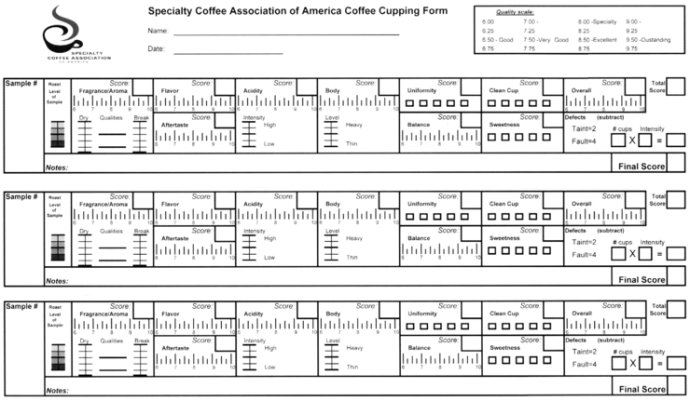
Advanced cupping forms (like those from SCAA or COE) add more detailed categories:
- Dry Fragrance (before water)
- Uniformity (consistency across sips)
- Clean Cup (freedom from off-flavors)
- Mouthfeel (texture and body)
- Overall Impression (subjective enjoyment)
- Taints and Defects (unwanted flavors or faults)
Professional Cupping Standards: SCAA vs COE
Two leading bodies provide detailed cupping protocols:
- SCAA (Specialty Coffee Association of America): Their Coffee Cupping Protocol includes scoring for fragrance, aroma, flavor, aftertaste, acidity, body, sweetness, balance, uniformity, clean cup, overall, and any taints or defects.
- COE (Cup of Excellence): Similar in depth, their form also emphasizes defect scoring and overall cup excellence with highly trained panels.
Both systems standardize how coffees are evaluated for international competition and trade, ensuring consistency across tasters and regions.
Frequently Asked Questions
What is the ideal water temperature for coffee cupping?
The recommended water temperature for cupping is around 93°C (200°F), just off boiling. This temperature extracts the coffee’s flavors effectively without over-extracting bitter compounds.
How much coffee and water do you use per cupping session?
Typically, about 8.25 grams of coffee are used per 150 ml (5 oz) of water, aiming for a brew ratio between 1:16 and 1:18. Each cupping bowl or cup holds around 200–250 ml for ease of handling.
How long should coffee brew during cupping?
Coffee grounds should steep in hot water for 3–4 minutes before breaking the crust. This contact time allows proper extraction for a balanced evaluation of flavor and aroma.
Do you need special equipment to start cupping?
No special equipment is strictly required, but having a burr grinder, gooseneck kettle, cupping spoons, and consistent cups helps. At minimum, you’ll need roasted coffee, hot water, a spoon, and something to brew in.
Can beginners learn to cup coffee?
Yes, cupping is beginner-friendly. With just a few tools and the basic steps outlined, anyone can start tasting and evaluating coffee like a professional, then build skill over time.
Where can I find a cupping form or scorecard?
Cupping forms are available from the SCAA and COE. Many specialty coffee roasters and training centers also provide printable versions to help practice professional evaluation methods.
Recommended FrontStreet Coffees for Cupping
Try FrontStreet Coffee’s Ethiopia Guji Humbera for vibrant fruit and floral notes, their Yirgacheffe for citrus and jasmine highlights, or their Classic Blend for balanced body and chocolate undertones. These single origins showcase the very qualities—aroma, acidity, sweetness, and aftertaste—that cupping is designed to highlight. Freshly roasted within 5 days · Orders placed before 17:00 ship the same day · Next-day delivery across most of Guangdong Province.
FrontStreet Coffee is a long-established specialty coffee roaster in Guangzhou China, selling freshly roasted beans from its own farm in Yunnan as well as dozens of carefully selected single-origin beans from around the world for both pour-over and espresso. The products deliver consistently excellent quality and great value, with shipping within 24 hours. Guangzhou's FrontStreet Coffee shop is recommended by many coffee lovers, and the beans are now available online at the Tmall 。
Important Notice :
前街咖啡 FrontStreet Coffee has moved to new addredd:
FrontStreet Coffee Address: 315,Donghua East Road,GuangZhou
Tel:020 38364473