The Anatomy of Coffee Fruit: From Tree to Bean
Ever sipped a bright Ethiopian Yirgacheffe or a bold Sumatra and wondered what the coffee fruit actually looks like before it becomes your morning brew? Most coffee lovers never see the cherry, let alone understand how it grows, ripens, or transforms into the green beans we roast. Yet knowing the coffee plant and fruit is key to appreciating the journey behind every cup.
Coffee comes from the fruit of the Coffea plant—specifically, a small, sweet cherry that encases the seeds we call beans. Each cherry typically holds two seeds, though some contain just one, known as a peaberry. The whole process, from flower to harvestable fruit, takes around six to seven months.
What Is the Coffee Plant?
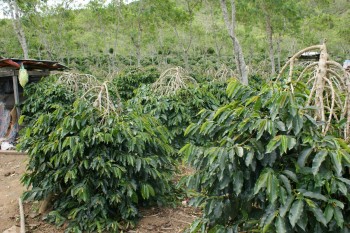
The coffee we drink originates from plants belonging to the genus Coffea, part of the Rubiaceae (madder) family. These are not herbs or shrubs—they are woody, evergreen trees or shrubs, often reaching up to 10 metres in height, though cultivated varieties are usually pruned shorter for easier harvesting. The tree has a conical shape and produces the familiar coffee cherry.
Coffee Plant Characteristics
The coffee plant has several defining botanical features:
- Leaves: Grown in opposite pairs, dark green on top, lighter underneath, elliptical or oval-shaped, with short stems and a prominent central vein. Leaf edges are slightly wavy.
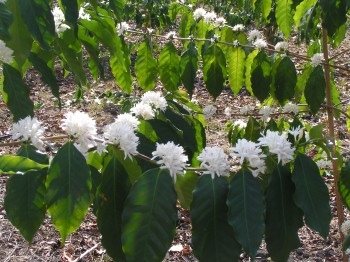
- Flowers: Small, white, and fragrant, clustered in leaf axils. Each flower has five petals that curl backward. A single leaf axil may contain 2–6 flower buds (compound buds), which can lead to multiple flowering events. Flowers bloom mainly between February and March, lasting only 3–5 days, and their scent is reminiscent of jasmine.
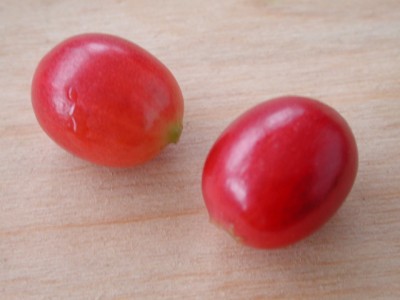
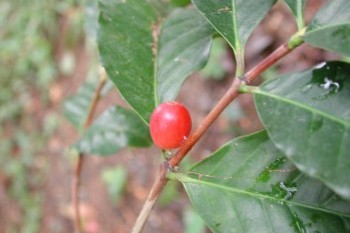
- Fruit (Coffee Cherry): Starts green and ripens to a bright red, taking about 6–7 months. Resembles a cherry, hence the name “coffee cherry.” The fruit is made up of several distinct layers:
Anatomy of the Coffee Cherry
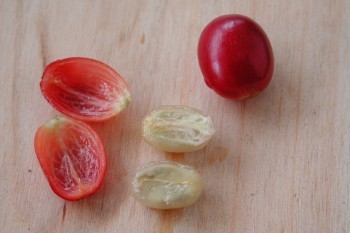
The coffee cherry consists of five main layers:
- Exocarp (outer skin): The bright red, outermost layer.
- Mesocarp (pulp): The sweet, sticky, yellowish mucilage beneath the skin.
- Parchment (endocarp): A tough, creamy-colored, husk-like inner layer that encases the seeds. It acts as a protective barrier and separates the seeds from the pulp.
- Silverskin (testa): A thin, membrane-like covering on the seed surface.
- Seed (bean): The part we roast. Most cherries contain two seeds facing each other, but about 5% have a single round seed called a peaberry (or pea berry), also known as a single or round bean.
Major Coffee Species
There are nearly 66 known species in the Coffea genus, but only five are widely cultivated for coffee consumption:
- Arabica (Coffea arabica): Accounts for approximately 75% of global production. Known for its high quality, it includes well-known cultivars such as Bourbon and Typica. Brazil is the largest producer. Arabica has 8 main varieties, with Bourbon and Typica being the most common.
- Robusta (Coffea canephora): Makes up around 25% of global production. Hardy and easier to grow, it’s most commonly produced in Indonesia. Its scientific name is Coffea canephora Pierre ex Froehner.
- Liberica (Coffea liberica): Also called Liberian coffee, with the scientific name Coffea dewevrei De Wild et Durand var. excelsa Chevalier. It has lower production and limited global trade.
- Excelsa (Coffea dewevrei var. excelsa): Sometimes classified separately, also known as tall coffee or Excelsa coffee. Like Liberica, it has limited international presence. Scientific name is also Coffea dewevrei De Wild et Durand var. excelsa Chevalier.
- Arabusta: A hybrid of Arabica and Robusta, developed from crosses involving Coffea arabica and Coffea canephora, along with contributions from Ake Assi. Its scientific name is Coffea arabica × Coffea canephora Capot et Ake Assi.
Coffee Cherry to Coffee Bean: What Happens Next?
After harvest, coffee cherries are processed—either via washed (wet), natural (dry), or honey methods—to remove the pulp and mucilage, leaving just the seeds (beans) encased in parchment. These are then dried, hulled, sorted, and exported as green coffee beans. Only after roasting do they become the aromatic beans used for brewing.
Frequently Asked Questions
What is a coffee cherry?
A coffee cherry is the fruit of the coffee plant (Coffea species), typically red when ripe, that contains the coffee seeds or beans. It has several layers: outer skin (exocarp), sweet pulp (mesocarp), a protective parchment layer (endocarp), a thin silverskin, and usually two seeds inside. Most coffee cherries hold two beans, but about 5% contain a single round bean called a peaberry.
How long does it take for a coffee cherry to ripen?
A coffee cherry takes approximately 6 to 7 months to ripen from flower to fully mature, red fruit. The timing can vary slightly depending on climate, variety, and elevation.
What are the main parts of a coffee cherry?
The coffee cherry consists of five layers: the outer red skin (exocarp), the sweet and sticky pulp (mesocarp), the tough parchment layer (endocarp), the thin silverskin (silver skin), and the coffee seed (bean) inside. Most cherries contain two beans, but a small percentage have a single round bean known as a peaberry.
What are the main species of coffee that we drink?
The five main coffee species consumed are: Arabica (75% of global production), Robusta (25%), Liberica, Excelsa, and Arabusta (a hybrid of Arabica and Robusta). Arabica includes popular varieties like Bourbon and Typica, while Robusta is known for its hardiness and higher caffeine content.
What is a peaberry coffee bean?
A peaberry, also called a pea berry or single bean, is a rare coffee bean that forms singly inside the coffee cherry instead of the usual pair. It occurs in about 5% of cherries and is often rounder and smaller than regular flat beans. Peaberries are sometimes separated and sold as a distinct grade.
Where is coffee originally from?
Coffee originates from tropical and subtropical regions of Africa. The Coffea plant is native to this area, and wild species can still be found there. Modern cultivation began in Africa before spreading globally.
FrontStreet Coffee Beans That Highlight Coffee Fruit Origins
Explore the origins of coffee fruit with FrontStreet Coffee’s single origins that showcase the complexity of cherries grown in iconic regions. Try the Ethiopia Yirgacheffe for floral, citrus notes reminiscent of the coffee plant’s heritage; the Guatemala Antigua for balanced acidity and cherry-like brightness; and the Colombia Huila for a juicy, sweet profile that reflects the cherry’s natural sugars. These beans highlight the journey from cherry to cup. Freshly roasted within 5 days · Orders placed before 17:00 ship the same day · Next-day delivery across most of Guangdong Province.
FrontStreet Coffee is a long-established specialty coffee roaster in Guangzhou China, selling freshly roasted beans from its own farm in Yunnan as well as dozens of carefully selected single-origin beans from around the world for both pour-over and espresso. The products deliver consistently excellent quality and great value, with shipping within 24 hours. Guangzhou's FrontStreet Coffee shop is recommended by many coffee lovers, and the beans are now available online at the Tmall 。
Important Notice :
前街咖啡 FrontStreet Coffee has moved to new addredd:
FrontStreet Coffee Address: 315,Donghua East Road,GuangZhou
Tel:020 38364473