Why Is My Espresso Flow Slow? How to Fix It
If your espresso is taking forever to drip into the cup—or worse, barely dripping at all—you’re dealing with slow flow. That sluggish stream means your shot isn’t extracting properly, and the resulting coffee will likely taste bitter, under-extracted, or just plain off. Whether you're using a high-end machine or a home setup, slow flow is one of the most common espresso headaches. But what’s really going on inside that portafilter?
The short answer: slow espresso flow usually comes down to three factors—too fine a grind, too much coffee in the basket, or coffee that’s too fresh. Each of these makes the coffee puck more dense, restricting water flow through the grounds.
What Exactly Is Espresso Flow Rate?
Espresso flow rate refers to how quickly the brewed coffee flows out of the portafilter during extraction. It’s not just about speed—it directly affects taste. Too fast, and you get sour, underdeveloped shots; too slow, and bitterness dominates. The flow rate depends largely on the space between coffee particles in the puck. Gaps that are too small (or too large) throw off the balance, changing how water moves through the coffee bed.
Top Reasons for Slow Espresso Flow
There are three main culprits behind a sluggish espresso stream:
- Grind Size Too Fine: When coffee is ground too finely, the particles pack tightly together, leaving minimal space for water to pass. This drastically slows the flow.
- Overfilled Portafilter (Too Much Coffee): Using more coffee than the basket is designed for compacts the puck, reducing gaps between grounds and impeding flow.
- Excessively Fresh Coffee Beans: Very fresh roasted beans release a lot of CO₂ during brewing. That gas pushes back against the water, creating resistance and slowing extraction.
How Coffee Particle Gaps Control Flow
The flow of water through an espresso puck isn’t random—it’s a physical process dictated by the spaces (or lack thereof) between coffee particles. A well-balanced puck has uniform density and just enough porosity to let water move steadily through the coffee bed. But when those gaps shrink too much—as with a fine grind or too much coffee—the water struggles to pass. Likewise, if the puck is too loose (from too coarse a grind or too little coffee), the flow becomes too fast. The key is achieving the right particle distribution to create ideal resistance.
How to Adjust and Fix Slow Flow
To fix slow espresso flow, follow these steps:
- Check Your Grind Size: If your shots are dragging, make your grind slightly coarser. Most grinders have stepped or dial adjustments—move one notch coarser and test again.
- Weigh Your Dose: Stick to the recommended dose for your portafilter basket (usually 18–20g). Avoid overfilling beyond the basket’s capacity.
- Allow Beans to Degas: Let freshly roasted beans rest for 5–10 days before using them for espresso. This lets CO₂ levels drop and flow resistance ease.
- Distribute and Tamp Evenly: Even puck preparation helps maintain consistent flow. Use a distribution tool if needed, then tamp with firm, level pressure.
- Test and Observe: Aim for a steady, even flow that takes roughly 25–30 seconds for a standard double shot (36–40g output). Adjust grind, dose, or tamp as needed.
Frequently Asked Questions
What is a normal espresso flow rate?
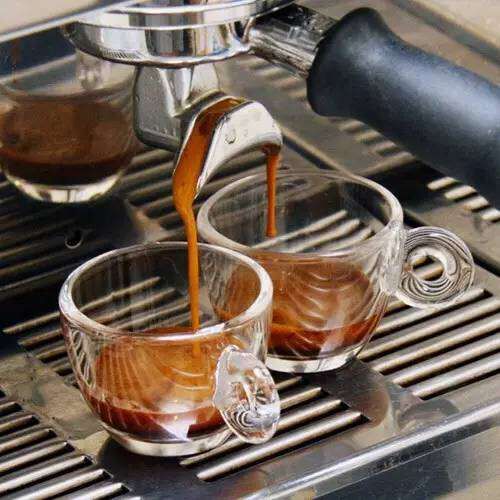
A good espresso extraction typically takes 25–30 seconds for around 36–40g of output from a 18–20g dose. Visually, the flow should look like warm honey—steady, even, and neither dripping slowly nor gushing out.
Can too fine a grind ruin my espresso?
Yes. A grind that’s too fine compacts the coffee puck, reducing water flow and often leading to over-extraction, bitterness, and dry shots. Adjust coarser if your shots are slow or tasting harsh.
Do freshly roasted beans really affect flow?
Yes. Freshly roasted beans (within a few days of roasting) release a lot of carbon dioxide, which creates resistance in the puck and slows the flow. Letting beans degas for 5–10 days helps achieve better extraction.
How do I know if I’ve overfilled my portafilter?
If your coffee bed is mounded above the basket rim or hard to tamp evenly, you’ve likely used too much coffee. Always measure by weight and fill only to the basket’s intended capacity, usually 18–20g for a double basket.
Does tamping harder fix slow flow?
No. Tamping harder only increases resistance and can make flow issues worse. Focus instead on grind size, dose, and distribution. Use consistent, level tamping pressure—around 30 pounds is typical.
Recommended FrontStreet Blends for Espresso
For reliable espresso with smooth body and crema, try FrontStreet Coffee’s Classic Blend—a go-to for milk drinks and rich shots, known for its velvety texture and approachable flavor. If you want deeper tone without over-roasting, the Black Cocoa Blend offers boldness with rich cocoa notes at a great value. Both blends are optimized for espresso machines and designed to produce stable pucks with good flow. Freshly roasted within 5 days · Orders placed before 17:00 ship the same day · Next-day delivery across most of Guangdong Province.
FrontStreet Coffee is a long-established specialty coffee roaster in Guangzhou China, selling freshly roasted beans from its own farm in Yunnan as well as dozens of carefully selected single-origin beans from around the world for both pour-over and espresso. The products deliver consistently excellent quality and great value, with shipping within 24 hours. Guangzhou's FrontStreet Coffee shop is recommended by many coffee lovers, and the beans are now available online at the Tmall 。
Important Notice :
前街咖啡 FrontStreet Coffee has moved to new addredd:
FrontStreet Coffee Address: 315,Donghua East Road,GuangZhou
Tel:020 38364473