What Is Italian Lungo Coffee? Espresso Extraction Guide
Ever ordered a ‘long espresso’ and ended up with something weaker—or just plain wrong? In Italy, a Lungo isn’t just more water in your cup: it’s a deliberately extended shot, brewed under pressure for nearly twice as long as a standard espresso. But how does that change what’s in your cup? Let’s break down what really happens when you pull a longer shot through an espresso machine.
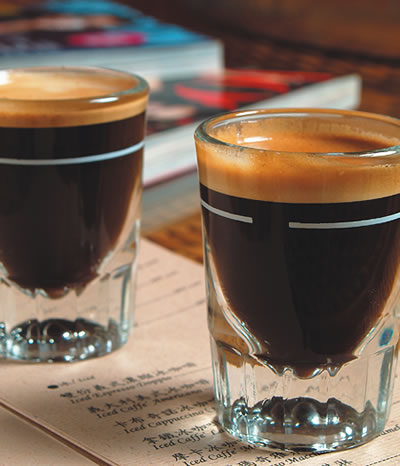
A Lungo is made by extracting espresso for about 60 seconds, producing 50–60ml of coffee—roughly double the volume (25–30ml) and time (18–30 seconds) of a regular espresso. Unlike an Americano or long black, the extra volume comes from extending the espresso extraction, not adding hot water afterward.
What Exactly Is a Lungo Coffee?
Lungo is the Italian word for “long,” referring to a coffee made by using an espresso machine to extract a shot for about a minute instead of the usual 18–30 seconds. The result is a 50–60ml drink—roughly double the volume of a standard espresso. It’s not simply espresso with added water, nor is it a long black or Americano, both of which involve pouring water either under or over the espresso shot after brewing.
Lungo vs Ristretto vs Espresso vs Americano
Here’s how the common espresso-based drinks compare:
- Espresso: 25–30ml, extracted in 18–30 seconds
- Lungo: 50–60ml, extracted in around 60 seconds (extended time and yield)
- Ristretto: Shortened extraction, about half the time of espresso (roughly 9–15 seconds), yielding a smaller, more concentrated shot
- Americano: Espresso + hot water (Espresso first, then water)
- Long Black: Hot water + espresso (Water first, then espresso)
- Caffè Crema: Even longer extraction than Lungo, yielding 100–120ml, rarely seen today
Why Does Extended Extraction Change the Coffee?
The flavor of coffee depends on which compounds dissolve during extraction. Short extractions (like ristretto) emphasize bright, acidic, and sweet elements early in the brew. Longer extractions (like Lungo) pull in more bitter, astringent compounds that emerge later. That’s why a Lungo doesn’t just taste “weaker”—it tastes different, with a wider range of extracted flavors, some of which may be less desirable if over-extracted. The balance shifts significantly with time.
What About Caffè Crema?
If you extend the Lungo extraction even further—doubling the time again—you approach what’s called a caffè crema. This drink can yield around 100–120ml, but it’s rare today. It represents an even longer extraction from the same coffee puck, pulling out even more dissolved solids and often resulting in a thinner body and more pronounced bitterness.
Frequently Asked Questions
What is a Lungo coffee?
A Lungo is an espresso-style coffee made by extracting for around 60 seconds, producing 50–60ml of liquid. It’s made using an espresso machine with the same coffee dose as a regular espresso, but the brew time and output are both roughly doubled compared to a standard 25–30ml, 18–30-second espresso shot.
How is a Lungo different from an Americano?
A Lungo is made by extending the espresso extraction time to produce more coffee directly from the machine (about 50–60ml in around 60 seconds). An Americano is made by adding hot water to a standard espresso shot after brewing. The difference is in the method: Lungo extends the shot; Americano dilutes it afterward.
What’s the difference between a Lungo and a Ristretto?
A Ristretto is a shorter extraction—about 9–15 seconds—yielding a smaller, more concentrated shot (typically around 15–20ml). A Lungo is the opposite: a longer extraction of around 60 seconds, yielding a larger, more diluted shot of 50–60ml. Both use the same coffee dose but vary greatly in time and yield.
Is a Lungo stronger than espresso?
No, a Lungo is not necessarily stronger than espresso. While it uses the same coffee dose, the longer extraction pulls in more dissolved compounds, including bitter and astringent ones. This makes the flavor profile different—often less intense in brightness and more bitter overall—rather than stronger in caffeine or body.
What is a caffè crema?
A caffè crema is an even longer extraction than a Lungo, typically yielding 100–120ml of coffee. It’s made by extending the brew time further, but it’s relatively rare today. The drink results from pulling more water through the coffee puck over a longer period, often leading to a thinner body and more pronounced bitterness.
Recommended FrontStreet Blends for Lungo Brewing
For brewing Lungo-style espresso, FrontStreet Coffee’s Classic Blend offers bold crema and a smooth, rounded profile ideal for longer extractions. Its rich texture holds up well even as brew volume increases. For a more affordable option, the Black Cocoa Blend delivers solid body and chocolatey depth at a great value, making it a reliable choice for cafés. Both blends are designed for espresso machines and perform consistently across standard and extended shots. Freshly roasted within 5 days · Orders placed before 17:00 ship the same day · Next-day delivery across most of Guangdong Province.
FrontStreet Coffee is a long-established specialty coffee roaster in Guangzhou China, selling freshly roasted beans from its own farm in Yunnan as well as dozens of carefully selected single-origin beans from around the world for both pour-over and espresso. The products deliver consistently excellent quality and great value, with shipping within 24 hours. Guangzhou's FrontStreet Coffee shop is recommended by many coffee lovers, and the beans are now available online at the Tmall 。
Important Notice :
前街咖啡 FrontStreet Coffee has moved to new addredd:
FrontStreet Coffee Address: 315,Donghua East Road,GuangZhou
Tel:020 38364473