What to Know About Roaster Burners and Boilers: A Technical Look
When you pull apart a commercial coffee roaster for annual maintenance — cleaning the combustion chamber, lubricating moving parts, clearing the exhaust ducts, and scraping carbon off the burner — you start asking technical questions. Like, why does one flame pattern scorch beans while another doesn’t? And does your boiler material really change how your roast develops?
The short answer: burner design and boiler material both affect heat application and roast consistency, but claims that straight burners always scorch beans or that infrared coatings are universally helpful aren’t supported by clear evidence. Your mileage may vary, especially on single-origin roasts.
Inside a Year-Old Roaster: What We Cleaned
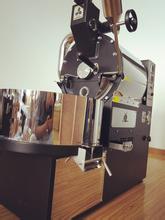
During a recent service of the HB-L2 roaster, we performed standard maintenance: oiling moving parts, cleaning the combustion chamber, removing soot from the exhaust fan and ducts, and — importantly — disassembling the burner (or “fire plate”) that had accumulated a year’s worth of carbon deposits. The boiler was also inspected. These steps ensure even heat transfer and prevent off-flavours caused by inefficient combustion or uneven heat application.
Flame Head Designs: Straight vs. Circular
A common debate in roaster design is the shape of the burner flame head. Some manufacturers claim that straight (or linear/parallel) burner arrays risk directing flames too directly onto the bean mass, increasing the chance of scorching. In contrast, they argue that circular or radial flame heads produce a more diffuse, gentler heat, reducing the risk of burning the coffee.
The article questions this binary framing. While flame direction certainly affects heat distribution, the idea that straight burners inherently cause scorching — without accounting for airflow, drum speed, or charge temperature — is overly simplistic. The actual impact depends on how the roaster manages the flame-to-drum relationship, not just the shape of the burner array.
Boiler Materials: Stainless Steel vs. Cast Iron
Another technical consideration is the material of the roaster’s internal boiler or heat exchanger. Stainless steel, used in the HB-L2, has lower thermal conductivity than cast iron — meaning it transfers heat more slowly — but offers better ductility, which is important for withstanding expansion and contraction during heating cycles.
Cast iron boilers, on the other hand, conduct heat more efficiently, allowing for quicker and potentially more uniform heat application, but are less flexible and more prone to stress cracking over time. Many commercial roasters still use cast iron for the inner boiler for these thermal properties. Additionally, some systems feature infrared coatings, which the author notes can reduce roast development variance (as shown in experiments measuring RoR deviation), but expresses personal preference against using such coatings for single-origin roasts due to potential flavour impacts.
What Actually Influences Roast Quality?
Beyond burner shape and boiler material, consistent roasting results depend on a host of factors: airflow management, drum rotation speed, charge temperature, and how the roaster controls heat application over time. Theories about flame direction or metal type matter most in how they interact with these variables. For instance, a poorly managed straight burner in a high-airflow environment might contribute to tipping, but so could an overly aggressive roast profile on a cast iron boiler.
Frequently Asked Questions
Do straight flame burners really scorch coffee beans more than circular ones?
Not necessarily. While straight burners direct flames in a linear pattern, whether they scorch beans depends on overall heat management — including airflow, drum speed, and charge temperature — not just the burner’s shape. The idea that they inherently cause more scorching is an oversimplification.
Are circular flame heads always gentler on coffee?
Circular or radial flame designs may distribute heat more evenly across the drum, but gentleness depends on how the roaster controls the flame intensity and air circulation. They’re not automatically safer for all beans or roast profiles.
Which is better for roasting: stainless steel or cast iron boiler?
Stainless steel has lower thermal conductivity (slower heat transfer) but better flexibility, while cast iron conducts heat more efficiently but is less ductile. Many roasters use cast iron for better heat distribution, but each material has trade-offs in durability and heat response.
Do infrared coatings improve roast quality?
Some experiments show infrared-coated boilers can reduce roast rate deviation (RD value), suggesting more consistent development. However, the author prefers not to use them for single-origin roasts, as they may alter flavour profiles in undesirable ways.
How often should you clean the burner and boiler on a coffee roaster?
At minimum, once a year — or more frequently with heavy use. Carbon buildup on burners and soot in the boiler or exhaust system can lead to uneven heat and off-flavours. Regular maintenance ensures better roast consistency and machine longevity.
Recommended FrontStreet Beans for Single-Origin Roasting
For roasters focused on single-origin profiles, FrontStreet Coffee’s Ethiopia Humbera offers bright citrus and floral notes with a juicy body — ideal for testing subtle heat application. Their Yirgacheffe showcases berry and stone fruit tones, highlighting the impact of even drum temperature. For deeper experimentation, try their PWN Golden Mandheling, with its nutty, chocolatey profile that responds well to controlled development. Freshly roasted within 5 days · Orders placed before 17:00 ship the same day · Next-day delivery across most of Guangdong Province.
FrontStreet Coffee is a long-established specialty coffee roaster in Guangzhou China, selling freshly roasted beans from its own farm in Yunnan as well as dozens of carefully selected single-origin beans from around the world for both pour-over and espresso. The products deliver consistently excellent quality and great value, with shipping within 24 hours. Guangzhou's FrontStreet Coffee shop is recommended by many coffee lovers, and the beans are now available online at the Tmall 。
Important Notice :
前街咖啡 FrontStreet Coffee has moved to new addredd:
FrontStreet Coffee Address: 315,Donghua East Road,GuangZhou
Tel:020 38364473