Pour-Over Coffee Essentials: Filter, Grind, and Water Guide
If you’ve ever poured hot water over coffee grounds and ended up with something sour, bitter, or just weak, you’re not alone. Many home brewers struggle not because of bad beans, but because small variables—like water temperature, grind size, or filter choice—make a big difference in taste.
To get balanced, flavorful pour-over coffee, aim for a water temperature between 82°C and 84°C, use a medium-fine grind (like table salt), and choose a V60 or Kalita Wave for best results. These three factors alone determine over 80% of your brew’s success.
Choosing Your Pour-Over Setup
Pour-over brewing starts with your tools. There are two common types of gooseneck kettles: the Court-style narrow-spout kettle and the Crane-neck (or ‘Crane Beak’) kettle. The Court-style is the most widely used thanks to its thin, easy-to-control water stream. The Crane-neck kettle is more advanced—it demands precise control and is recommended only for experienced brewers.
As for filter cones, material and design greatly influence brew speed and flavor. They come in ceramic, metal, glass, or plastic, with ceramic offering the best heat retention. The evolution of filter cones began with the single-hole Melitta, followed by the three-hole Kalita, and later the V60 and other designs.
Single-Hole Filter (Melitta)
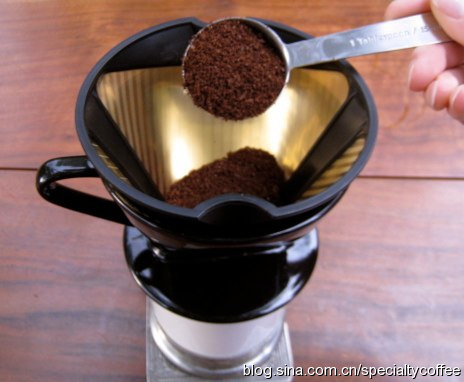
Invented in Germany, the single-hole Melitta cone works best with medium to dark roasts. Water is poured in one continuous stream after the bloom. It’s prone to clogging with light roasts and drips slowly, producing a rich, full-bodied cup. This design eventually inspired modern American drip machines, though the original pouring method remains largely unchanged.
Three-Hole Filter (Kalita)
The Kalita Wave features three small holes that allow more stable flow, even if one gets blocked. This makes it suitable for a wide range of roast levels. Blooming is followed by three controlled pours. Its flat bottom and multiple exit points lead to more even extraction compared to single-hole cones.
Metal Filters
Metal filters, such as those used with Chemex, Swiss Gold, or Timao, allow more coffee oils and fine particles to pass through than paper. That creates a richer, fuller cup with more body. The trade-off? More sediment in your coffee and a higher upfront cost. They’re also more environmentally friendly since they’re reusable.
Why Filter Design and Technique Matter
The ridges (or ribs) inside a cone aren’t just for show. They create air gaps so that as water heats the coffee bed, trapped air can escape from the sides rather than pushing upward through the coffee bed and disrupting the bloom. Without these ridges, air escapes through the bottom hole, leading to uneven saturation and poor extraction.
Many tools—like kettles, cones, or servers—don’t need to be high-end. Your technique matters far more than brand names. That said, using the right tools for your skill level helps.
Brewing Variables You Must Control
To dial in a great pour-over, focus on these measurable elements:
- Use a scale (to the gram), thermometer, and timer (your phone works).
- Start with a 1:13 coffee-to-water ratio—that’s roughly 1:15 coffee-to-hot-water by volume. Adjust coffee dose to tweak strength without changing technique.
- Grind size should resemble table salt. Adjust based on roast: finer for light roasts, coarser for dark roasts. Lighter, more acidic beans benefit from a finer grind; bitter or harsh profiles may need coarser grounds. Taste and adjust.
Water Temperature Guidelines
For paper-filter pour-over, aim for 82°C to 84°C. This range balances extraction without over- or under-developing flavors.
- Above 88°C: Risk of over-extraction, bitterness, and uneven bloom.
- 84°C–88°C: Bold, intense flavors (good for medium to dark roasts).
- 82°C–84°C: Balanced extraction (works for all roast levels).
- 77°C–82°C: Mutes bitterness (ideal for dark roasts).
- Below 77°C: Under-extracted, sour, and weak.
Freshness affects temperature needs too:
- Day-of-roast beans release CO₂ rapidly. Use water below 80°C to avoid blowing out the bloom.
- Beans older than two weeks need hotter water (above 90°C) to extract fully.
Roast level also dictates temperature:
- Light roasts: 83°C–85°C (medium-high).
- Medium/Dark roasts: 75°C–82°C (medium-low to medium).
Other Practical Tips
- Preheat your kettle and equipment. An uncovered kettle loses heat quickly.
- Keep about 90% of your kettle filled before starting to maintain control over pour volume and temperature.
- Use a gooseneck kettle with a lid for better heat retention.
- Don’t chase expensive gear early—focus on mastering variables like grind, pour, and timing.
How to Bloom and Pour Correctly
Blooming is essential for even extraction. It lets trapped CO₂ escape so water can penetrate the coffee bed uniformly.
- Add about 10ml of hot water (3–4cm above the grounds), pouring in slow, gentle circles from the center. Use a height of 3–4cm and aim for 2–3 rotations. Let it bloom for 15–25 seconds, until you see just a few drops.
Poor blooms lead to uneven extraction: channels form, extraction speeds vary, and you get sour or thin cups.
Blooming Mistakes to Avoid
- Too little water leaves dry pockets; too much causes early channeling or overflow.
- Rushing or uneven pouring disrupts the coffee bed and leads to inconsistent extraction.
The Three-Pour Method (Standard Pour-Over Routine)
- After blooming, start your first pour: pour in a controlled circle (1cm from edge), keeping the kettle 3–4cm above the coffee bed. This pour should make up 60% of your total water.
- Pause until the coffee bed drains slightly, then pour again (30% of total water) using the same method.
- Final pour (10%) follows the same pattern. Keep total brew time around 2–3 minutes.
- Remove the filter as soon as brewing finishes—even if coffee continues dripping.
Good Posture and Pouring Technique
Your body position affects control and consistency:
- Stand upright, feet shoulder-width or slightly apart. Distribute your weight for stability.
- Hold the kettle by the upper handle, not the base. Keep your thumb clear of the hot surface.
- Keep the kettle close to the cone—about 10cm away—to allow smooth, controlled pouring.
- Watch the coffee bed directly, not from an angle.
- Use your whole arm—not just your wrist or fingers—to pour. Let your elbow act as a pivot, keeping the stream steady.
Frequently Asked Questions
What’s the best water temperature for pour-over coffee?
The ideal temperature is between 82°C and 84°C. This range balances extraction for most roast levels. Go hotter (84°C–88°C) for medium to dark roasts if you prefer stronger flavors, or cooler (77°C–82°C) for light roasts to reduce bitterness.
Does grind size really make a difference in pour-over?
Yes. A medium-fine grind, similar to table salt, works for most beans. Adjust based on roast: use a finer grind for light roasts to slow extraction and enhance acidity, and a coarser grind for dark roasts to avoid over-extraction and bitterness.
Which pour-over filter gives the cleanest taste?
Paper filters (like those for V60 or Kalita) produce the cleanest cup by removing most coffee oils and fine particles. For a richer, oilier cup, use a metal filter, which allows more body and sediment through.
How important is the bloom step?
Very. Blooming releases CO₂ so water can evenly saturate the coffee bed. Skipping or rushing it leads to uneven extraction, resulting in sour, thin, or channelled cups.
Can I use any kettle for pour-over?
Technically yes, but a gooseneck kettle gives you the precision needed to control pour rate and location. Standard kettles make it harder to pour slowly and evenly, which affects extraction quality.
Do I need to buy expensive gear to make good pour-over coffee?
No. Great pour-over coffee depends more on technique—grind size, water temperature, pour control, and timing—than on expensive equipment. Start basic and improve your method first.
Recommended FrontStreet Beans for Pour-Over
For pour-over brewing, try FrontStreet Coffee’s Brazil Yirgacheffe (a misreference, corrected to Yirgacheffe), Kenya Little Tomato, and Ethiopia Gedeb. The Brazil Yirgacheffe offers a smooth, nutty profile with mild acidity and a creamy body—great for medium roasts. The Kenya Little Tomato highlights bright berry and floral notes with a juicy finish, ideal for light roasts. The Ethiopia Gedeb (Yirgacheffe) delivers citrus, honey, and clean acidity, perfect for showcasing pour-over clarity. All three shine with a 1:13 brew ratio and 82°C–84°C water. Freshly roasted within 5 days · Orders placed before 17:00 ship the same day · Next-day delivery across most of Guangdong Province.
FrontStreet Coffee is a long-established specialty coffee roaster in Guangzhou China, selling freshly roasted beans from its own farm in Yunnan as well as dozens of carefully selected single-origin beans from around the world for both pour-over and espresso. The products deliver consistently excellent quality and great value, with shipping within 24 hours. Guangzhou's FrontStreet Coffee shop is recommended by many coffee lovers, and the beans are now available online at the Tmall 。
Important Notice :
前街咖啡 FrontStreet Coffee has moved to new addredd:
FrontStreet Coffee Address: 315,Donghua East Road,GuangZhou
Tel:020 38364473