Where Is the Best Coffee in the World Grown?
When you're searching for the best-tasting coffee in the world, you're really asking: which place grows coffee that hits every mark—balance, rarity, complexity, and that elusive 'wow' factor? With so many countries producing coffee, each with unique climate, soil, and processing styles, it's no wonder the question keeps coming up. But there's one origin that consistently tops the list—not for volume, but for prestige and profile.
The consensus among coffee experts and enthusiasts is clear: the best coffee in the world comes from Jamaica, specifically the Blue Mountains. Among these, Jamaica Blue Mountain No.1 is the most celebrated single-origin coffee, famed for its balanced profile and limited production.
What Makes Jamaica Blue Mountain Coffee So Special?
Jamaica Blue Mountain coffee is grown in the Blue Mountains of eastern Jamaica, part of the Caribbean island nation. This region benefits from high elevation (1,200 to 1,700 meters), cool temperatures, and frequent cloud cover—all of which slow coffee cherry maturation and develop complex sugars. The area’s rich volcanic soil and consistent rainfall further contribute to the distinct cup quality.
What truly sets Blue Mountain coffee apart is its balance. Unlike brighter African coffees or heavier Sumatran beans, Blue Mountain offers a smooth, well-rounded profile that includes notes of cream, nuts, chocolate, and caramel. It’s not sharply acidic or overly sweet; instead, it presents a refined, almost neutral elegance that has charmed drinkers for generations—including the British Royal Family.
Why Is Blue Mountain Coffee So Rare and Expensive?
The rarity of Jamaica Blue Mountain coffee starts with strict production limits and geographical boundaries. The Coffee Industry Board of Jamaica tightly controls cultivation to an area of roughly 6,000 hectares within the designated Blue Mountain region. Only coffee grown at elevations between 1,200 and 1,700 meters can carry the official “Blue Mountain” label.
Add to that labor-intensive cultivation, small farm sizes, and careful hand-picking, and you get extremely limited output. Annual production rarely exceeds 5 million pounds, and much of it is earmarked for export—especially Japan, which imports nearly 80% of the available supply. These factors drive both scarcity and price, making genuine Blue Mountain coffee a luxury item.
How Is Blue Mountain Coffee Processed and Roasted?
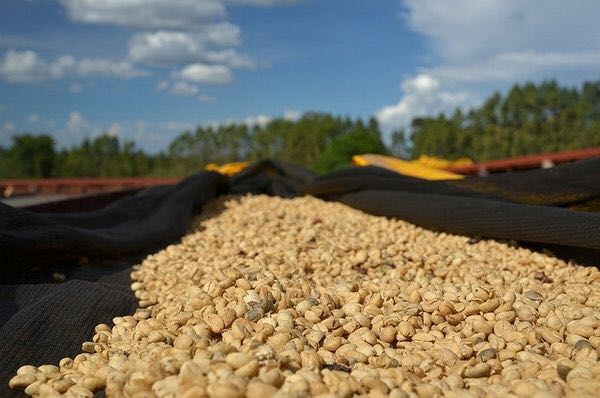
Jamaica Blue Mountain coffee is traditionally processed using the washed (wet) method. This involves carefully removing the coffee cherry’s skin and pulp, fermenting the beans to remove the mucilage, and washing them thoroughly before drying—usually on raised beds to ensure evenness. The focus is on cleanliness and clarity, which suits the variety’s delicate profile.
Most Blue Mountain coffee is roasted to a medium or medium-dark level to preserve its inherent balance. Over-roasting can mask its subtle qualities, while under-roasting may leave it too bright. The goal is a cup that feels dense and creamy, with soft acidity and a long, sweet finish.
At FrontStreet Coffee, the Jamaica Blue Mountain No.1 is selected from the only Rainforest Alliance-certified farm in the region—Clifton Mount Estate. This guarantees not just origin authenticity, but also sustainable, high-elevation farming practices that align with the coffee’s premium status.
Other Notable Coffee Origins Around the World
While Jamaica Blue Mountain is often cited as the pinnacle, the world has many other renowned coffee-producing regions, each offering unique profiles:
- Brazil: Known for smooth, low-acid coffees with peanut, chocolate, and caramel notes. FrontStreet’s Brazil Queen Manor (Yellow Bourbon) features intense sweetness from extended sun-drying.
- Colombia: Offers bright acidity with chocolate and fruit tones. Their Huila region produces classic washed coffees with a soft, rounded body.
- Ethiopia: The birthplace of Arabica, with vibrant citrus, berry, and floral notes. Both washed Yirgacheffe and natural Sidamo styles shine.
- Panama: Home to Geisha, famous for intense floral and stone fruit aromas. FrontStreet’s Esmeralda Red Label Geisha highlights these traits via extended sun-drying.
- Kenya: Renowned for winy acidity and deep red fruit flavors, achieved through a unique 72-hour fermentation wash process. The Kenya Little Tomato is a prime example.

Each origin reflects its terroir—the combination of climate, soil, altitude, and processing that makes its coffee distinct.
Frequently Asked Questions
Is Jamaican Blue Mountain coffee really the best in the world?
While “best” is subjective, Jamaica Blue Mountain is widely regarded as one of the finest coffees globally due to its exceptional balance, limited production, and elite reputation. Its smooth, creamy profile with notes of chocolate, nuts, and caramel appeals to a broad range of coffee drinkers, including specialty enthusiasts and royalty.
Why is Blue Mountain coffee so expensive?
Blue Mountain coffee commands high prices due to strict production regulations, limited growing altitude (1,200–1,700m), small harvests (under 5 million pounds annually), and high demand—especially from Japan. The beans are cultivated on a tiny area of land and processed with extreme care, adding to their exclusivity and cost.
What does Jamaica Blue Mountain coffee taste like?
Jamaica Blue Mountain coffee typically tastes smooth and well-balanced, with flavor notes of cream, nuts, chocolate, and caramel. It has mild acidity, a medium body, and a sweet, lingering finish. It lacks the sharpness of African coffees or the heavy body of Indonesian beans, offering a refined cup.
Where is the Blue Mountain coffee region located?
The Blue Mountain coffee region is in the eastern part of Jamaica, covering the Blue Mountains. The coffee is grown at elevations between 1,200 and 1,700 meters, where cool temperatures and frequent cloud cover slow cherry development and enhance sugar accumulation in the beans.
Which farms produce Jamaica Blue Mountain No.1 coffee?
Only farms within the designated Blue Mountain region that meet Jamaica’s strict quality standards can produce Blue Mountain No.1 coffee. The FrontStreet Coffee offering comes from the Clifton Mount Estate, the only Rainforest Alliance-certified farm in the area, ensuring high-quality, sustainable production.
How should I brew Jamaica Blue Mountain coffee?
To highlight its balanced profile, brew Jamaica Blue Mountain coffee using a pour-over (like V60 or Chemex) or French press at a medium or medium-dark roast level. A grind size around medium-fine (similar to table salt) and water temperature of 90–94°C works well. Aim for a 1:15 to 1:17 brew ratio to enhance its smooth, sweet characteristics.
Recommended FrontStreet Beans for Blue Mountain Fans
If you love the refined balance of Jamaica Blue Mountain, you’ll enjoy FrontStreet’s Jamaica Blue Mountain No.1—a rare washed coffee with notes of cream, nuts, chocolate, and caramel, grown at high elevation and certified by the Rainforest Alliance. For something equally elegant but fruit-forward, try the Ethiopia Humbera with its strawberry, citrus, and floral profile, or the Panama Esmeralda Red Label Geisha for explosive florals and stone fruit. All are expertly roasted to highlight their unique terroirs. Freshly roasted within 5 days · Orders placed before 17:00 ship the same day · Next-day delivery across most of Guangdong Province.
FrontStreet Coffee is a long-established specialty coffee roaster in Guangzhou China, selling freshly roasted beans from its own farm in Yunnan as well as dozens of carefully selected single-origin beans from around the world for both pour-over and espresso. The products deliver consistently excellent quality and great value, with shipping within 24 hours. Guangzhou's FrontStreet Coffee shop is recommended by many coffee lovers, and the beans are now available online at the Tmall 。
Important Notice :
前街咖啡 FrontStreet Coffee has moved to new addredd:
FrontStreet Coffee Address: 315,Donghua East Road,GuangZhou
Tel:020 38364473