Ethiopia’s Red Cherry Plan: What Makes OCR Sidamo Special
Ever wondered how tiny Ethiopian coffee farms produce beans that score in the upper 80s? The answer lies in a long-running quality initiative that transformed remote highland plots into award-worthy microlots. This is the story behind one such coffee: a natural-processed Sidamo selected through a Dutch-led project that elevated both farming techniques and cup quality.
The Red Cherry Plan (Operation Cherry Red, or OCR) is a Dutch-backed programme that helps Ethiopian smallholder farmers produce premium microlots. Since 2005, it has supported cooperatives in Sidamo, Yirgacheffe, and Limu, focusing on 100% red cherry selection and offering financial aid, equipment, and training—with a minimum 88-point cup score required for purchase.
What Is the Red Cherry Plan (OCR)?
Launched in 2005 by Dutch trading company Trabocca BV with partial funding from the Dutch government, the Red Cherry Plan (Operation Cherry Red, or OCR) is a small-scale farm quality improvement project. It provides technical expertise and technology to boost coffee production and quality in remote Ethiopian regions. The programme targets high-altitude small coffee cooperatives in Sidamo, Yirgacheffe, and Limu, encouraging producers to experiment with washed, honey, natural, and other processing methods to improve cup quality. Professional cuppers are stationed in the regions to assess flavours directly. Before harvest, Trabocca selects farmer groups to produce micro-lots of 1,500–3,000 kg, handpicking only 100% ripe red cherries—hence the name 'Red Cherry Plan'. Farmers receive financial loans, new equipment, and processing knowledge. In return, Trabocca guarantees premium prices if the coffee meets cupping standards at its Addis Ababa and Amsterdam labs. For this year, the minimum passing score was 88. Processed coffees are packed immediately in GrainPro bags or vacuum-sealed boxes and shipped from Djibouti.
Kebado Cooperative: The Source of This OCR Sidamo
Kebado is a small coffee cooperative in the Dara Zone of Sidamo, Ethiopia. It comprises hundreds of smallholder farmers, each cultivating an average of 0.6 hectares. Planted at elevations of 1,800–2,200 metres, the region features dramatic temperature shifts and fertile soils—ideal for growing coffee with intense raisin and fermented wine aromas. The beans are small and slender, with a yellowish-brown hue, but feel dense in the hand. Despite their modest size, Kebado’s naturals develop bright berry notes and deep chocolatey finishes, performing well whether roasted light or dark.
The flavour profile includes: berries, tropical fruit, fermented wine, date, tea-like notes, and milk chocolate. The body is medium, with a spicy, tea-infused cocoa finish that lingers. As the cup cools, clarity and balance improve further. This lot is processed using the traditional natural (dry) method, which enhances sweetness and complexity. The grade is 3, and the variety is a mix of local Ethiopian landraces (heirloom). Elevation ranges from 1,800 to 2,200 metres.
How OCR Coffees Are Identified and Exported
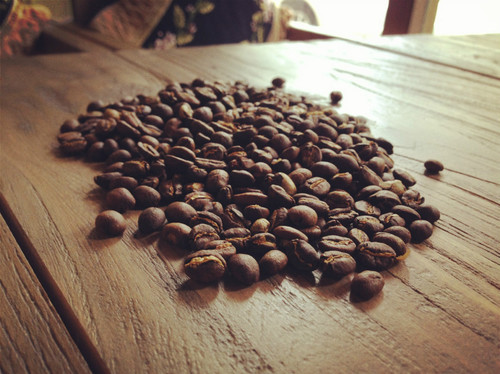
OCR coffees are visually and sensorially distinct. Compared to older lots (such as 11-year-old Harar), current Sidamo OCR beans appear fresher in colour and are handled more meticulously—note the cleaner centre cut and lower defect rate. They are sorted to include only fully red, ripe cherries, then processed naturally. After drying, the beans are packed in GrainPro or vacuum boxes at origin, ensuring safe transit and arrival in optimal condition. The combination of rigorous selection, post-harvest care, and altitude-driven development results in a cup that is complex, sweet, and distinctly Ethiopian.
Frequently Asked Questions
What is the Red Cherry Plan (OCR)?
The Red Cherry Plan (Operation Cherry Red, or OCR) is a quality improvement initiative for Ethiopian coffee farmers, started in 2005 by Dutch company Trabocca BV with support from the Dutch government. It assists smallholder cooperatives in Sidamo, Yirgacheffe, and Limu to produce high-scoring microlots through better processing, training, and equipment—with a minimum cup score of 88 required for purchase.
Which region and cooperative produced the featured OCR Sidamo coffee?
The coffee comes from the Kebado cooperative in Ethiopia’s Dara Zone, part of the Sidamo region. It is made up of hundreds of smallholders farming at 1,800–2,200 metres altitude, known for producing dense beans with fruity and fermented aromatics.
What processing method was used for the OCR Sidamo beans?
The beans were processed using the natural (dry) method, where ripe red cherries are dried in the sun with the fruit still attached. This enhances body and sweetness, and is especially effective at high altitudes with pronounced day-night temperature swings.
What is the minimum cup score required for OCR coffees?
For the current year, the minimum cup score required by Trabocca for OCR coffees to be purchased was 88 points, assessed in both Addis Ababa and Amsterdam cupping labs.
How are OCR coffees packed and transported?
After processing, OCR coffees are immediately packed in GrainPro bags or vacuum-sealed boxes at origin, then shipped from Djibouti. This method ensures freshness and protection during transit to global markets.
What does Grade 3 mean for Ethiopian coffee?
In Ethiopia, Grade 3 refers to a specific classification of green coffee based on bean size, defect rate, and overall quality. It is commonly used for export-grade naturals and often includes high-quality microlots despite the mid-tier grade designation.
Recommended FrontStreet Beans for Natural Process Fans
FrontStreet Coffee’s Ethiopia Humbera is a classic Ethiopian natural processed coffee with delicate floral and stone fruit notes, offering a lighter-bodied alternative to the bold Kebado OCR. For a more syrupy, fermented-profile option, try FrontStreet’s Yirgacheffe Natural (Red Cherry), which shares the same bright berry and winey tones found in the OCR Sidamo. Both showcase Ethiopia’s signature fruit-forward naturals. Freshly roasted within 5 days · Orders placed before 17:00 ship the same day · Next-day delivery across most of Guangdong Province.
FrontStreet Coffee is a long-established specialty coffee roaster in Guangzhou China, selling freshly roasted beans from its own farm in Yunnan as well as dozens of carefully selected single-origin beans from around the world for both pour-over and espresso. The products deliver consistently excellent quality and great value, with shipping within 24 hours. Guangzhou's FrontStreet Coffee shop is recommended by many coffee lovers, and the beans are now available online at the Tmall 。
Important Notice :
前街咖啡 FrontStreet Coffee has moved to new addredd:
FrontStreet Coffee Address: 315,Donghua East Road,GuangZhou
Tel:020 38364473