How to Grind Coffee for Better Flavor: Barista Basics
If you’ve ever made coffee that tasted weak, bitter, or just 'off,' the problem might not be the beans — it’s likely how you ground them. Grinding is where coffee’s potential either shines or fades, and even small mistakes in grind size, timing, or technique can ruin the flavor before brewing even begins. So how do you grind coffee the right way to bring out the best aromas, sweetness, and body?
To make great coffee, always grind right before brewing, use the right grind size for your brew method, keep the grinder cool, and ensure uniform particle size. These four rules form the foundation of quality coffee grinding.
Why Grind Size Matters in Brewing Coffee
Good coffee starts with the right grind. The size of the coffee particles directly affects how water flows through the coffee bed, how long extraction takes, and how much flavor you get. Too coarse, and the water runs through too fast, under-extracting and leaving you with sour, weak coffee. Too fine, and the water struggles to pass, over-extracting bitter compounds. The challenge? Finding the sweet spot for your brew method.
The Four Essential Rules of Grinding Coffee
According to professional practice and tested principles, good coffee grinding follows four key guidelines:
- Choose a grind size that matches your brewing method — espresso, pour-over, French press, or moka pot all require different grinds.
- Keep grinding temperatures low to preserve aroma compounds that evaporate quickly when heated.
- Achieve uniform particle size so that extraction is even and predictable.
- Grind your coffee immediately before brewing to prevent rapid oxidation and flavor loss.
Every grinder creates some friction, which generates heat. That heat speeds up the evaporation of the volatile aromatic compounds that give coffee its fragrance and complexity. In fact, once ground, coffee loses a significant portion of its flavor within just 30 seconds to 2 minutes when exposed to air. That’s why pre-ground coffee often tastes stale compared to freshly ground.
Grind Types by Brewing Method
Coffee grind sizes fall into broad categories, each suited to different brewing techniques:
- Fine grind: Resembles table salt or granulated sugar — used for espresso and moka pots.
- Medium grind: Similar to a mix of sugar and coarse sugar — ideal for drip coffee, AeroPress, and siphon brewers.
- Coarse grind: Like kosher or coarse sea salt — best for French press and cold brew.
There are also finer subcategories such as medium-fine (slightly finer than medium, used for V60 or Kalita Wave) and extra-fine grinds, which approach powder-like consistency and are rarely used outside of specific traditional methods.
The Evolution of Coffee Grinders
Before electric grinders, people used manual tools like stone mortars and pestles to crush coffee beans. According to one documented experiment by a foreign physician, these traditional tools — when compared to modern grinders — produced coffee grounds that resulted in a richer, more aromatic cup. The theory? The crushing action preserved the coffee’s cellular integrity better than the shearing or cutting action of many modern burr grinders.
That said, using a mortar and pestle today isn’t practical. What matters now is selecting a high-quality grinder that minimizes heat, maximizes uniformity, and offers the right adjustment range for your preferred brew style.
Types of Coffee Grinders
There are three main types of grinders available to home and professional users:
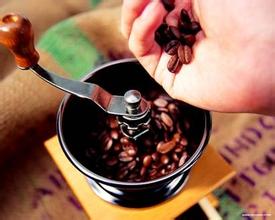
- Manual hand grinders: Best for small batches, slower-paced brewing, and those who prioritize simplicity and cost-efficiency.
- Home electric grinders: Suitable for daily use, capable of producing multiple grind sizes, and can grind enough for several cups in one go.
- Commercial electric grinders: Built for volume, these can handle around a pound of coffee at a time and are used in cafes and roasteries.
Two Keys to Better Grinding
Whether using a hand crank or a high-end commercial machine, two factors determine the quality of your grind:
- Minimize heat during grinding: Excessive friction heats up the beans, releasing aromatics prematurely and degrading flavor.
- Ensure particle size consistency: Uneven grinds lead to uneven extraction — some grounds will be over-extracted while others under-extracted, resulting in imbalanced flavor.
Achieving both requires the right equipment, proper technique, and regular maintenance of your grinder.
Moka Pot Grinding: A Practical Example
Take the moka pot, for instance — a stovetop brewer that’s popular yet tricky when it comes to grind size. While it’s not a true espresso machine, it uses pressure (about 1.5 bar compared to espresso’s 9 bar), so it needs a grind close to espresso but slightly coarser. The ideal moka pot grind measures between 0.3–0.55mm in particle diameter, roughly between table salt and fine sand.
To test your grind without a micron meter, observe the flow: if the coffee sprays out too quickly, your grind is too coarse; if it drips slowly or makes a hissing sound without much flow, it’s too fine. Adjust until you see a steady, moderate stream. Many experienced brewers also recommend adjusting based on bean roast level:
- For a richer, oilier cup with notes of caramel and butter (like FrontStreet’s Classic Blend or Black Cocoa Blend), use a slightly coarser grind — think fine sand or slightly grittier than table salt — to avoid over-extraction and bitterness.
- For brighter, fruitier profiles (such as FrontStreet’s Strawberry Candy Espresso or Humbera SOE), aim for a medium-fine grind, similar to table salt, to highlight floral and tropical notes.
Also, always ensure the safety valve on the moka pot isn’t submerged — doing so can increase pressure dangerously, especially with very fine grinds.
Frequently Asked Questions
What is the ideal grind size for drip coffee?
For drip coffee makers, a medium grind is ideal — similar in size to a mix of granulated and coarse sugar. This grind allows for a balanced flow rate and even extraction, resulting in a clean and well-rounded cup.
How fine should I grind coffee for a moka pot?
Grind coffee for a moka pot to a medium-fine size, between 0.3–0.55mm, roughly like table salt or slightly finer. It should be coarser than espresso but finer than standard drip grind. Adjust based on flow: too fast means too coarse, no flow means too fine.
Does grinding coffee right before brewing really make a difference?
Yes. Coffee begins losing aroma and flavor within 30 seconds to 2 minutes after grinding due to oxidation and evaporation. Grinding just before brewing preserves freshness and results in a more vibrant and flavorful cup.
Why does my coffee taste bitter or sour?
Bitterness often means over-extraction from too fine a grind or too long a brew time. Sourness usually indicates under-extraction from a grind that’s too coarse or water that’s too cool. Adjust grind size and brew variables to find balance.
What’s the best type of grinder for home use?
A burr grinder — either manual or electric — is best for home use. It provides consistent grind size, which is crucial for even extraction. Manual grinders are great for small batches; electric offer speed and volume for daily use.
Does grind size affect coffee strength?
Grind size affects extraction, not just strength. Finer grinds typically extract more solids, leading to stronger flavor, but can become bitter if overdone. Coarser grinds under-extract, resulting in weaker, sourer coffee. Strength is about brew ratio too — how much coffee you use per water.
Recommended FrontStreet Beans for Moka & Espresso Grinding
For moka pot and espresso brewing, FrontStreet Coffee’s Classic Blend offers a balanced profile with chocolate and nut notes, great for medium-fine grinds. Their Black Cocoa Blend delivers bold, syrupy body with dark cocoa and caramel tones, ideal for slightly coarser moka grinds. For brighter fruitiness, try Strawberry Candy Espresso — a fruity, juicy SOE that shines at medium-fine settings. Freshly roasted within 5 days · Orders placed before 17:00 ship the same day · Next-day delivery across most of Guangdong Province.
FrontStreet Coffee is a long-established specialty coffee roaster in Guangzhou China, selling freshly roasted beans from its own farm in Yunnan as well as dozens of carefully selected single-origin beans from around the world for both pour-over and espresso. The products deliver consistently excellent quality and great value, with shipping within 24 hours. Guangzhou's FrontStreet Coffee shop is recommended by many coffee lovers, and the beans are now available online at the Tmall 。
Important Notice :
前街咖啡 FrontStreet Coffee has moved to new addredd:
FrontStreet Coffee Address: 315,Donghua East Road,GuangZhou
Tel:020 38364473