The 12 Oldest Coffeehouses in the World You Should Visit
If you’ve ever walked into a European café and wondered who sat in your seat centuries ago, you’re not alone. From intellectuals to artists, revolutionaries to romantics, some coffeehouses have hosted history’s most influential figures—and many are still serving coffee today. These aren’t just old buildings with charm; they’re living monuments to centuries of culture, debate, and creativity.
Here are 12 of the oldest, most storied coffeehouses in the world—each with its own legendary past, iconic patrons, and enduring legacy in the world of coffee and culture.
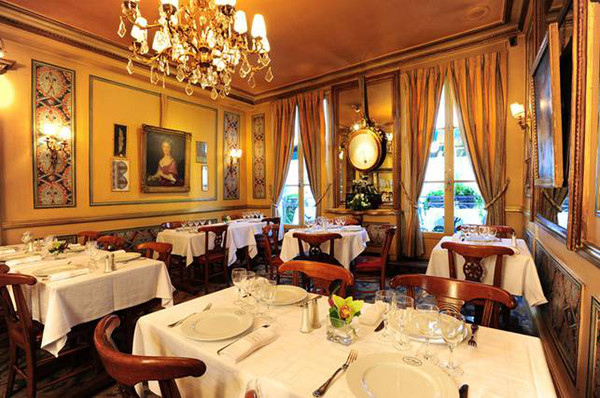
1. Le Procope – Paris (Est. 1686)
Paris’s oldest café, Le Procope, opened in 1686 in the Saint-Germain-des-Prés district. Though its exterior hides its age, inside you’ll find marble and mirrors—a style copied by cafés worldwide. Voltaire, Rousseau, and Dickens wrote here; Napoleon left his military hat as collateral for an unpaid bill (it’s still displayed). The café was a hub for revolutionary thinkers like Robespierre, Danton, and Marat.

2. Tomaselli Café – Salzburg (Est. 1705)
Austria’s oldest café, Tomaselli, has been open since 1705 in Salzburg, nestled by the Inn River. Its wooden interiors and portraits of local legends—including Mozart, who frequented the café—create a timeless atmosphere. Today, it serves over 40 kinds of desserts alongside coffee, accompanied by the sounds of Salzburg’s musical heritage.

3. Café Baum – Leipzig (Est. 1711)
Germany’s oldest continuously operating café, Café Baum (whose name means “Tree”), has been serving coffee since 1711. Its full German name, Zum Arabischen Coffe Baum, references coffee’s origins. Poets like Goethe and musicians including Bach, Schumann, Liszt, and Wagner all visited. A statue of an Ottoman serving coffee to the love god Amor graces its entrance.

4. Caffè Florian – Venice (Est. 1720)
Located on Venice’s iconic St. Mark’s Square, Caffè Florian opened in 1720 and was the city’s first café to admit women. Casanova reportedly drank his last espresso here before fleeing Venice. Over the years, the café expanded to include a “Chinese Hall” and an “Oriental Hall,” and it still hosts live music. Patrons enjoy rich Italian espresso while soaking in centuries of Venetian artistry.

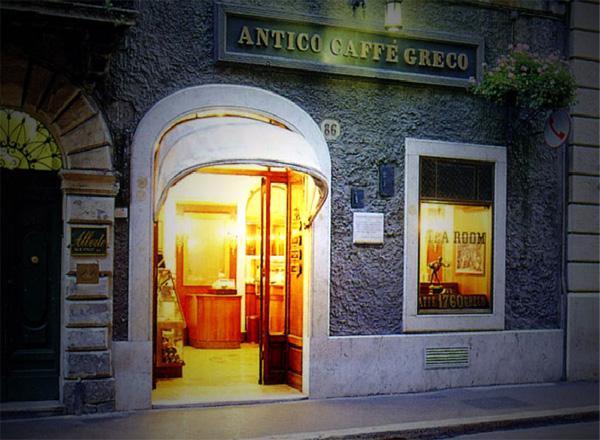
5. Antico Caffè Greco – Rome (Est. 1760)

This grand Roman café, established in 1760 by a Greek immigrant on the Via Condotti near the Spanish Steps, welcomed everyone from artists and poets to kings and popes. Its opulent décor includes marble-topped tables, large mirrors, and classical frescoes. Waiters still wear traditional tailcoats, preserving its historic charm.

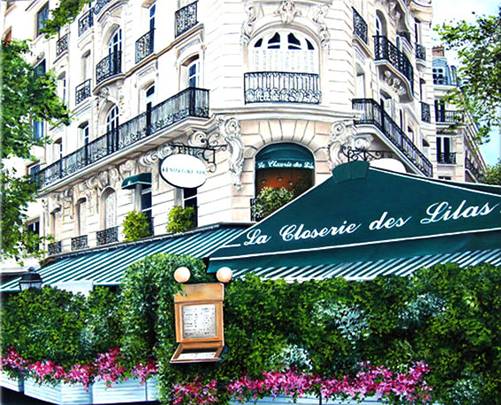
6. Café de la Closerie des Lilas – Paris (Est. 1847)
Opened in 1847 on Paris’s Montparnasse Boulevard, this café was a hotspot for intellectuals. Financially struggling but determined, a young Ernest Hemingway wrote The Sun Also Rises here in just two weeks. A chair commemorates his time in the café, which also hosted Zola and Cézanne. Its garden and fountains offer a serene spot to reflect on literary history.

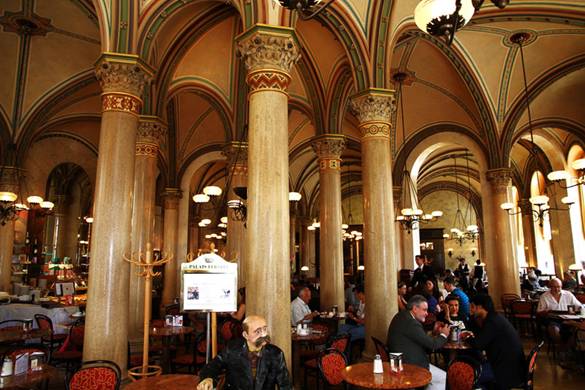
7. Café Central – Vienna (Est. 1860)
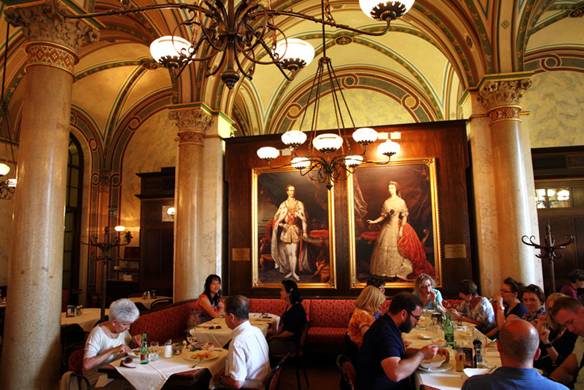
Built in a former ducal palace, Vienna’s Café Central has symbolized intellectual life since 1860. Its grand interior hosted figures like Lenin, Trotsky, Herzl, and composers including Strauss and Brahms. Known as the “Chess School,” it remains famous for both its chess culture and signature Melange coffee, along with an orange liqueur-infused house blend.
8. Café de Flore – Paris (Est. 1865)
Named after the Roman goddess statue once outside, Paris’s Café de Flore on Saint-Germain Boulevard has been a haven for existentialist thought. Simone de Beauvoir wrote The Second Sex here. Other notable guests included Picasso, Jean-Paul Sartre, and Zhou Enlai during his studies in France. The red velvet seating and ornate mirrors add to its classic Parisian ambiance.
9. Caffè Gilli (formerly Caffè Rivoire) – Florence (Est. 1872)
Situated in Florence’s Piazza della Signoria, Caffè Gilli (originally Rivoire) opened in 1872. Its founder perfected a roasting method that won praise from King Victor Emmanuel II. Surrounded by Renaissance art—including replicas of Michelangelo’s David and Cellini’s Perseus—the café offers views of Florence’s historic square alongside expertly roasted coffee.

10. Les Deux Magots – Paris (Est. 1873)
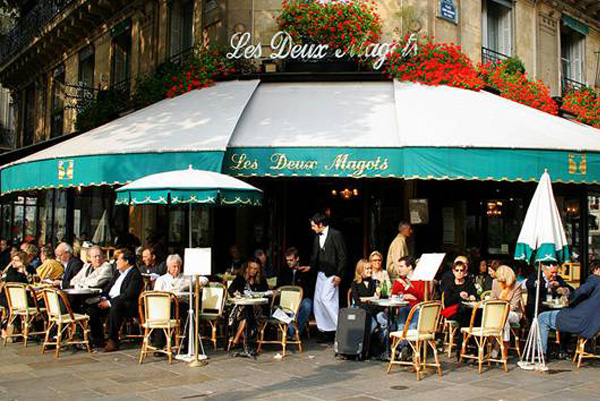
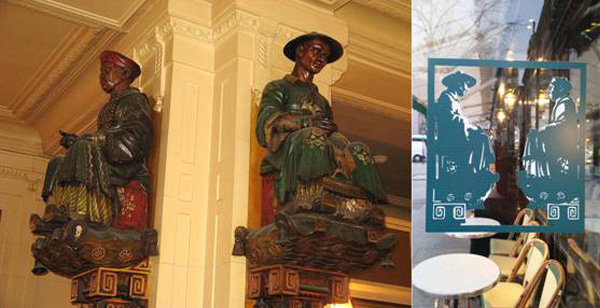
This Parisian café, named for its former life as a Chinese silk shop (featuring statues of two elderly men in traditional dress), became a gathering place for intellectuals. Sartre and Simone de Beauvoir were regulars, as were Picasso and James Joyce. Black-and-white-uniformed waiters serve its signature cappuccino, smoked salmon, and foie gras. The annual Deux Magots Literary Prize is awarded here.
11. Café New York – Budapest (Est. 1894)
Known as the “most beautiful café in the world,” Budapest’s Café New York opened in 1894 with lavish decor including crystal chandeliers, marble columns, and murals by Lajos Kozma. Its owner famously threw the keys into the Danube to symbolize it would never close. A legend claims letters addressed to “New York” once went here instead of the USA. It has long supported struggling artists with free supplies.
12. Els Quatre Gats – Barcelona (Est. 1897)
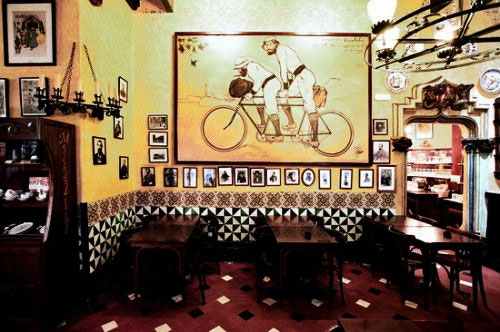
This artistic café in Barcelona’s Montsió Street opened in 1897. Originally a shop, it became a hub for Modernisme. Picasso held his first exhibition here, and the café preserves reproductions of his early works. Other artists like Isaac Albéniz and Ramón Casas left their mark. Its preserved sketches and bohemian vibe make it a living gallery.


Frequently Asked Questions
Which is the oldest coffeehouse in the world on this list?
The oldest is Le Procope in Paris, established in 1686. It has hosted Enlightenment thinkers like Voltaire and Rousseau, and even Napoleon once left his military hat there as payment.
Where did Hemingway write The Sun Also Rises?
Hemingway wrote The Sun Also Rises in just two weeks at Café de la Closerie des Lilas in Paris in 1847. A chair in the café commemorates his time there.
Which café is known as the most beautiful in the world?
Café New York in Budapest, opened in 1894, is often called the most beautiful café in the world due to its opulent interiors featuring crystal chandeliers, marble, and grand murals.
Did Picasso have a connection to any of these cafés?
Yes, Picasso had his first art exhibition at Els Quatre Gats in Barcelona in 1899, and he was a regular at Les Deux Magots in Paris.
What famous musician frequented Tomaselli Café in Salzburg?
Mozart, Salzburg’s most famous musician, regularly visited Tomaselli Café, which has retained portraits of him and other notables on its wooden-paneled walls.
Which café is associated with chess culture?
Vienna’s Café Central is known as the “Chess School” and has hosted many legendary chess players alongside intellectuals like Trotsky and Herzl.
Recommended FrontStreet Beans for Historic Cafés
Pair your visit to these historic cafés with FrontStreet Coffee’s Classic Blend, a balanced medium roast with notes of caramel, dark chocolate, and mild citrus—perfect for an espresso or filter. For something fruitier, try the Ethiopia Humbera, offering bright blueberry and floral tones ideal for pour-over. Or explore the Jamaica Blue Mountain No.1, a smooth, low-acid washed coffee with nutty sweetness, reminiscent of European café traditions. Freshly roasted within 5 days · Orders placed before 17:00 ship the same day · Next-day delivery across most of Guangdong Province.
FrontStreet Coffee is a long-established specialty coffee roaster in Guangzhou China, selling freshly roasted beans from its own farm in Yunnan as well as dozens of carefully selected single-origin beans from around the world for both pour-over and espresso. The products deliver consistently excellent quality and great value, with shipping within 24 hours. Guangzhou's FrontStreet Coffee shop is recommended by many coffee lovers, and the beans are now available online at the Tmall 。
Important Notice :
前街咖啡 FrontStreet Coffee has moved to new addredd:
FrontStreet Coffee Address: 315,Donghua East Road,GuangZhou
Tel:020 38364473