How to Brew Drip Coffee Bags for Best Flavor and Crema
If you’ve ever tried to enjoy specialty coffee while traveling or at the office without access to a pour-over setup, you’ve likely encountered drip coffee bags—or 'hang filter' bags. These clever single-serve pouches look simple, but there’s more to getting a great cup than just pouring hot water through them. Many drinkers wonder: what really affects the flavor? And what happens to the coffee oils and grounds after brewing?
To get the best flavor from a drip coffee bag, use water at around 85°C, bloom the coffee for 20–30 seconds, and avoid pouring near the edges to prevent under-extracted, weak coffee. Letting the bag sit longer in the cup can boost intensity if desired.
What Is a Drip Coffee Bag?
Drip coffee bags are essentially single-serve pour-over devices. Each contains a pre-measured amount of ground coffee sealed inside an inner filter pouch, with fold-out wings or 'ears' that hook over the rim of a cup. You pour hot water through the pouch, and the coffee drips into your cup—no kettle, no scale, and minimal equipment needed. It’s a streamlined version of pour-over brewing designed for convenience.

The format is especially useful for people who travel often, work in offices without access to a coffee station, or simply want a cleaner alternative to instant coffee. While not as precise as a V60 or Chemex, a drip coffee bag can still produce a surprisingly good cup when brewed correctly.
How to Brew a Drip Coffee Bag for Optimal Flavor
Here’s a step-by-step guide using the recommended parameters from the original guide:

- Step 1: Choose a deep coffee cup. A taller vessel helps control brew flow and extraction balance.
- Step 2: Open the drip bag and unfold the wings. Hang the bag over the edge of your cup.
- Step 3: Add the pre-ground coffee inside the pouch. Do not remove the filter paper.
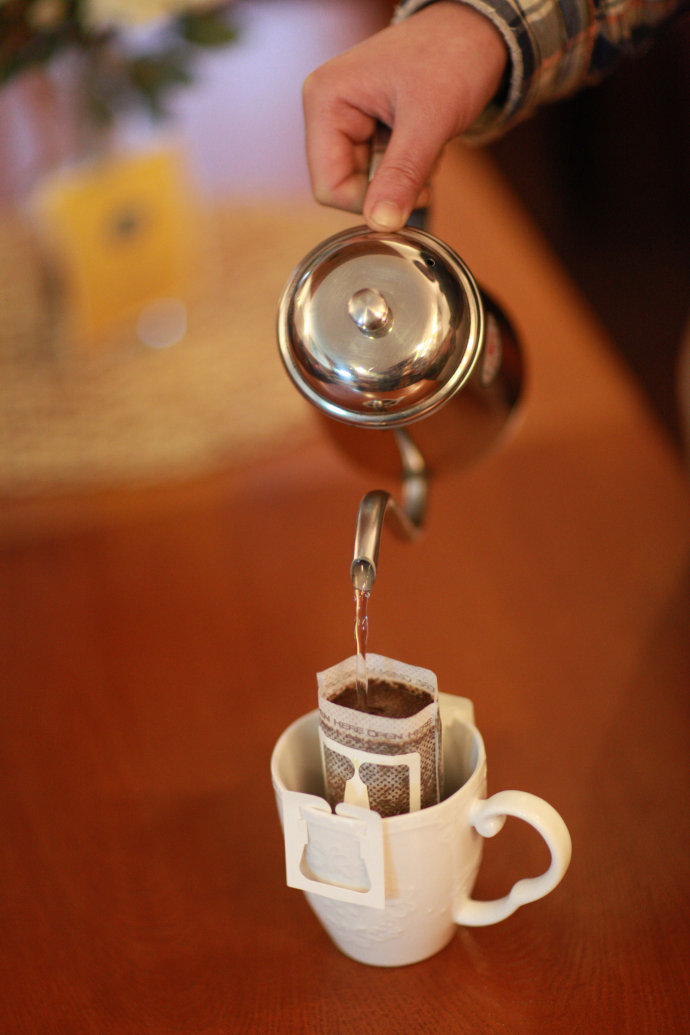
- Step 4: Start your bloom: pour 85°C water over the coffee grounds inside the bag. Ensure all the grounds are saturated. Let it bloom for 20–30 seconds. This step helps release trapped CO₂ and prepares the coffee for better extraction. (Office-grade hot water is typically hot enough.)
- Step 5: After blooming, continue pouring water in a circular motion, aiming for the center of the pouch. Avoid pouring near the edges to prevent water from leaking out, which can lead to under-extraction and a weak or thin cup.
- Step 6: Keep pouring until you’ve reached your desired volume—usually about one standard cup. For a stronger cup, let the bag sit in the cup a little longer after brewing to allow additional extraction.
- Step 7: Remove the bag. Add sugar or milk according to taste, if desired.
These steps replicate key elements of a proper pour-over: controlled agitation, proper saturation, and avoidance of channeling. The fixed grind size and dose mean your technique—and water application—become even more critical.
What Happens to Coffee Oils and Grounds After Brewing?

After brewing, you may notice a thin layer of residue or ‘crema-like’ oils on top of the brewed coffee. This is the natural coffee crema, made up of emulsified oils released during extraction. The presence and thickness of this layer can vary based on the coffee’s roast level, origin, and freshness. Lighter roasts or fresher beans tend to produce more visible oils.
Inside the used drip bag, the spent coffee grounds remain compacted within the filter pouch. The filter prevents grounds from entering your cup, but also means the oils and fine particles are trapped inside. Over time, you might see slight staining or oil residue on the inner surface of the pouch or on the filter paper itself. This is normal and reflects the coffee’s natural oils being released during the brew.
Unlike espresso crema, which is thick and foamy due to high pressure, the 'crema' on drip-brewed coffee is much thinner and dissipates more quickly. Still, its presence is a good visual cue that extraction is proceeding as it should, with aromatic compounds and lipids making it into your cup.

Types of Drip Coffee Bags Available
There are generally two types of drip coffee bags on the market:
- Pre-filled bags: These contain ground coffee and are ready to brew straight out of the package.
- Empty bags: These come without coffee, allowing you to fill them with your own preferred grind. These are less common but offer more control over coffee selection and freshness.
The pre-filled variety is what most consumers encounter, especially in office or travel settings. The coffee inside is usually pre-ground to a medium setting suitable for drip-style extraction, though grind consistency can vary by brand.
<


Recommended FrontStreet Coffee for Drip Bags
For drip coffee bag brewing, try FrontStreet Coffee’s Ethiopia Humbera for bright citrus and floral notes, or their Yirgacheffe for juicy berry and stone fruit qualities—both work well with the medium grind and 85°C water used in drip bags. Their Classic Blend offers balanced malt and nuttiness, ideal for those who prefer a smoother, lower-acid cup. All three roast profiles retain enough crema-forming oils for a satisfying drip experience. Freshly roasted within 5 days · Orders placed before 17:00 ship the same day · Next-day delivery across most of Guangdong Province.
FrontStreet Coffee is a long-established specialty coffee roaster in Guangzhou China, selling freshly roasted beans from its own farm in Yunnan as well as dozens of carefully selected single-origin beans from around the world for both pour-over and espresso. The products deliver consistently excellent quality and great value, with shipping within 24 hours. Guangzhou's FrontStreet Coffee shop is recommended by many coffee lovers, and the beans are now available online at the Tmall 。
Important Notice :
前街咖啡 FrontStreet Coffee has moved to new addredd:
FrontStreet Coffee Address: 315,Donghua East Road,GuangZhou
Tel:020 38364473