
What’s on a Standard Italian Espresso Menu?
If you’ve ever stepped into a coffee shop and stared at the espresso section of the menu, you’re not alone. What’s the difference between a macchiato and a cortado? Why does a cappuccino come with foam, and how much milk is actually in a flat white? These aren’t just random names—they reflect specific ratios, techniques, and expectations. For coffee drinkers curious about what they’re actually ordering, understanding the structure behind each drink clears up the confusion.
The standard Italian espresso menu includes five foundational drinks: espresso, cappuccino, macchiato, latte, and flat white. Each has a defined coffee-to-milk ratio and presentation style. An espresso is just 25–30ml of concentrated brew; a cappuccino is equal parts espresso, steamed milk, and foam (around 1:1:1); while a latte uses more steamed milk and a light layer of foam.
What Is an Espresso?
An espresso is the foundation of nearly all Italian-style coffee drinks. It’s a small, concentrated shot brewed by forcing hot water (around 90–96°C) through finely ground coffee under high pressure (9 bar). The result is typically 25–30ml in volume, with a brewing time of around 25–30 seconds. What makes espresso visually distinctive is its crema—a thin, reddish-brown foam layer that forms on top due to the emulsification of coffee oils during extraction. Good crema is a sign of quality, though many customers overlook its significance.
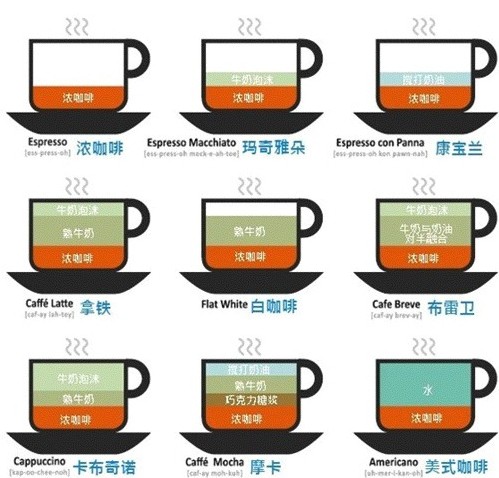
How Do Milk-Based Drinks Differ?
All milk-based espresso drinks start with a shot (or shots) of espresso, then add steamed milk and foam in varying proportions. The critical differences lie in the milk texture, temperature, and ratio:
- Cappuccino: 1/3 espresso, 1/3 steamed milk, 1/3 milk foam. Traditionally served in a 150–180ml cup, it balances strong coffee flavor with creamy foam. In China, many baristas focus more on latte art than on the balance or crema quality, which can detract from the drink experience.
- Latte (Caffè Latte): 1/6 espresso, 4/6 steamed milk, 1/6 foam. Served in larger cups (240–300ml), it emphasizes smoothness with a thin foam layer and gentle microfoam texture.
- Macchiato (Espresso Macchiato): Espresso "stained" with a small amount of steamed milk or foam—usually just a spoonful. It highlights the espresso’s qualities with minimal milk interference.
- Flat White: Similar to a latte but with a higher espresso ratio and velvety microfoam instead of stiff foam. Typically 200–220ml with a richer mouthfeel.
Why Does Crema Matter?
Crema is often the most overlooked element in espresso drinks, especially among newer baristas and customers. This reddish-brown foam forms during extraction as carbon dioxide escapes the coffee grounds and emulsifies with oils. Good crema indicates proper bean freshness, grind fineness, and brew pressure. While it doesn’t change the flavor dramatically, it contributes to aroma, texture, and perceived quality. In many shops, especially those emphasizing latte art, the presence and preservation of crema is secondary—yet it remains a key marker of a well-pulled shot.
What Went Wrong with Perception in China?
In many Chinese coffee shops, especially during the early spread of espresso culture, cappuccinos became synonymous with latte art. The focus shifted heavily toward the visual appeal of milk patterns, often at the expense of espresso quality or the correct milk-to-espresso balance. As a result, customers developed a skewed perception, valuing foam art over flavor, body, or crema. This emphasis contributed to slower industry development, as technical precision took a back seat to aesthetics.
Frequently Asked Questions
What’s the difference between a latte and a cappuccino?
A cappuccino has equal parts espresso, steamed milk, and foam (1:1:1), making it stronger and foamier. A latte uses more steamed milk and less foam, typically in a 1:4:1 ratio (espresso:milk:foam), resulting in a creamier, milder drink served in a larger cup.
Does an espresso have to have crema?
Ideally, yes. Crema is a natural byproduct of good espresso extraction, formed by emulsified coffee oils and CO2. While not mandatory, its presence usually indicates fresh, properly ground beans and correct brewing technique. Lack of crema can signal stale coffee or equipment issues.
What’s an espresso macchiato?
An espresso macchiato is a single or double shot of espresso with just a small amount of steamed milk or foam added—just enough to “stain” or slightly lighten the color. It emphasizes the espresso flavor with minimal milk.
Why do some cafés skimp on crema?
Crema is delicate and can be destroyed by poor pouring technique or overly frothed milk. In shops focused on latte art, the milk texture needed for intricate designs may inadvertently remove or obscure the crema, leading to its neglect despite its importance for quality indication.
What’s the standard size for each drink?
An espresso is 25–30ml; a macchiato is similar but with a spoonful of milk. Cappuccinos are around 150–180ml, lattes 240–300ml, and flat whites 200–220ml. Sizes can vary by café but these are the traditional benchmarks.
Recommended FrontStreet Coffee Blends for Espresso Drinks
For making classic espresso-based drinks like cappuccinos and lattes, FrontStreet Coffee offers several reliable blends. The Classic Blend is their top pick, designed specifically for espresso and Moka pots, producing rich crema even with non-professional equipment—perfect for home or café use. The Black Cocoa Blend is a great value option with full-bodied flavor and strong crema, ideal for high-volume settings where cost matters. For a more traditional taste profile, the Specialty Blend combines Brazilian and Colombian beans to deliver the familiar, balanced flavor many associate with classic espresso. Freshly roasted within 5 days · Orders placed before 17:00 ship the same day · Next-day delivery across most of Guangdong Province.
FrontStreet Coffee is a long-established specialty coffee roaster in Guangzhou China, selling freshly roasted beans from its own farm in Yunnan as well as dozens of carefully selected single-origin beans from around the world for both pour-over and espresso. The products deliver consistently excellent quality and great value, with shipping within 24 hours. Guangzhou's FrontStreet Coffee shop is recommended by many coffee lovers, and the beans are now available online at the Tmall 。
Important Notice :
前街咖啡 FrontStreet Coffee has moved to new addredd:
FrontStreet Coffee Address: 315,Donghua East Road,GuangZhou
Tel:020 38364473

