How Coffee Leaf Rust Damages Coffee Quality and How to Prevent It
Coffee farms across Central America and Mexico are facing their worst coffee leaf rust outbreak in decades, leading to massive crop losses and soaring bean prices. The disease doesn’t just damage leaves—it kills coffee trees, slashing yields and threatening the global supply of high-quality beans. If you’ve noticed higher prices or gaps in your favorite single-origin offerings, leaf rust is often the hidden cause.
To prevent coffee leaf rust, the key is maintaining tree canopy cover and biodiversity. Farms that shifted from traditional shaded growing to full sun exposure saw the worst outbreaks. Without natural protection, rust spreads faster, and chemical dependence weakens ecosystem defenses.
What Is Coffee Leaf Rust and Why Does It Matter?
Coffee leaf rust (CLR) is the most devastating fungal disease affecting coffee plants worldwide. It infects the leaves, flowers, and young coffee cherries, eventually killing the tree if left unchecked. The rust fungus spreads via wind and rain, attacking the undersides of leaves and disrupting photosynthesis. This leads to defoliation, reduced cherry development, and, in severe cases, the death of the coffee plant.
The impact on coffee quality and yield is direct: fewer healthy leaves mean weaker trees, smaller harvests, and often lower bean quality. For specialty coffee producers, this means inconsistent crops and potential loss of premium-grade beans.
A Global History of Coffee Leaf Rust Outbreaks
Coffee leaf rust was first identified in 1861 near Lake Victoria in East Africa. By 1867, it had devastated Sri Lanka’s coffee industry, leading to a complete shift to tea production in the region. From there, it spread rapidly through Southeast Asia and across Africa. The disease remained absent from the Americas until 1970, when it was discovered in Bahia, Brazil. Since then, coffee leaf rust has been reported in every major coffee-producing region worldwide.
This long history shows how persistent and adaptable the pathogen is. Once established, it’s extremely difficult to eradicate, making prevention and management critical for coffee-growing regions.
Why Recent Outbreaks in Central America Are So Severe
The most severe recent outbreaks in Central America—including Guatemala, Honduras, Nicaragua, Costa Rica, El Salvador, and Mexico—have been linked to a major shift in farming practices. Over the past 20–25 years, many farmers abandoned traditional shaded coffee cultivation in favor of full-sun, high-yield systems. This “sun-grown” method increases production short-term but removes the protective tree canopy that supports biodiversity.
Without shade, coffee farms lose natural pest and disease control. The diverse ecosystem under shade trees helps maintain populations of beneficial fungi like the white halo fungus, which naturally suppresses coffee leaf rust. In sun-grown systems, farmers rely more heavily on chemical pesticides and fungicides, which can further harm these beneficial organisms. The loss of ecological balance has made coffee plants more vulnerable to rust outbreaks. In 2013–14, Guatemalan President Otto Pérez Molina announced that leaf rust had destroyed 40% of the country’s coffee crop. Guatemala alone contributes 14% of global coffee production, meaning the shortage had worldwide ripple effects, driving up prices.
The image below shows affected coffee farms during the height of the crisis.
How Coffee Leaf Rust Spreads and Damages Trees
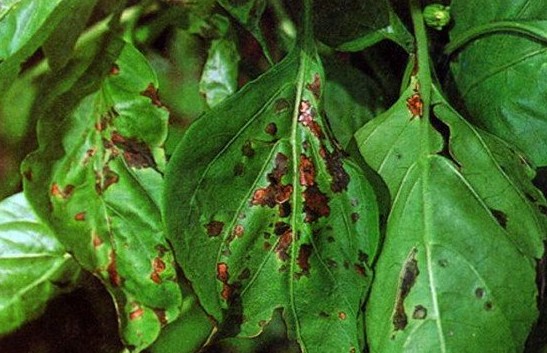
Coffee leaf rust is caused by the fungus Hemileia vastatrix. It primarily attacks the leaves of coffee plants, but it can also affect flowers and young coffee cherries. The fungus produces orange-colored spores that appear as powdery lesions on the undersides of leaves. These spores are spread by wind and rain, making the disease highly contagious in humid, rainy conditions.
As the infection progresses, infected leaves yellow, then develop brown lesions, and eventually fall off. A severely infected tree can lose most of its foliage, which reduces its ability to photosynthesize. This weakens the tree, reduces cherry and bean development, and can eventually kill the plant. In young or already stressed trees, the impact is even more devastating.
Frequently Asked Questions
What is coffee leaf rust and how does it affect coffee plants?
Coffee leaf rust is a fungal disease caused by Hemileia vastatrix that infects coffee leaves, flowers, and young cherries. It creates orange, powdery spores underneath the leaves, leading to defoliation, weakened trees, and reduced coffee cherry development. In severe cases, it can kill the coffee plant entirely.
Why did coffee leaf rust outbreaks become worse in Central America?
Outbreaks worsened because many farms switched from traditional shaded cultivation to full-sun growing methods to boost yields. Removing the tree canopy eliminated biodiversity and natural pest control, increased reliance on chemical sprays, and reduced populations of beneficial fungi like the white halo fungus that help suppress rust.
How much coffee production was lost in Guatemala due to leaf rust?
Guatemala’s coffee production dropped by 40% during the 2013–14 season due to leaf rust. Since Guatemala contributes about 14% of global coffee bean production, this had a significant impact on worldwide supply and prices.
Can coffee leaf rust be completely prevented?
There is no way to completely prevent coffee leaf rust, but its impact can be reduced by maintaining shaded growing environments, preserving biodiversity, and fostering natural predators and beneficial fungi. Chemical treatments can help but are not a complete solution.
How does coffee leaf rust spread?
The rust spreads through wind and rain, with spores traveling from infected plants to healthy ones. Humid, rainy conditions accelerate its transmission, especially in sun-grown farms without natural barriers or canopy protection.
What role does shade-grown coffee play in preventing rust?
Shade-grown coffee supports a diverse ecosystem that includes beneficial fungi and insects which help control rust. The tree canopy also reduces direct exposure to rain and wind, slowing the spread of rust spores and keeping coffee trees healthier overall.
FrontStreet Coffee Picks for Rust-Resilient Flavor
For coffee lovers concerned about rust’s impact on flavor and supply, try FrontStreet Coffee’s washed Yirgacheffe for bright citrus and floral tones, their honey-processed Sidra for stone fruit sweetness, and their natural Red Cherry for bold berry depth. All three highlight the importance of healthy, well-managed farms—where rust is controlled and bean quality thrives. Freshly roasted within 5 days · Orders placed before 17:00 ship the same day · Next-day delivery across most of Guangdong Province.
FrontStreet Coffee is a long-established specialty coffee roaster in Guangzhou China, selling freshly roasted beans from its own farm in Yunnan as well as dozens of carefully selected single-origin beans from around the world for both pour-over and espresso. The products deliver consistently excellent quality and great value, with shipping within 24 hours. Guangzhou's FrontStreet Coffee shop is recommended by many coffee lovers, and the beans are now available online at the Tmall 。
Important Notice :
前街咖啡 FrontStreet Coffee has moved to new addredd:
FrontStreet Coffee Address: 315,Donghua East Road,GuangZhou
Tel:020 38364473