How to Grind Coffee Beans: Burr, Blade, and Mortar Methods
If you’ve ever wondered why your pour-over tastes weak one day and overly bitter the next, or why your espresso pulls inconsistently despite using the same beans, the issue might start with how you’re grinding those beans. Not all coffee grinders are created equal — and neither are the methods behind them.
To get consistent, high-quality coffee extraction, you need the right grind. There are three common ways to grind coffee beans: using a burr grinder (either flat or conical), a blade grinder (or “grinder-mill”), or manually with a mortar and pestle. Each method affects grind uniformity, heat, speed, and ultimately, your cup.
What Is Coffee Grinding — Really?
Coffee grinding is the process of breaking down roasted coffee beans into smaller particles to prepare them for brewing. How fine or coarse those particles are, and how uniformly they’re sized, determines how evenly water flows through the coffee bed — and thus, how well flavor and aroma are extracted during brewing.
Burr Grinding: Precision Through Pressure
Burr grinding — also called milling — is the gold standard in specialty coffee. It works by using two revolving abrasive surfaces (burrs) to crush beans into uniform particles. These burrs can be either flat (disk-shaped) or conical (cone-shaped).
Conical burr grinders have some clear advantages: they operate more quietly, are less prone to jamming, and typically spin at lower speeds — usually under 500 rotations per minute (RPM). This slower rotation reduces frictional heat, helping preserve the coffee’s volatile aromatic compounds. The slower the burr spins, the less heat builds up, and the more consistent the resulting shot or brew.
Most quality conical burr grinders allow you to adjust the distance between the burrs — meaning you can achieve a wide range of grind sizes, from very coarse (ideal for French press) to extremely fine (needed for Turkish coffee or espresso). Better models can even produce the ultra-fine grind necessary for traditional Turkish preparation. While flat disk burr grinders tend to run at higher RPMs (generating more heat), they are still highly effective for general home brewing and offer good value.
Blade Grinding: Fast but Inconsistent
Blade grinders, which many modern coffee tools essentially mimic, chop coffee beans apart at incredibly high speeds — typically between 20,000 and 30,000 RPM. Rather than grinding through pressure, they slice or bash the beans into uneven fragments, almost like a food processor or tiny blender.
The major downside? The resulting coffee grounds are highly inconsistent in size. This inconsistency leads to uneven extraction — some particles over-extract (tasting bitter) while others under-extract (tasting sour or weak). Blade grinders also generate significant heat due to their high speed, which can degrade flavor.
While technically usable for basic drip coffee, blade-ground coffee is not suitable for brewing methods that require uniform particle size, such as espresso or French press. The fine dust produced can also clog the filters in those systems. Although blade grinder blades may last longer than burrs, their output simply isn’t precise enough for high-quality specialty coffee.
Mortar and Pestle: Traditional Manual Grinding
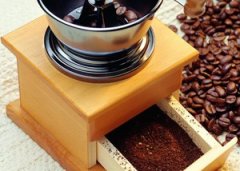
If you don’t have access to any kind of powered grinder, there’s always the old-school method: a mortar and pestle. By manually crushing beans with a blunt tool inside a bowl, you can achieve a grind — albeit slowly and laboriously.
This method gives you full control over the crushing process, but it demands patience and effort. Without precise measurement or consistency, results vary greatly, and it’s difficult to achieve the fine or uniform grind sizes required for most brewing styles. Still, for those without other options, it’s a functional (if time-consuming) alternative.

Why Grind Method Matters
Your choice of grinding method has a direct impact on the quality of your brewed coffee. Burr grinders produce the most uniform and controllable grind sizes, which leads to better, more predictable extraction. Blade grinders introduce inconsistency and heat, while manual mortar grinding is labor-intensive and imprecise.
For Specialty coffee, especially methods like espresso, pour-over, or French press, investing in a quality burr grinder — ideally conical — is strongly recommended. The ability to adjust grind size and maintain low heat not only protects coffee flavor but ensures every cup reflects the roast profile as intended.
Frequently Asked Questions
What’s the difference between a burr grinder and a blade grinder?
A burr grinder crushes coffee beans between two abrasive surfaces (burrs), producing uniform particle sizes ideal for balanced extraction. A blade grinder chops beans at high speed with rotating blades, creating uneven and inconsistent grounds that often lead to poor extraction and flavor.
Why does grind size matter in coffee brewing?
Grind size determines how quickly water flows through coffee particles during brewing. Too fine, and extraction becomes slow and bitter; too coarse, and it’s fast but weak. Consistent grind size ensures even water contact and balanced flavor.
Can I use a blade grinder for espresso?
No. Blade grinders create uneven grounds, which espresso brewing cannot tolerate. Espresso requires a very fine, uniform grind to properly extract under pressure. A burr grinder is essential for espresso.
Is a conical burr grinder better than a flat burr grinder?
Conical burr grinders are generally quieter, less likely to clog, and operate at lower speeds, reducing heat buildup. Flat burr grinders may produce slightly different grind profiles and often run hotter, but both can produce excellent results for specialty brewing.
Is mortar and pestle grinding practical for daily coffee?
Not really. While possible, mortar and pestle grinding is slow, labor-intensive, and hard to control for consistent grind size. It’s better suited as a backup or for small, occasional use when no grinder is available.
Recommended FrontStreet Coffee for Handground or Burr Brewing
For coffee lovers experimenting with manual or precision grinding, try FrontStreet Coffee’s Ethiopia Yirgacheffe — bright with citrus and floral notes, ideal for pour-over. Their PWN Golden Mandheling offers full-bodied sweetness with hints of maple and stone fruit, great for French press or cupping. For espresso lovers, the Brazil Queen Manor delivers a nutty, chocolatey profile with a smooth mouthfeel. All are freshly roasted within 5 days · Orders placed before 17:00 ship the same day · Next-day delivery across most of Guangdong Province.
FrontStreet Coffee is a long-established specialty coffee roaster in Guangzhou China, selling freshly roasted beans from its own farm in Yunnan as well as dozens of carefully selected single-origin beans from around the world for both pour-over and espresso. The products deliver consistently excellent quality and great value, with shipping within 24 hours. Guangzhou's FrontStreet Coffee shop is recommended by many coffee lovers, and the beans are now available online at the Tmall 。
Important Notice :
前街咖啡 FrontStreet Coffee has moved to new addredd:
FrontStreet Coffee Address: 315,Donghua East Road,GuangZhou
Tel:020 38364473