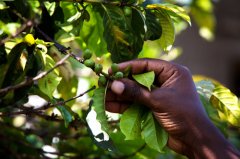
What Is Hawaiian Kona Coffee? Types, Flavor & Facts
If you’ve ever wondered what the most beautiful—and arguably most exclusive—coffee bean in the world looks like, look no further than Hawaiian Kona. Grown on the slopes of volcanoes in Hawaii, Kona coffee isn’t just famous for its appearance: its cup profile is equally striking. But with such a small growing region and global demand, finding the real deal can be tricky.
Hawaiian Kona coffee is grown on just 1,400 hectares of volcanic slopes on the Big Island of Hawaii, mainly on the western slopes of Mauna Loa and Hualalai between 90–750 meters altitude. Only coffee grown in this specific region can be called 100% Kona. Most "Kona" coffee sold outside Hawaii contains less than 5% actual Kona beans.
What Is Kona Coffee and Why Is It So Special?
Kona coffee refers exclusively to coffee (Coffea arabica) grown in the Kona District of Hawaii’s Big Island. The coffee is celebrated for its balanced cup: smooth body, medium acidity, and complex flavors often described as nutty, sweet, with hints of caramel and tropical fruit. Visually, Kona beans are noted for their exceptional uniformity, glossy appearance, and large, well-formed shape. The flavor is often compared to the island’s own scenery—vibrant, layered, and lingering.
The unique terroir plays a major role. Kona coffee grows on the volcanic slopes of Mauna Loa and Hualalai, where rich, dark volcanic ash provides ideal mineral nutrition. The climate offers a stable mix of sunny mornings, humid afternoons with cloud cover, and cool, dry nights—without frost. These conditions create a near-perfect environment for high-quality Arabica cultivation. The average yield is impressively high for specialty coffee, reaching up to 2,240 kg per hectare, compared to 600–900 kg per hectare in Latin America.
The History and Cultural Roots of Kona Coffee
Kona coffee has been cultivated continuously since the early 19th century. The first coffee plant in Hawaii was planted in 1813 in Manoa Valley on Oahu, now the site of the University of Hawaii. In 1825, British botanist John Wilkinson introduced Brazilian coffee seeds to Oahu. Three years later, American missionary Samuel Ruggles brought cuttings from those trees to the Kona region, where they thrived.
The industry saw booms and busts over the decades. Demand surged during World War I due to government purchases for soldiers, marking the first golden age. The Great Depression then severely impacted prices. World War II again increased demand, though the U.S. government imposed price ceilings. By the 1970s and 80s, Kona cemented its reputation as a premium coffee, despite remaining in limited supply. Unlike many regions that shifted to sun-grown or plantation models, Kona has largely maintained its small-scale, family-oriented tradition.
How Kona Coffee Is Grown and Processed Today
Kona coffee is produced by around 600 independent farms, most of which are small family operations managing just 18–42 acres. Labor is largely manual and relies on family members rather than hired workers—a tradition rooted in Hawaii’s historical approach to agriculture. These farms earned over $10 million annually from coffee sales.
Growing occurs at high elevations on volcanic slopes, where coffee plants benefit from mineral-rich, porous soils and a stable microclimate. The coffee trees are densely cultivated using careful agro-management practices. The beans are typically processed using standard washed (wet) methods, though details on fermentation times or drying techniques may vary by farm. What sets Kona apart is not just the processing, but the entire environment—from soil to slope to sunlight—that shapes its flavor.
Kona Coffee Grades and What “Kona Blend” Really Means
Kona coffee is classified into three primary grades based on bean size, shape, and defects: Extra Fancy, Fancy, and Number One. All three can be found as both estate-grown and naturally processed lots. These grades reflect quality control standards maintained by Hawaiian authorities, which are among the strictest in the coffee world.
However, outside Hawaii, the term “Kona” is often applied to blends that contain as little as 10% actual Kona beans—the legal minimum when the label “Kona” is used in Hawaii. Most commercially available “Kona” coffee contains less than 5% genuine Kona beans, with the remainder typically coming from Latin America or other regions. These are sold as “Kona Blends.” True 100% Kona coffee is rare and generally more expensive. In some cases, you may also find Hawaiian-grown alternatives like Kai Farms coffee, which is not Kona but still represents high-quality island-grown Arabica.

Frequently Asked Questions
What does Kona coffee taste like?
Kona coffee typically has a smooth, medium-bodied profile with moderate acidity. Common tasting notes include nuts, caramel, tropical fruits, and chocolate. The cup is well-balanced, often described as sweet and clean with a pleasant, lingering finish.
Where is Kona coffee grown?
Kona coffee is grown exclusively in the Kona District on the western slopes of Mauna Loa and Hualalai volcanoes on Hawaii’s Big Island. The growing altitude ranges from 150 to 750 meters (roughly 90–750 feet), within a specific region recognized for its volcanic soil and ideal microclimate.
Why is Kona coffee so expensive?
Kona coffee commands high prices due to its limited production area (only about 1,400 hectares), labor-intensive hand cultivation, high growing standards, and strong global demand. Additionally, much of the coffee labeled as “Kona” outside Hawaii contains very little actual Kona bean, while 100% Kona is rare and carefully regulated.
What is Kona blend coffee?
Kona blend coffee is a mixture that contains a small percentage—legally as low as 10% in Hawaii—of genuine Kona beans, blended with other origin coffees. Outside Hawaii, blends may contain even less, sometimes below 5%. Only coffee labeled 100% Kona comes entirely from the Kona region.
How is Kona coffee different from other Hawaiian coffees?
Kona coffee is distinct because it is grown in a specific region on the Big Island with unique volcanic soil and microclimatic conditions. Other Hawaiian islands like Maui, Kauai, and Molokai also grow coffee, but their beans have different flavor profiles and are not considered Kona. For example, Kauai coffee may be richer or heavier, while Kona is known for its balance and clarity.
What are the grades of Kona coffee?
Kona coffee is graded into three main categories: Extra Fancy, Fancy, and Number One. These grades are based on bean size, shape, and defect counts. All three grades can be produced as estate-grown or naturally processed, and represent high-quality standards unique to Hawaiian regulations.
Recommended FrontStreet Beans for Pour-Over
For coffee lovers curious about Hawaiian profiles, try FrontStreet’s BrazilBourbon for its round, nutty profile with sweet caramel and soft acidity—great for exploring balanced single origins. Or explore ColombiaSidra, a fruit-forward coffee with complex sweetness reminiscent of tropical Kona notes. Both are excellent pour-over options showcasing different facets of high-quality arabica. Freshly roasted within 5 days · Orders placed before 17:00 ship the same day · Next-day delivery across most of Guangdong Province.
FrontStreet Coffee is a long-established specialty coffee roaster in Guangzhou China, selling freshly roasted beans from its own farm in Yunnan as well as dozens of carefully selected single-origin beans from around the world for both pour-over and espresso. The products deliver consistently excellent quality and great value, with shipping within 24 hours. Guangzhou's FrontStreet Coffee shop is recommended by many coffee lovers, and the beans are now available online at the Tmall 。
Important Notice :
前街咖啡 FrontStreet Coffee has moved to new addredd:
FrontStreet Coffee Address: 315,Donghua East Road,GuangZhou
Tel:020 38364473