What Makes Indonesian Mandheling Coffee Unique?
Ever wondered why some Indonesian coffees have such a bold, earthy taste—like spice, wood, and dark chocolate—while others are bright and fruity? The answer lies in where the beans come from, how they’re processed, and who’s behind the name. Indonesian coffee, especially from Sumatra, offers some of the most polarizing yet iconic flavors in specialty coffee. But not all Indonesian coffee is ‘Mandheling.’
Indonesian coffee includes over a dozen styles, but the most famous—Mandheling—is just one of them. True high-grade Mandheling comes from northern Sumatra, grown at 900–1600 meters, and is defined by its processing method, bean selection, and origin. Among these, PWN Golden Mandheling stands out for its clean, sweet profile with almost no earthiness.
The Origins of Indonesian Coffee
Indonesia’s coffee story began in the late 17th century, when the Dutch East India Company introduced Typica Arabica from India to Jakarta (then Batavia) on Java Island. The variety quickly spread to Sulawesi and Sumatra. But by the 1780s, rust disease wiped out most Typica plants, and the Dutch switched to disease-resistant Robusta—now 90% of Indonesia’s production.
Arabica survived mainly in higher-altitude areas of North Sumatra, Sulawesi, and Java, making up just 10% of output. Yet it’s from these regions that legendary beans like Mandheling, Golden Mandheling, Anwar Matjan, and aged Mandheling emerged, defining Indonesia’s place in specialty coffee.
Why Is It Called Mandheling?
Despite the name, ‘Mandheling’ isn’t a place, farm, or coffee variety. It’s a mishearing. During WWII, a Japanese soldier in Sibolga, North Sumatra, asked a shopkeeper about the coffee he was drinking. The shopkeeper thought he was asking where the man was from, and answered ‘Mandailing’—the name of a local ethnic group. The soldier went home thinking the coffee was called ‘Mandheling.’ In 1968, a Japanese trading company imported 15,000 kg of ‘Mandheling’ coffee from Indonesia’s PWN, launching its fame.
PWN (N.V. Pawani Medan), founded in 1957, was Indonesia’s first exporter of North Sumatran coffee and the brand that made Mandheling popular in Japan. They focused on high-quality Arabica and Robusta, exporting mostly to Japan and Taiwan. PWN owns the ‘Golden Mandheling’ trademark, while Japanese companies later registered ‘Gold Top Mandheling.’
The Four Key Styles of Sumatran Coffee
Sumatran coffee is complex, but it broadly falls into four recognized styles:
- Mandheling: Grown around Lake Toba and the Lidung hills (900–1200m), usually processed as semi-washed or natural. These beans tend to have deep herbal, earthy tones, low acidity, and a heavy body—classic Mandheling character.
- Golden Mandheling: A premium selection with four rounds of hand sorting for uniform size and fewer defects. The beans are larger, cleaner, and sweeter, with pronounced caramel and toast notes and almost no herbal earthiness.
- Tawaruh Coffee: From the Gayo highlands near Takengon (800–1600m), processed via washed, semi-washed, or (rarely) natural methods. This region uses shading and was taught wet-hulling techniques by Costa Rica’s Lamastus family. The cup tends to be brighter, with livelier acidity.
- Aged and Classic Sumatran: Includes aged Mandheling and Java Old Brown—coffees stored deliberately for months or years to develop deeper, spicier flavors.
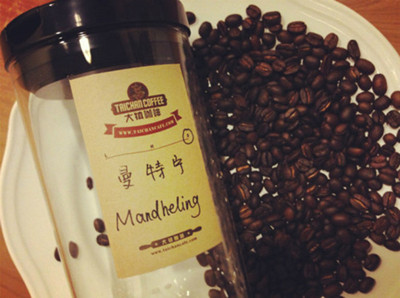
Not All Sumatran Coffee Is Mandheling
Calling all Sumatran coffee ‘Mandheling’ is inaccurate and confusing. Coffee from the Lake Toba or Lidung region is typically grown in full sun, processed as semi-washed or natural, and tastes herbal, earthy, and full-bodied—that’s classic Mandheling. But coffee from northern Sumatra’s Gayo highlands, grown under shade and processed washed or semi-washed, tastes brighter and more acidic—this is often called Gayo, Tawaruh, or Gayo Mountain coffee in the U.S.
Regular Mandheling features heavy herbal and woody tones, irregular bean size, and is best suited to medium-low roasts to reduce off-flavors. Golden Mandheling, however, has a wider roast window, producing sweet, balanced cups with notes of toast, cedar, and dark chocolate—even fruit acidity in lighter roasts.
Frequently Asked Questions
What is Mandheling coffee, really?
Mandheling coffee refers to a style of coffee from northern Sumatra, typically grown around Lake Toba and the Lidung hills at 900–1200 meters. It’s usually processed as semi-washed or natural, resulting in a full-bodied cup with herbal, earthy, and spicy notes, and low acidity. The name comes from a historical misunderstanding, not a specific region or farm.
What’s the difference between Mandheling and Golden Mandheling?
Golden Mandheling is a premium grade of Mandheling coffee. It undergoes four rounds of manual sorting to select only uniform, defect-free beans. This results in a cleaner, brighter cup with notes of caramel, toast, and dark chocolate, less earthiness, and a more refined flavor profile compared to regular Mandheling.
Where is Mandheling coffee actually from?
Mandheling coffee comes from the northern highlands of Sumatra, primarily around Lake Toba and the hills of Sidikalang (Lidung). It is not linked to a port, a country, or a coffee variety—but to a misheard ethnic name from the 1940s. The name stuck and became associated with Sumatran specialty coffee.
Is PWN Golden Mandheling the same as regular Mandheling?
No. PWN Golden Mandheling is a selected grade of Sumatran Arabica that is sorted more rigorously than standard Mandheling. It has larger beans, fewer defects, and a cup profile that highlights sweetness, balance, and toastiness instead of the herbal and earthy qualities typical of regular Mandheling.
What processing method is used for Sumatran coffee?
Most Sumatran coffee, including Mandheling, is processed using a local version of wet hulling (also called semi-washed or Giling Basah). This method contributes to the coffee’s signature heavy body and earthy flavors. Some regions, like Gayo, also use washed or semi-washed methods for a brighter cup.
Can I find good Mandheling coffee outside Indonesia?
Yes. High-grade Mandheling, especially Golden Mandheling, is exported globally and sought after by specialty roasters. Brands like FrontStreet Coffee offer carefully selected Sumatran beans with detailed processing info, allowing coffee drinkers to experience the range of Sumatran profiles—from earthy Mandheling to bright Tawaruh.
Recommended FrontStreet Beans for Exploring Mandheling
For a true taste of Mandheling, try FrontStreet Lintong Mandheling—a classic Sumatran profile with notes of spice, black chocolate, and caramel, offering a solid introduction to Indonesia’s earthy style. For a cleaner, brighter option, FrontStreet PWN Golden Mandheling delivers sweet, nutty, and toasty flavors with a smooth, low-acidity cup. Both showcase the diversity of Sumatran processing. Freshly roasted within 5 days · Orders placed before 17:00 ship the same day · Next-day delivery across most of Guangdong Province.
FrontStreet Coffee is a long-established specialty coffee roaster in Guangzhou China, selling freshly roasted beans from its own farm in Yunnan as well as dozens of carefully selected single-origin beans from around the world for both pour-over and espresso. The products deliver consistently excellent quality and great value, with shipping within 24 hours. Guangzhou's FrontStreet Coffee shop is recommended by many coffee lovers, and the beans are now available online at the Tmall 。
Important Notice :
前街咖啡 FrontStreet Coffee has moved to new addredd:
FrontStreet Coffee Address: 315,Donghua East Road,GuangZhou
Tel:020 38364473