What Is Mechanical Semi-Washed Coffee Processing?
When you’re trying to understand how your favorite single-origin coffee was processed, you might come across terms like 'natural,' 'washed,' or 'honey.' But what about 'mechanical semi-washed'? This lesser-known method is especially common in regions where traditional sun-drying isn’t practical—often due to high humidity that makes outdoor fermentation or drying risky. It’s a solution-driven approach that balances efficiency, water use, and quality.
Mechanical semi-washed processing, also called mechanical demucilaging, removes the coffee cherry’s sticky mucilage layer using a machine rather than fermentation or extended sun drying. It typically uses just a small amount of water and takes much less time than traditional methods. The result? A cleaner, more controlled profile suited for regions where weather doesn’t cooperate.
Why Mechanical Semi-Washed Processing Exists
Not every coffee-growing region can rely on the Brazilian-style natural or pulped natural processes. In areas with high humidity—where sticky, mucilage-covered beans would rot or mold if left in the sun—farmers need a different solution. Mechanical semi-washed processing was developed precisely for these wetter climates. Instead of fermenting the beans in water tanks or drying them outdoors while still coated in fruit residue, this method mechanically strips the mucilage, then dries the beans more safely.
How Mechanical Semi-Washed Processing Works
The process starts with sorting ripe coffee cherries. Only red and slightly underripe (red-to-yellow) beans are selected, usually by floating them in water tanks—denser, unripe or defective beans float and are removed. The good beans sink and move to the next stage.
Next, a depulper (fruit flesh remover) strips off the outer skin and most of the fruit pulp, leaving the beans covered in a sticky mucilage layer. Here’s where it diverges from traditional honey or pulped natural methods: instead of letting the mucilage break down via fermentation in water tanks, the beans go straight into a Demucilager machine.
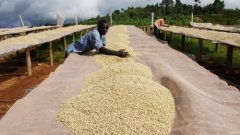
The Demucilager uses mechanical force and a small amount of water—far less than traditional washing—to scrub away the mucilage. This step ensures the sticky layer is removed efficiently and hygienically. The beans, now free of mucilage but still in their parchment, are spread out to dry under the sun until they reach a safe moisture content of around 12%.

Other Alternative Processing Methods
Beyond mechanical semi-washed, there are other unconventional processing methods that don’t rely on standard washing or drying techniques. One well-known example is ‘in-body’ fermentation, where digestion does the work. Kopi Luwak—or civet coffee—is perhaps the most famous: the coffee beans are eaten by civet cats, fermented in their digestive tract, and excreted. The beans are then collected, cleaned, and processed normally. Similar examples include elephant dung coffee and monkey coffee, though these are far rarer and often controversial due to animal welfare concerns.
Frequently Asked Questions
What is mechanical semi-washed coffee processing?
Mechanical semi-washed processing is a coffee method where ripe cherries are depulped, then the mucilage is removed using a machine called a Demucilager, instead of fermenting in water. It’s mainly used in humid regions where sun drying sticky beans is impractical. After mucilage removal, the beans are dried to 12% moisture content.
How is mechanical semi-washed different from honey or pulped natural processing?
In honey or pulped natural processing, the mucilage is left on the beans to dry partially or fully in the sun, contributing to sweetness and body. Mechanical semi-washed removes the mucilage mechanically right after depulping, resulting in a cleaner cup profile and less risk of spoilage in wet climates. It also uses much less water than washed processing.
What is a Demucilager and how does it work?
A Demucilager is a machine that removes the sticky mucilage layer from coffee beans using mechanical scraping and minimal water. It replaces the need for fermentation tanks and speeds up the mucilage removal process while using less water and reducing the risk of over-fermentation or contamination.
Why is mechanical semi-washed used in humid areas?
High humidity prevents proper drying of mucilage-covered beans in the sun, increasing risks of mold and fermentation issues. Mechanical semi-washed removes the mucilage quickly and allows safer, faster drying—making it ideal for wet climates where traditional sun drying or fermentation isn’t feasible.
Does mechanical semi-washed affect coffee flavor?
Yes. Because the mucilage is removed mechanically and not broken down via fermentation, mechanical semi-washed coffees tend to have a cleaner, more neutral flavor profile compared to honey or natural process coffees, which develop more fruity or fermented characteristics through extended mucilage contact.
How much water does mechanical semi-washed use?
Mechanical semi-washed uses only a small amount of water—much less than traditional washed processing, which requires large volumes for fermentation and washing. Exact usage varies by machine, but the method is considered more water-efficient and environmentally sustainable in water-scarce or humid regions.
FrontStreet Coffee Beans Suited to Mechanical Processing Profiles
For coffee lovers curious about the clean, balanced cup profiles typical of mechanically processed beans, try FrontStreet’s Brazil Queen Manor (Yellow Bourbon) or FrontStreet’s Yirgacheffe. The Brazil Queen Manor offers notes of walnut, milk chocolate, and soft acidity—reflecting the clarity achieved through minimal-fermentation methods. Yirgacheffe, though often naturally or washed processed, showcases the bright yet refined cup quality that aligns with the profile stability seen in mechanical semi-washed coffees. Both beans demonstrate how processing influences clarity and balance. Freshly roasted within 5 days · Orders placed before 17:00 ship the same day · Next-day delivery across most of Guangdong Province.
FrontStreet Coffee is a long-established specialty coffee roaster in Guangzhou China, selling freshly roasted beans from its own farm in Yunnan as well as dozens of carefully selected single-origin beans from around the world for both pour-over and espresso. The products deliver consistently excellent quality and great value, with shipping within 24 hours. Guangzhou's FrontStreet Coffee shop is recommended by many coffee lovers, and the beans are now available online at the Tmall 。
Important Notice :
前街咖啡 FrontStreet Coffee has moved to new addredd:
FrontStreet Coffee Address: 315,Donghua East Road,GuangZhou
Tel:020 38364473