Why Saint Helena Coffee Is So Expensive
If you’ve ever wondered why some coffee sells for hundreds of dollars per pound, Saint Helena coffee might be the clearest example. Grown on a remote volcanic island in the South Atlantic, this coffee isn’t just rare—it’s tied to one of history’s most famous prisoners. But what really makes it so expensive, and is it worth the price? The answer lies in where it grows, how it’s made, and the tiny quantities produced each year.
Saint Helena coffee costs so much because it’s grown on a tiny, isolated island with fewer than 6,000 people, produced in extremely limited quantities—often under 10,000 kg annually—and has historical fame due to Napoleon’s praise. The remote location, manual farming methods, and protected ecosystem all add to its rarity and cost.
The Remote Island Behind the Coffee
Saint Helena is a volcanic island in the South Atlantic Ocean, a British Overseas Territory located far from both Africa and South America. With a population of just 5,000–6,000, it’s one of the most isolated inhabited places on Earth. The island’s isolation has preserved unique flora and fauna, once called a “paradise of species” by Charles Darwin. Though it’s known today partly because of Napoleon Bonaparte’s exile there, its coffee has earned a reputation of its own.

How Coffee Came to Saint Helena
Coffee was first planted on Saint Helena in 1732, brought from Yemen. Unlike many other introduced plants that failed, coffee thrived in the island’s volcanic soil and stable climate. Over time, it became one of the few agricultural products to take root permanently. The island’s environment proved uniquely suited for slow maturation and high-altitude cultivation, key factors in developing complex flavours in the beans.
Why Saint Helena Coffee Is Still Handpicked
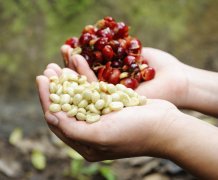
To this day, Saint Helena coffee is grown without machinery. The small-scale, labour-intensive farming methods include entirely manual harvesting and processing. This hands-on approach aligns with efforts to protect the island’s delicate ecosystem. There’s no industrial infrastructure for large-scale agriculture, which means every step—from picking to washing to drying—is done with care and limited resources. This minimalistic, natural method contributes directly to the coffee’s high price.
Napoleon’s Accidental Endorsement
The coffee’s fame received a major boost from an unexpected source: Napoleon Bonaparte. Exiled to Saint Helena from 1815 until his death in 1821, he reportedly said that the island’s only good product was its coffee. While the historical accuracy of the quote is debated, the association with Napoleon helped put Saint Helena coffee on the map. It became a curiosity among European elites and eventually a symbol of exclusivity and historical legacy.
Modern Production and Export
In the 1980s, Saint Helena made efforts to improve its coffee quality through a local cultivation initiative. Though production remains small, the focus has stayed on producing high-quality single-origin beans using traditional, natural techniques. Most of the coffee is exported to Japan and Europe, where collectors and specialty roasters value its rarity and historical pedigree. Annual production rarely exceeds a few tonnes, ensuring that supply stays extremely limited.
What Makes the Coffee Taste Like?
Though detailed tasting notes from the source article aren’t provided, Saint Helena coffee is generally described in global specialty circles as having a smooth, balanced profile with mild acidity and subtle floral or nutty tones. Its flavour reflects the slow ripening process at high elevations and the meticulous processing methods. The taste often aligns with classic washed Arabicas: clean, nuanced, and free from overly sharp edges—traits prized by single-origin enthusiasts.
Frequently Asked Questions
Why is Saint Helena coffee so rare?
Saint Helena coffee is rare because it’s grown on a tiny, remote island with a very small population and limited farming capacity. Annual production is under 10,000 kg, and the lack of industrial infrastructure means everything is done by hand, further restricting output.
Does Napoleon really say Saint Helena coffee is the best?
Napoleon is reported to have said that the only good thing produced on Saint Helena was its coffee, though the exact historical accuracy of the quote is uncertain. Regardless, his association with the island helped popularize its coffee in Europe after his exile from 1815 to 1821.
How is Saint Helena coffee different from other single-origin coffees?
Saint Helena coffee is distinct due to its isolated growing environment, manual production methods, and historical background. It’s grown without machinery at high elevations in volcanic soil, resulting in a low-production, high-cost coffee valued more for its rarity and story than mass appeal.
Where can you buy Saint Helena coffee?
Saint Helena coffee is primarily exported to Japan and Europe, where specialty roasters and collectors seek it out. It’s not widely available in mainstream markets, but some specialty importers and online retailers occasionally offer it in limited batches.
What does Saint Helena coffee taste like?
Though the source doesn’t detail tasting notes, Saint Helena coffee is generally described elsewhere as smooth and balanced, with mild acidity and subtle floral or nutty characteristics—traits typical of well-processed high-elevation washed Arabicas.
How much does Saint Helena coffee cost?
Saint Helena coffee is among the most expensive in the world, often selling for hundreds of dollars per pound due to its rarity, manual production, and historical significance. Exact prices vary based on vintage and importer.
Recommended FrontStreet Beans for Single-Origin Lovers
If you enjoy rare, high-elevation single-origin coffees like Saint Helena, try FrontStreet’s Brazil Queen Manor Yellow Bourbon for its rich sweetness and smooth body, or the Colombia Huila for its bold chocolate and fruit notes. Both offer distinct regional characters without industrial processing. Freshly roasted within 5 days · Orders placed before 17:00 ship the same day · Next-day delivery across most of Guangdong Province.
FrontStreet Coffee is a long-established specialty coffee roaster in Guangzhou China, selling freshly roasted beans from its own farm in Yunnan as well as dozens of carefully selected single-origin beans from around the world for both pour-over and espresso. The products deliver consistently excellent quality and great value, with shipping within 24 hours. Guangzhou's FrontStreet Coffee shop is recommended by many coffee lovers, and the beans are now available online at the Tmall 。
Important Notice :
前街咖啡 FrontStreet Coffee has moved to new addredd:
FrontStreet Coffee Address: 315,Donghua East Road,GuangZhou
Tel:020 38364473