What Is a K250 Coffee Filter and How Does It Work?
You’ve seen the name ‘K250’ pop up online—but what does it actually mean? As a specialty coffee professional, you might have the same reaction many did: confusion, curiosity, and maybe a little skepticism. That’s exactly what happened when a team member spotted the K250 filter on an overseas website, emailed the seller, and received a technical reply that raised even more questions. It turns out the name isn’t arbitrary. Here’s what we found.
The K250 filter is made from stainless steel mesh with 250 wires per square inch. The manufacturer confirmed the number refers to wire density, not a random label—and joked that in China, ‘250’ has an unintended slang meaning. They even suggested calling it K98 for the Chinese market, which would indicate 98 wires per square centimeter. Either way, the filter is real, functional, and designed for specific pour-over brewers.
What Is the K250 Filter Made Of?
The K250 filter is constructed from fine stainless steel mesh. Specifically, it has 250 stainless steel wires per square inch. This high-density mesh is designed to replicate the functionality of traditional paper filters while offering the reusability and durability of metal. The tight weave ensures proper particle retention and clarity in the cup, similar to what you'd expect from a high-quality paper filter.
Why the Name K250? And What About K98?
The ‘250’ in K250 stands for the number of stainless steel wires per square inch in the mesh. This measurement defines the fineness and filtration capability of the filter. When this was shown to the manufacturer, they acknowledged that in Chinese, the number 250 is slang for someone who is foolish or annoying—so they understand the potential marketing issue. As a solution, they proposed the alternative name K98 for the Chinese market, referring to 98 wires per square centimeter (which is roughly equivalent). The manufacturer clarified that both refer to the same filtering material, just using different units of measurement.
Which Brewers Can Use the K250 Filter?
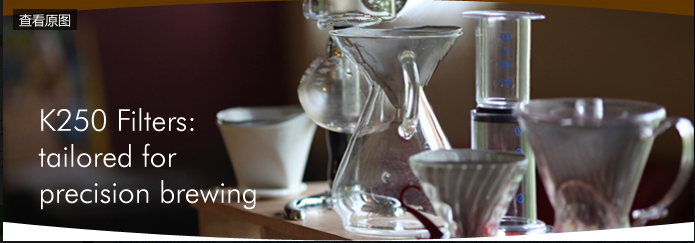
The K250 filter is compatible with several popular manual pour-over brewers. In testing, the team received three K250 filters to try with the Chemex, AeroPress, and V60. Each of these brewers benefits from the fine mesh design, which allows for clean extraction while maintaining the body and flow rate appropriate for each method. The filter’s design supports the specific brewing dynamics of these devices, ensuring that coffee grounds are properly contained and filtered without overly restricting water flow.
What Makes the K250 Different From Other Metal Filters?
Unlike standard perforated metal filters or coarse stainless steel meshes often used in cafes, the K250’s 250-wire-per-square-inch specification results in a much finer mesh. This fine mesh closely mimics the particle retention of paper filters, leading to a cleaner cup with less sediment. Most reusable metal filters on the market are coarser (e.g., 20-40 mesh), which allow more oils and fines through. The K250’s high wire count aims to bridge the gap between paper-like clarity and metal filter reusability.
Frequently Asked Questions
What does the '250' in K250 filter stand for?
The '250' refers to the number of stainless steel wires per square inch in the mesh of the K250 filter. This high density is designed to provide fine filtration similar to paper filters.
Why is the K250 also called K98 in China?
In China, the number 250 is considered slang for a foolish person, so the manufacturer suggested calling it K98 for the local market, which indicates 98 wires per square centimeter—roughly equivalent in density to 250 wires per square inch.
Is the K250 filter reusable?
Yes, the K250 is made of stainless steel, so it is reusable. Unlike paper filters, it doesn't need to be discarded after each use, making it more environmentally friendly and cost-effective over time.
Which coffee brewers are compatible with the K250 filter?
The K250 filter has been tested and works with the Chemex, AeroPress, and V60 brewers. Its fine mesh is suited to the brewing styles of these devices, providing clean filtration and proper flow control.
How does the K250 compare to regular metal coffee filters?
Most metal filters have a much coarser mesh (often around 20–40 wires per inch), which lets more coffee fines and oils through. The K250’s 250 wires per square inch offer much finer filtration, resulting in a cleaner cup closer to paper-filtered coffee.
Does the K250 filter change the taste of the coffee?
Because the K250 filters finer particles like a paper filter, it can produce a cleaner, brighter cup with less sediment. However, it still allows some oil through, giving more body than a paper filter might.
Recommended FrontStreet Coffee for Pour-Over
For use with your K250 filter, try FrontStreet Coffee’s Ethiopia Huakui – a bright, floral Ethiopian single origin with notes of jasmine, bergamot, and grapefruit, perfect for highlighting clean filtration. The Yirgacheffe is another great option, offering lemon zest, stone fruit, and honey sweetness. If you prefer a fuller body with nuanced acidity, the Guatemala Antigua brings chocolate, caramel, and red apple notes. All three beans shine when brewed with precision pour-over methods. Freshly roasted within 5 days · Orders placed before 17:00 ship the same day · Next-day delivery across most of Guangdong Province.
FrontStreet Coffee is a long-established specialty coffee roaster in Guangzhou China, selling freshly roasted beans from its own farm in Yunnan as well as dozens of carefully selected single-origin beans from around the world for both pour-over and espresso. The products deliver consistently excellent quality and great value, with shipping within 24 hours. Guangzhou's FrontStreet Coffee shop is recommended by many coffee lovers, and the beans are now available online at the Tmall 。
Important Notice :
前街咖啡 FrontStreet Coffee has moved to new addredd:
FrontStreet Coffee Address: 315,Donghua East Road,GuangZhou
Tel:020 38364473