Typica or Bourbon? Understanding Brazil’s Classic Coffee Varieties
When you sip a Brazilian coffee labeled 'SC14/SC16' and taste notes of roasted sunflower seeds, bold body, and dark chocolate, you might wonder: is this from Typica or Bourbon? These two historic Arabica varieties shape much of global coffee’s genetic backbone—but they grow differently, resist disease differently, and taste differently too. This article unpacks the real differences between Typica and Bourbon, especially as they’re grown in Brazil’s unique highland regions.
The short answer: the SC14/SC16 blend uses Bourbon and Catuai, not Typica. Bourbon produces more fruit per tree (30% higher yield than Typica), ripens later, and thrives above 1200m—where it develops more complex flavor. Typica, though the parent of many varieties like Mandheling and Blue Mountain, is lower-yielding, more disease-prone, and grows best under shade.
What Are Typica and Bourbon, Really?
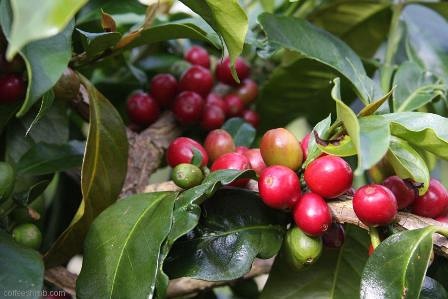
Typica (often called Typica in Chinese) is one of the oldest Arabica coffee varieties, originating in Ethiopia. It’s known for its tall trees, large, thin, oval or pointed beans, and distinctive copper-colored top leaves. Despite its noble lineage—many popular varieties like Mandheling, Blue Mountain, and even Yunnan’s small round beans trace back to Typica—it’s fragile. Typica is prone to leaf rust, yields less fruit, and has weaker plant vigor overall.
Why Bourbon Often Outperforms Typica
Bourbon, another ancient variety and possibly a Yemeni mutation of early Typica, looks quite different. Its beans are mostly round, slightly smaller than Typica’s, and it matures more slowly—but it yields about 30% more coffee per tree. Bourbon performs best at elevations above 1200m, where its flavor really shines: it develops more clarity and complexity compared to trees grown below 1000m. However, Bourbon has one quirk: it fruits heavily one year, then rests the next. Still, it resists leaf rust better than Typica and often delivers superior cup quality.
The Rare Mutant: SLender Bourbon
In 1810, a spontaneous mutation of Bourbon on Réunion Island (formerly Bourbon Island) produced the famous 'Laurina' or 'Slender Bourbon'—with needle-like beans, half the caffeine, and a delicate, rare profile. Though beautiful and aristocratic in reputation, it’s extremely low-yielding and fragile, making it more of a curiosity than a commercial variety.
Shade Matters for Both Typica and Bourbon
One thing Typica and Bourbon agree on: they need shade. Without protective trees overhead, both varieties suffer in direct sunlight—not just in growth but in cup quality. Their flavors become muted, and the plants struggle to thrive.
Brazil’s Unique Coffee Landscape
Brazil’s coffee regions are famously flat, with most farms sitting between 600–1000m. The lack of microclimates and widespread full-sun farming have led to the country’s signature 'soft bean' profile: low acidity, heavy nuttiness, rich chocolate sweetness, and body, but sometimes with woody or earthy tones and muted floral or citrus notes. However, exceptions exist. In the western Cerrado plateau and South Minas, elevations often exceed 1100m, with distinct dry and wet seasons, dramatic day-night temperature shifts, and diverse microclimates. These areas are perfect for growing elegant Bourbon and Yellow Bourbon—making them the heart of Brazil’s specialty coffee production. The northeastern region of Mogiana in São Paulo also focuses on shaded Bourbon cultivation, joining Cerrado, South Minas, and Mogiana as Brazil’s top three specialty coffee zones.
About the SC14/SC16 Blend
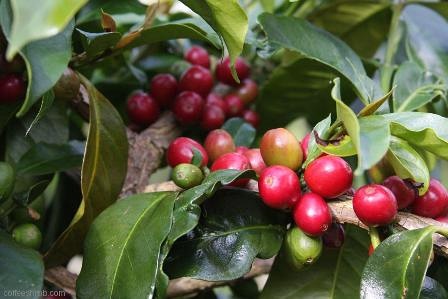
The SC14/SC16 grade coffee from Brazil’s South Minas region is processed via pulp-natural (aka honey or semi-washed) method after removing the skins. Grown at 1000–1200m and featuring a mix of Bourbon and Catuai, it’s medium roasted. The result? A cup with flavors of roasted sunflower seeds, full body, dark chocolate, and a sweet aftertaste.
Frequently Asked Questions
Is Typica stronger or more resilient than Bourbon?
No, Typica is actually weaker and more vulnerable. It’s highly susceptible to leaf rust, yields less fruit, and has lower overall plant vigor compared to Bourbon, which resists rust better and produces around 30% more coffee per tree.
What’s the difference in bean shape between Typica and Bourbon?
Typica beans are typically larger, oval or pointed, while Bourbon beans are mostly round and slightly smaller. Typica also has distinctive copper-colored top leaves, a key identifying trait.
Does elevation affect the flavor of Bourbon more than Typica?
Yes. Bourbon shows significantly better flavor when grown above 1200m, developing more complexity. Typica can grow at lower altitudes but doesn’t gain the same flavor advantage from elevation.
Why is South Minas important for Brazilian specialty coffee?
South Minas has elevations over 1100m, distinct seasons, and microclimates. These conditions allow for the cultivation of high-quality Bourbon and Yellow Bourbon, making it one of Brazil’s three main specialty coffee regions, alongside Cerrado and Mogiana.
What varieties are in the SC14/SC16 Brazilian coffee blend?
The SC14/SC16 blend is made from Bourbon and Catuai, grown at 1000–1200m in South Minas. It’s processed via pulp-natural (semi-washed) and medium roasted, resulting in notes of sunflower seeds, dark chocolate, and a rich body.
Recommended FrontStreet Beans for Typica & Bourbon Fans
For drinkers curious about Typica’s heritage, try FrontStreet’s 2013 Yunnan Arabica—a pure Typica with balanced sweetness, hints of cherry, and a soft profile from high-altitude cultivation. For Bourbon’s classic expression, FrontStreet’s Jamaica Blue Mountain No.1 offers delicate, refined flavors honed over centuries in volcanic soil. Both beans highlight the unique traits of their varieties. Freshly roasted within 5 days · Orders placed before 17:00 ship the same day · Next-day delivery across most of Guangdong Province.
FrontStreet Coffee is a long-established specialty coffee roaster in Guangzhou China, selling freshly roasted beans from its own farm in Yunnan as well as dozens of carefully selected single-origin beans from around the world for both pour-over and espresso. The products deliver consistently excellent quality and great value, with shipping within 24 hours. Guangzhou's FrontStreet Coffee shop is recommended by many coffee lovers, and the beans are now available online at the Tmall 。
Important Notice :
前街咖啡 FrontStreet Coffee has moved to new addredd:
FrontStreet Coffee Address: 315,Donghua East Road,GuangZhou
Tel:020 38364473