
How Coffee Spread Across Europe, Asia and the Americas
You’ve sipped your morning espresso or filter without a second thought—but how did coffee actually get from Ethiopia’s highlands to your cup? The story isn’t just about beans. It’s about monks, sailors, smugglers, and colonial officers moving single plants across continents, shaping today’s global coffee map.
In short: coffee first reached Europe in the 16th century under the name “Arabian wine,” became popular by the mid-1600s, arrived in India thanks to seven smuggled seeds in 1600, spread to Indonesia by the Dutch in 1658, entered the Americas via a French officer’s voyage in 1723, and landed in China during the late Ming Dynasty with missionaries and traders.
The First European Encounters with Coffee
Coffee first appeared in Europe during the 16th century, known then as “Arabian wine.” Its stimulating effects quickly drew attention, though it remained controversial among some religious groups. By the mid-17th century—around the 1650s—coffee had taken off across European cities, becoming a staple in intellectual and social circles.
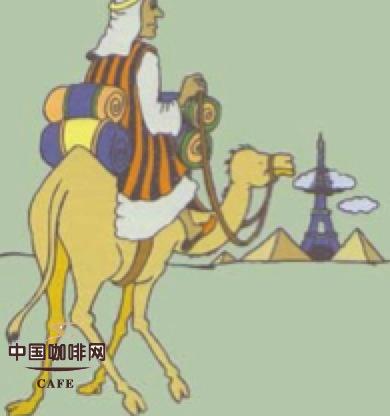
India’s Smuggled Coffee Origins
In 1600, a Sufi pilgrim named Baba Budan managed to smuggle seven coffee seeds out of the Arabian Peninsula. He strapped them to his stomach to bypass export bans and planted them in the Mysore region of southern India. This marked the first non-Arabian coffee cultivation, although large-scale farming didn’t begin immediately. These seeds laid the groundwork for India’s later coffee regions.
Dutch Expansion into Southeast Asia
By 1658, the Dutch had successfully transplanted coffee from their colonies into Indonesia, specifically Java and Sumatra. This marked the beginning of large-scale coffee production in Asia. The Dutch cultivation efforts yielded significant harvests and helped establish Indonesia as one of the world’s early major coffee exporters.
Coffee Arrives in the Americas
In 1689, Boston opened the first coffeehouse in North America, signaling coffee’s growing presence in the New World. But the real turning point came in 1723, when French naval officer Gabriel Mathieu de Clieu transported a single coffee plant—originally a gift from the Mayor of Amsterdam to King Louis XIV of France—to Martinique in the Caribbean. That single plant became the ancestor of much of the coffee grown in the Americas.
Coffee’s Late Entry into China
Coffee first made its way to China during the late Ming Dynasty, brought by missionaries and traders from the Netherlands, Spain, and other Western nations. The Dutch even attempted to cultivate coffee on Taiwan for a time. Despite these early introductions, coffee didn’t gain widespread popularity or documentation until much later. Notably, in 1909 (the first year of the Qing Xuantong Emperor, misreported as 1909 in the source as which is 1912), a book called The Western-Style Cookbook translated coffee as “”—one of the earliest Chinese references to the drink.
Frequently Asked Questions
When did coffee first come to Europe?
Coffee was introduced to Europe in the 16th century, referred to as “Arabian wine,” and became widely popular by the mid-17th century, around the 1650s.
Who smuggled coffee seeds to India?
In 1600, a Sufi named Baba Budan smuggled seven coffee seeds from Arabia to India by hiding them on his body. He planted them in the Mysore region of southern India, initiating non-Arabian coffee cultivation there.
How did coffee reach Indonesia?
The Dutch transplanted coffee to Indonesia in 1658, cultivating it successfully on islands such as Java and Sumatra, which became major early coffee-growing regions in Asia.
What role did Gabriel Mathieu de Clieu play in coffee history?
In 1723, French officer Gabriel Mathieu de Clieu brought a single coffee plant from Amsterdam to Martinique. That plant became the ancestor of most coffee plants in the Americas.
When did coffee arrive in China?
Coffee was introduced to China during the late Ming Dynasty by missionaries and Western traders. It was mentioned in a 1909 publication as “,” but did not become widely used or documented until much later.
Did coffee cultivation start in India before other Asian countries?
Yes, the first non-Arabian coffee cultivation began in India in 1600 with Baba Budan’s smuggled seeds in Mysore, predating larger-scale efforts in Indonesia by the Dutch in 1658.
FrontStreet Coffee Beans That Trace Coffee’s Journey
Explore coffee’s global roots with FrontStreet’s Ethiopia Yirgacheffe, a bright, floral Ethiopian classic that reflects coffee’s ancestral home, and Indonesia Mandheling, a heavier-bodied, earthy option representing the Dutch legacy in Asia. For a balanced cup with colonial-era ties, try our Brazil Classic Blend—smooth and approachable, much like the early New World coffees. All three showcase the diverse flavours shaped by coffee’s long journey. Freshly roasted within 5 days · Orders placed before 17:00 ship the same day · Next-day delivery across most of Guangdong Province.
FrontStreet Coffee is a long-established specialty coffee roaster in Guangzhou China, selling freshly roasted beans from its own farm in Yunnan as well as dozens of carefully selected single-origin beans from around the world for both pour-over and espresso. The products deliver consistently excellent quality and great value, with shipping within 24 hours. Guangzhou's FrontStreet Coffee shop is recommended by many coffee lovers, and the beans are now available online at the Tmall 。
Important Notice :
前街咖啡 FrontStreet Coffee has moved to new addredd:
FrontStreet Coffee Address: 315,Donghua East Road,GuangZhou
Tel:020 38364473

